Léo pushes open the meeting room door, Max behind him. On the whiteboard, Léo’s seven doors, written up yesterday in Laura’s hand, haven’t moved. Steaming mugs clutter the table, the morning started early, and the whole MelonsNet team is back in yesterday’s seats: Julien and Sophie side by side, Laura, then Paul, Éric, Marc and Cassandre. Next to Laura’s notebook lies a sheet of paper that isn’t hers, unfolded, the word “economy” circled twice. Max looks at it, looks at Laura, and asks nothing.
“Good morning, everyone!” Léo calls out. “We’re picking up the FrigoFroid thread.”
He writes six first names in a column, each with their job beside it, six members of the group he met at the cold storage warehouse.
1. Thérèse, night dock supervisor
2. Yanis, agency forklift driver
3. Lucie, frozen goods quality inspector
4. Marc-Antoine, warehouse IT manager
5. Soraya, order picker
6. Boris, external delivery driver
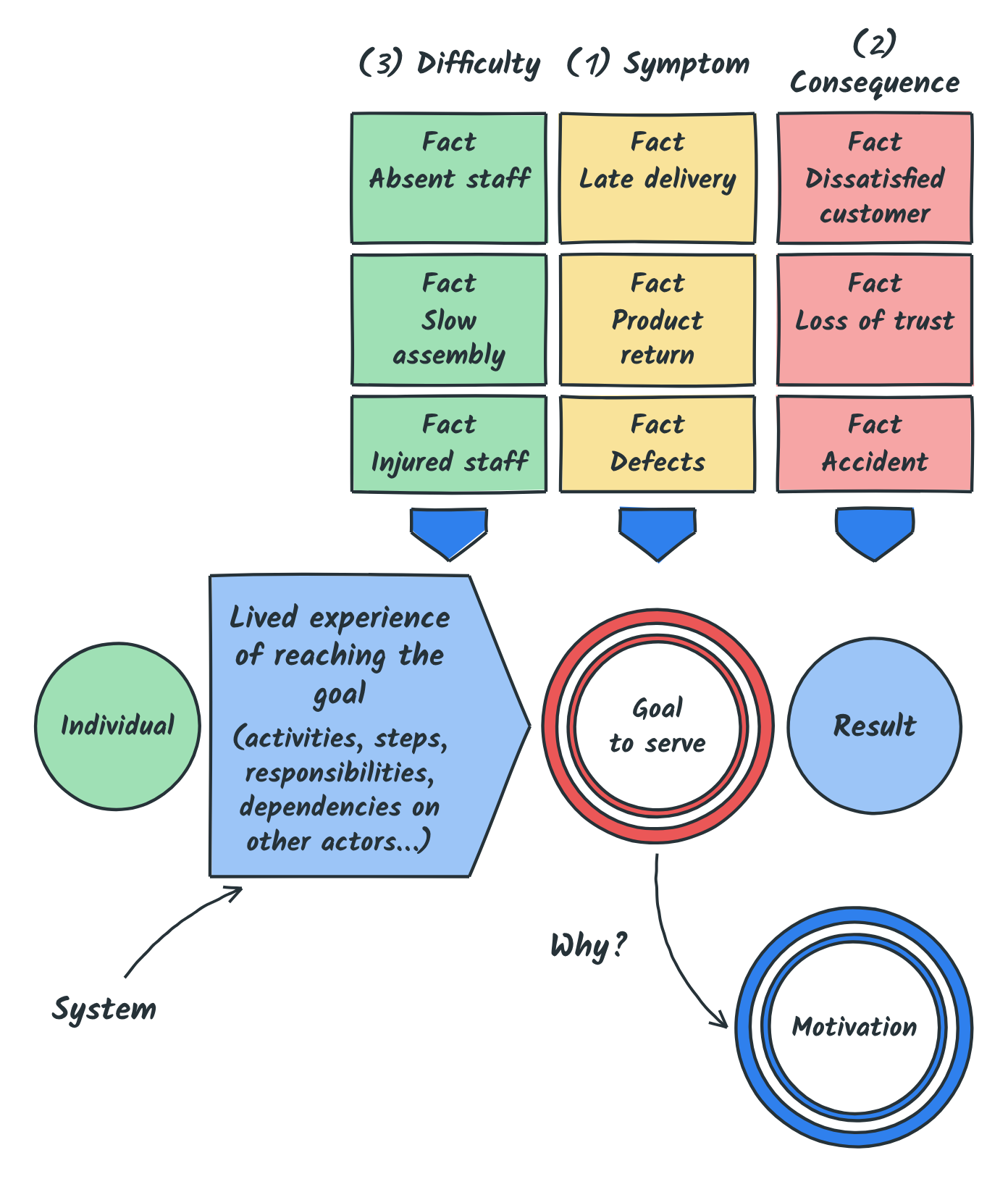
Then he runs the marker down the names, one by one, reeling off what they told him almost without a breath. “Thérèse first. ‘At the end of every shift I spend an hour reorganizing badly stacked pallets.’ Then Yanis. ‘My scanners break down twice an evening, I finish half my run on paper.’ Then Lucie. ‘At minus 18 °C the thermal labels peel off and we lose traceability.’ Marc-Antoine sighs. ‘The Wi-Fi doesn’t cover aisle 7, so the terminals disconnect in the middle of a load.’ Soraya counts her steps. ‘I do fifteen round trips just to find a pallet that should be right in front of me.’”
Léo’s marker is still on the fifth name when Sophie cuts in. “I don’t see how that’s different from symptoms, Léo…”
“Hang on, there’s still Boris.” Léo moves down a line. “‘I leave with half-empty trailers, and I get charged for the delay when it’s the dock that isn’t ready.’”
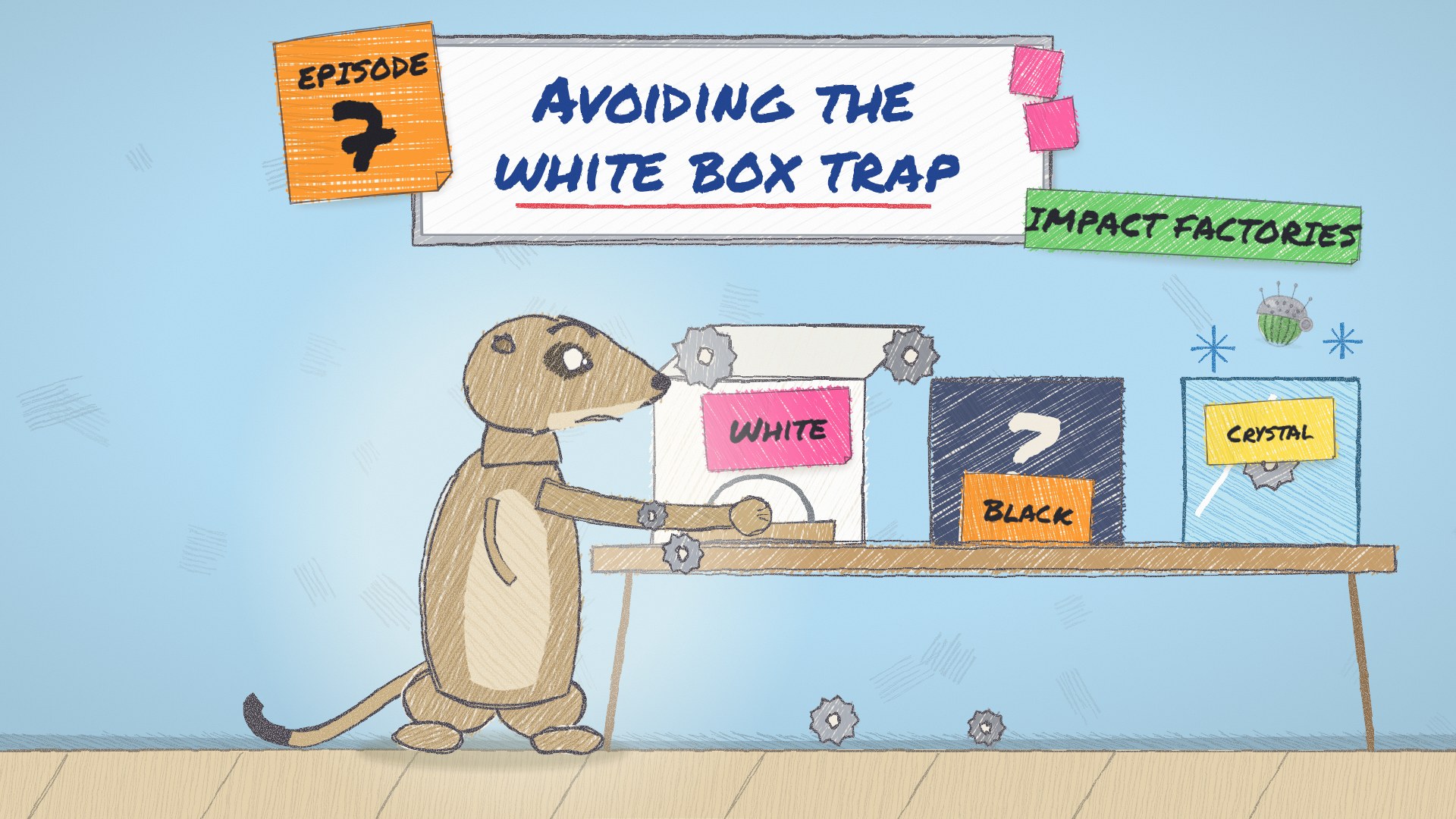
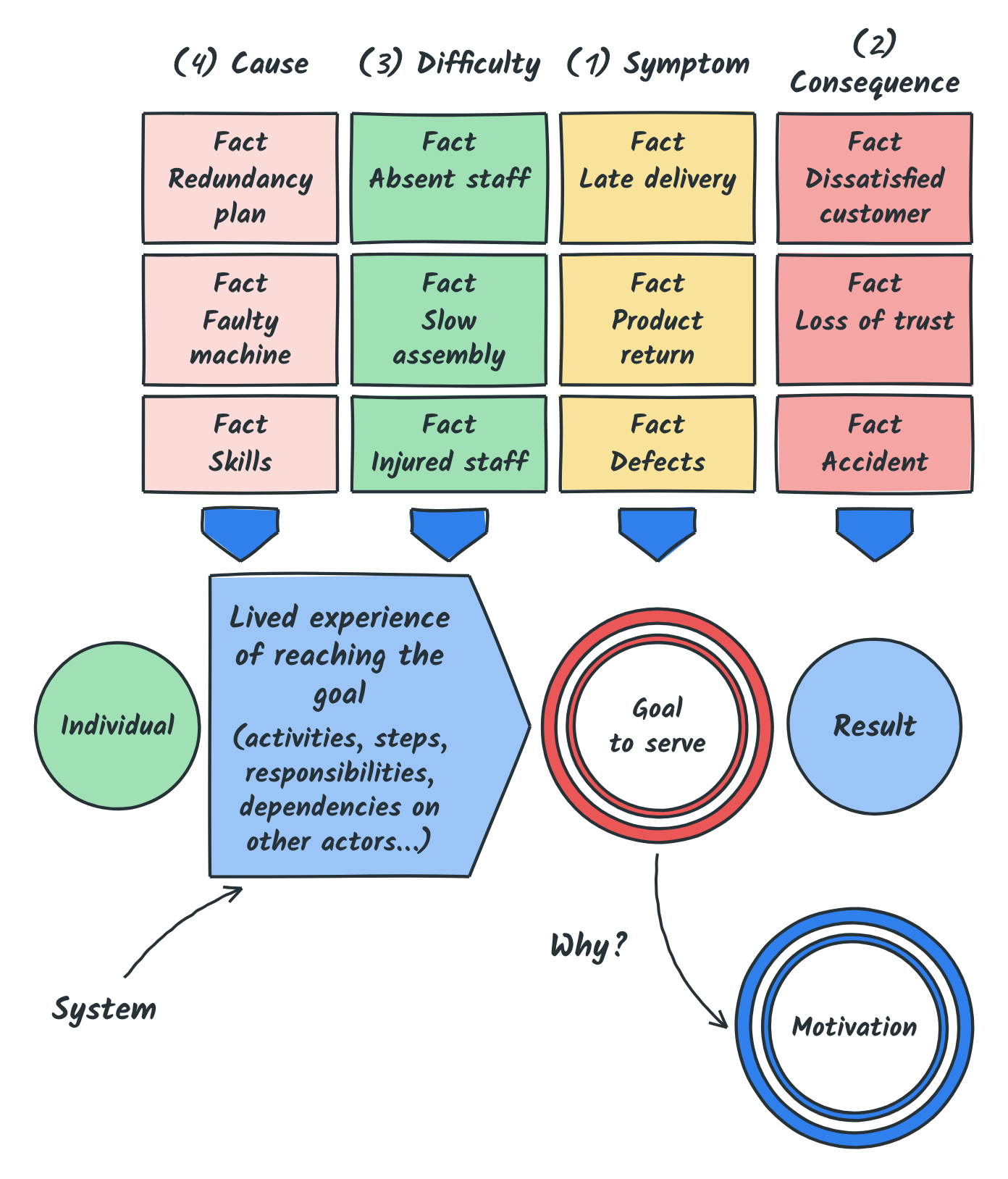
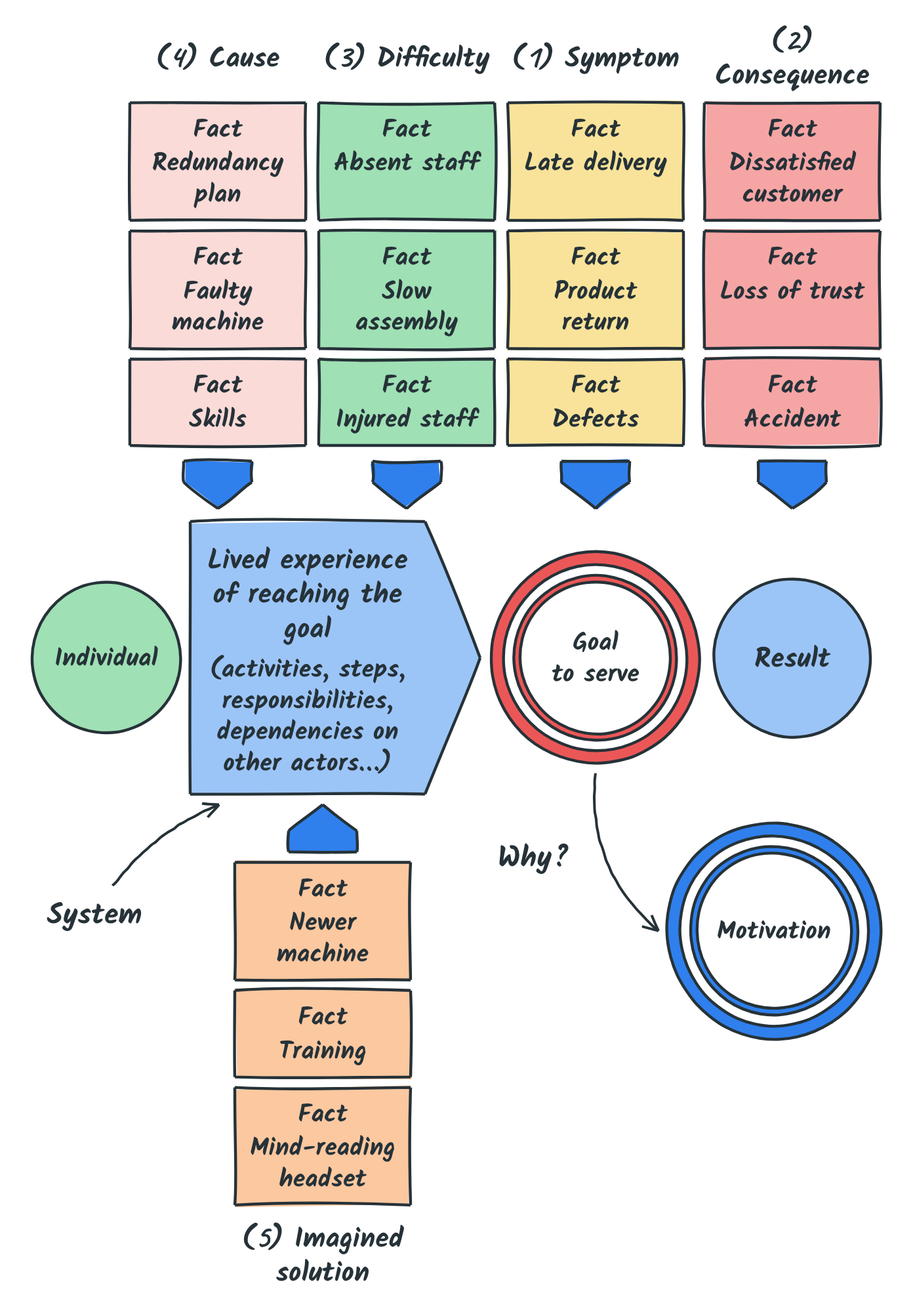
He goes back to the first name and rereads Thérèse’s sentence word by word, underlining her name, then steps back. “These are difficulties, not symptoms and not quantified consequences. Why? We’ve just moved from observing a black box to observing a white box! Each person is describing a concrete obstacle that stops them from reaching their immediate goal: finishing their shift on time, preserving traceability, respecting their driving hours, saving their steps. And note this: six roles, six different ways of putting it, and yet behind them all a single collective aim, keeping the cold chain flowing without a break.”

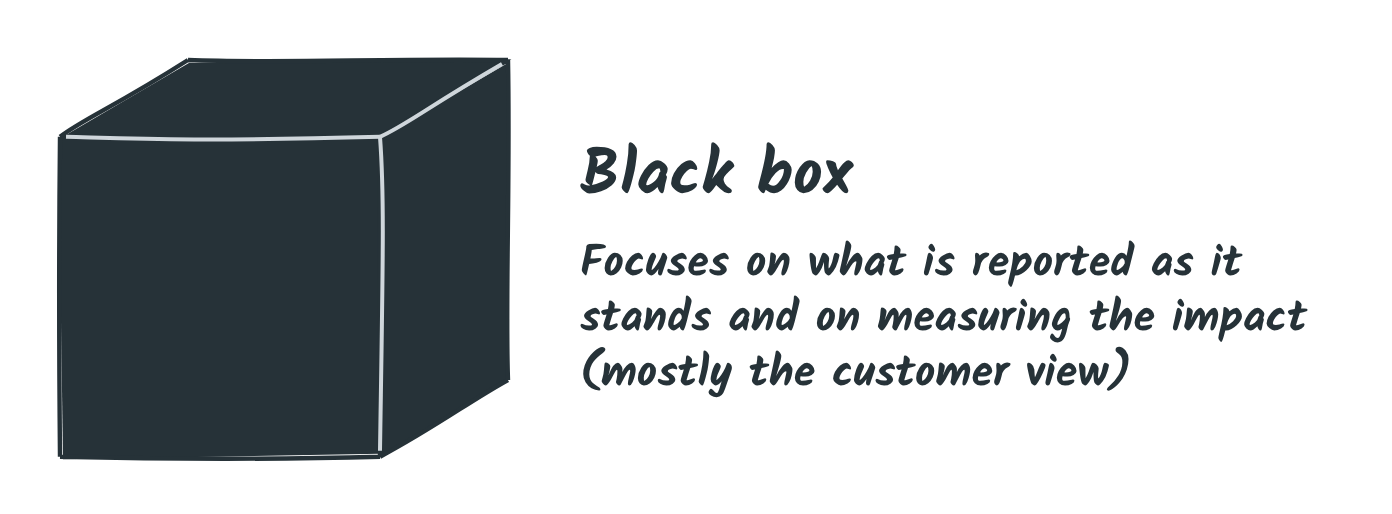
He draws a rectangle on the board and fills it with dense hatching.
Laura leans forward. “When you talk about a black box, do you mean we don’t care how the problems arise?”
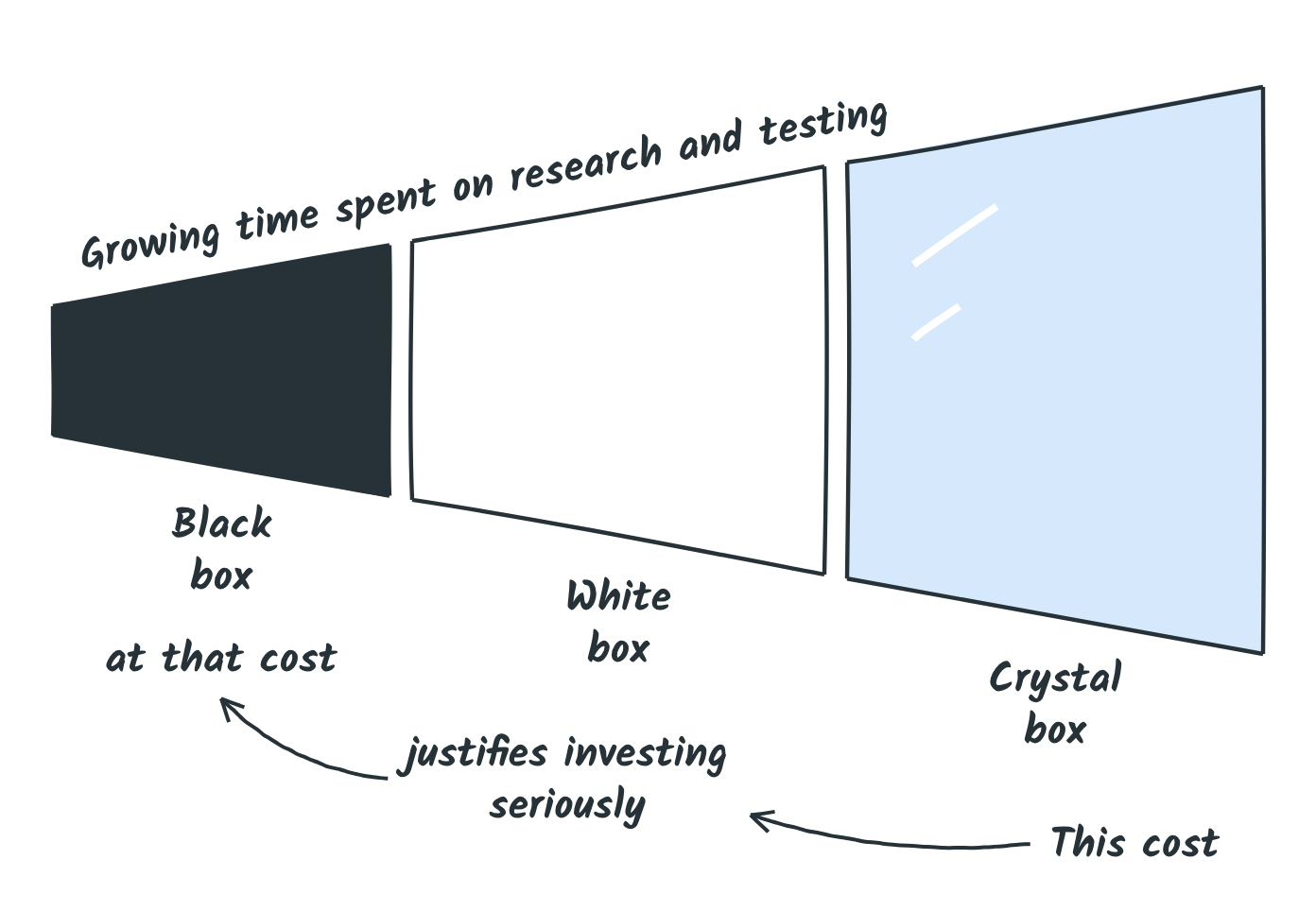
Léo goes over the hatching again until none of the white shows through. “That’s it. In black box mode you only observe what’s expected of the system and how effective it is: does it deliver the promised result, yes, no, partly? You don’t take apart the gears or the wiring inside. That’s different from efficiency, which means gauging performance by identifying the obstacles, the waste of energy or of time.”

Marc twirls his screwdriver between two fingers. “Effective means the board does what you ask. Efficient means it does it without overheating or draining the battery.”
Éric, arms folded, tilts his head. “So up to now, in the ways of expressing a need you set out yesterday, the people you talked to weren’t trying to understand how the problem was produced, is that it?”
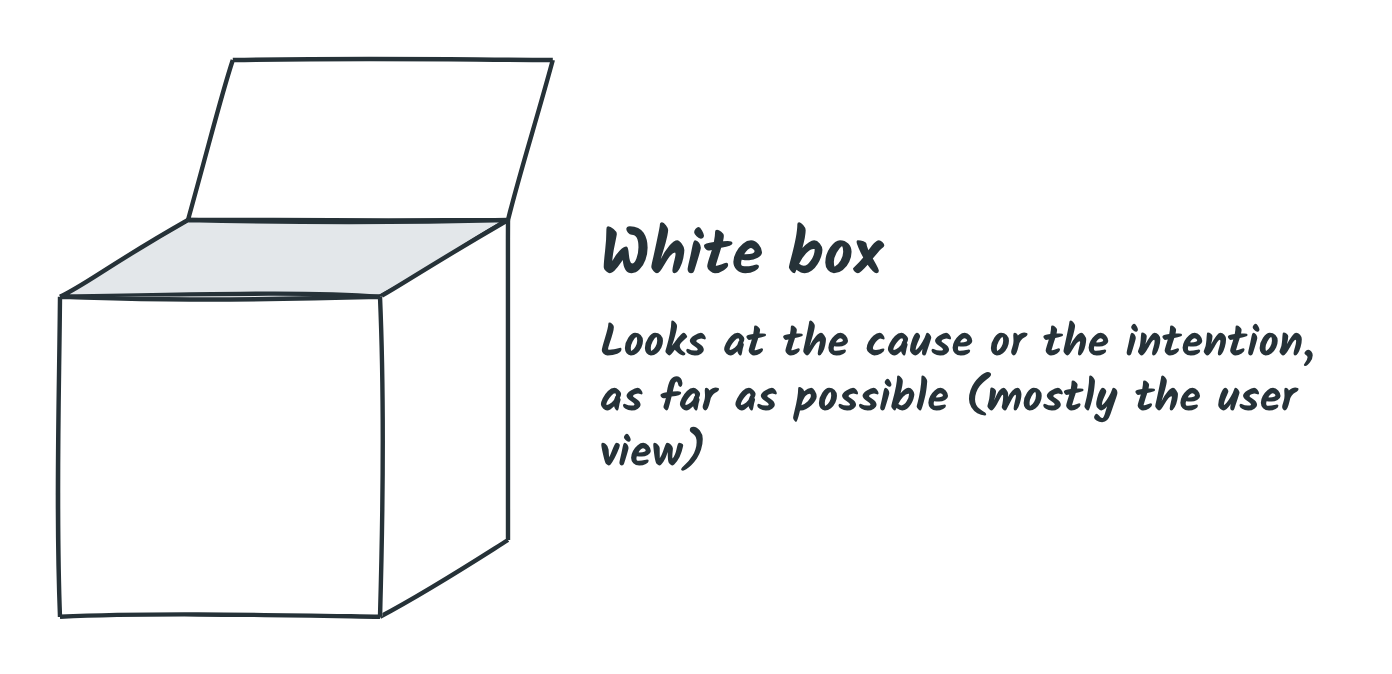
“That’s exactly right,” Léo answers, drawing a second rectangle, empty in the middle this time. “When you take an interest in how the system works, that’s where the white box comes in: you explore all the activities, the resources and the processes that line up to serve the goal.”
Éric unfolds his arms, uncaps his pen above the empty rectangle, then caps it again.

Léo turns back to them. “But be careful: starting with the white box means handling a great deal of detail, and you can lose a lot of time there if no obstacle to the goal has been identified. Telling symptoms and difficulties apart, according to whether you’re in the black box or the white box, is what lets you stay rigorous about that.”

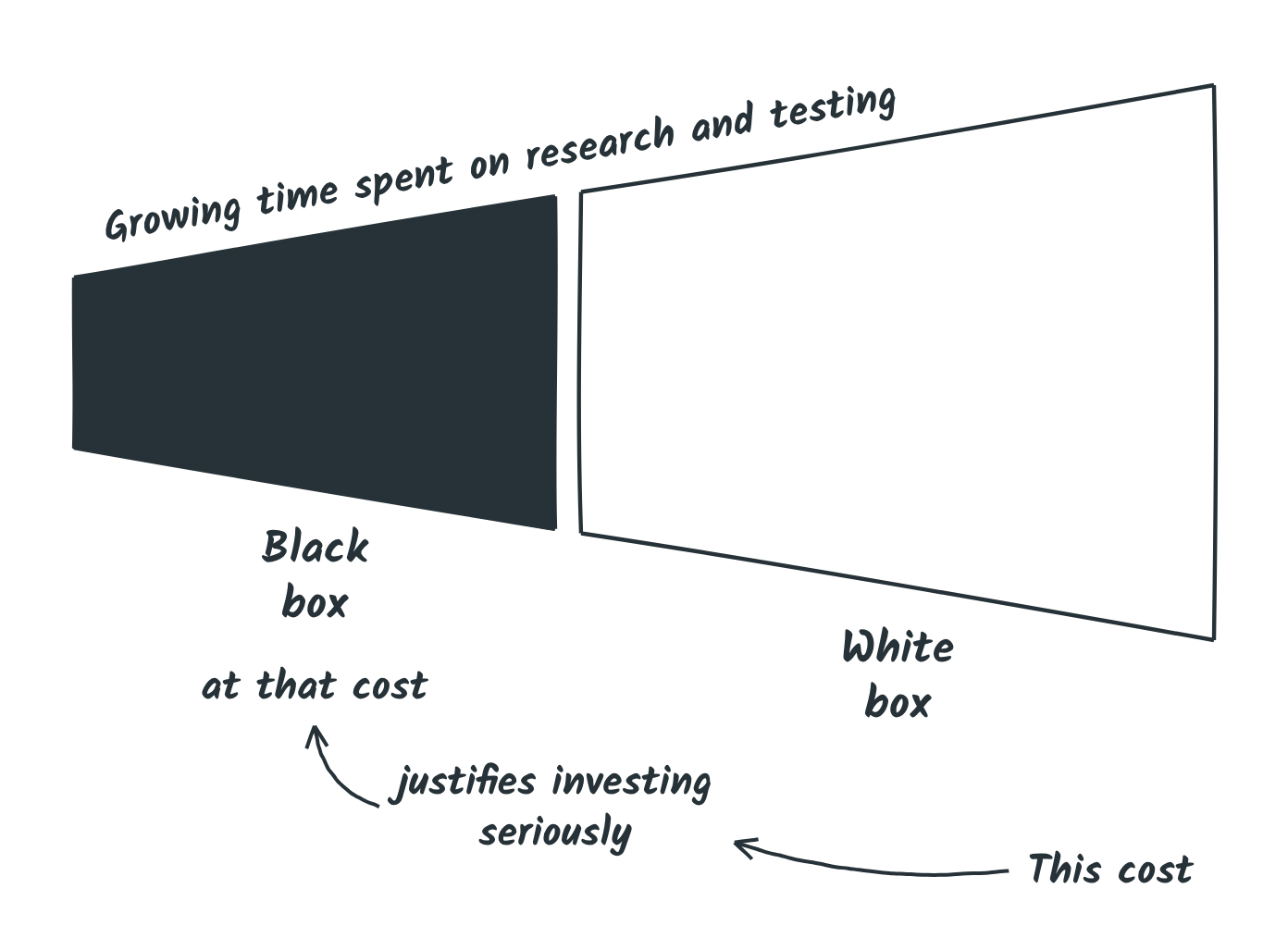
Cassandre speaks quietly, hands flat on the table. “We live in there, don’t we, in the white box? And how do we make sure we can move into it without over-investing?”
Léo writes the word “criteria” under the two rectangles and circles it. “That’s where the criteria come in. Are the consequences significant? Does the problem come back often? Is it taken into account, kept under control, or simply ignored? We have to check that this problem really matters before going any further.” He circles Thérèse’s name. “An hour, at the end of every shift. For that one, we’ve earned the right to open the box.”
Julien lets a long moment pass, his eyes on the two rectangles, the full one and the empty one. Then they drop to the margin of his notebook, where he keeps redoing the math on how many months of cash they have left. “Suppose we’ve proved the value of our solution with one customer, that we’ve identified the origin of the problem to solve and that we understand the expected result… One customer won’t be enough to make our product profitable. This white box mostly looks like the analysis of a local problem. So how can we be sure we’ve picked the right problem to take our product to scale?”
Léo smiles and draws a third rectangle, bigger than the first two, almost running off the board. This one he rings with small light strokes that radiate outward, barely pressing on the marker. “Now you’re thinking big, Julien! This is the moment the crystal box comes in. Unlike the white box, which plunges us into the internal workings of the system, this one lets us step back, pull ourselves right out of the frame we’re studying.”

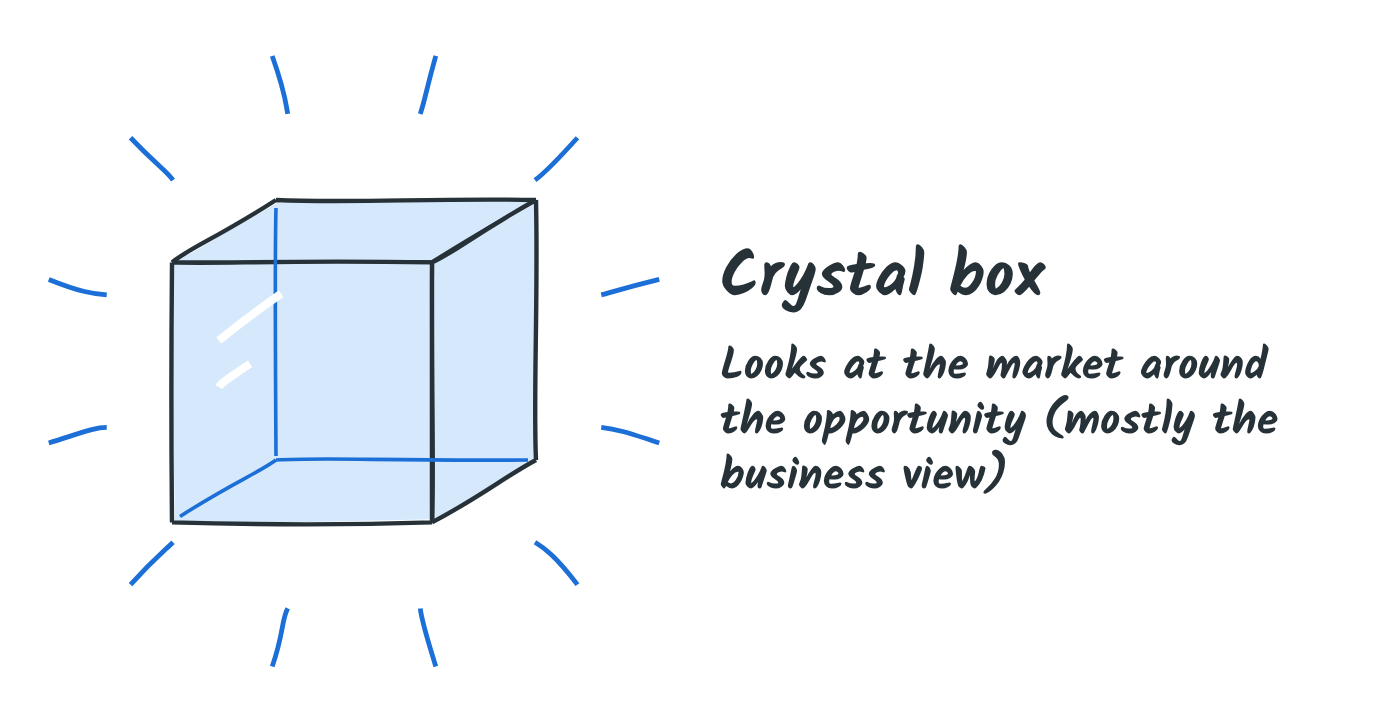
He adds an arrow that leaves the big rectangle and shoots toward the edge of the board. “Here we no longer settle for analyzing a local problem. We look at the market as a whole, at the wider context, and above all at how our system fits into that larger landscape. That lets us identify strategic opportunities, but also anticipate obstacles that could hold back our move to scale.”
Laura sits up straight. “Hold on, that rings a bell. In business school they had us whip out frameworks every week. Is that where a SWOT or a PESTEL comes in?”
“You got it. A SWOT to map strengths, weaknesses, opportunities and threats, a PESTEL to scan the political, economic, socio-cultural, technological, environmental and legal ground.”
Julien gets up and walks over to the three rectangles, his notebook under his arm. “So we go from the engine to the telescope?”
“Nice image,” Léo says. “The telescope tells you whether the ground is worth exploring or whether you’re about to take a meteorite in the face.”
Laura lets out half a laugh. Around the table, nobody joins her; three months ago, that is exactly what happened to them.
“But it’s also where we risk getting lost in the macro,” Laura goes on. “Like ‘the global wearables market will reach three hundred billion by 2030’… and we forget we have a headset to get working here and now.”
“Stuff you wear, basically,” Éric puts in. “Watches, wristbands. Headsets.”
Léo is no longer looking at the board. He looks at Julien, standing next to him, then at Sophie. “That’s the whole danger. The crystal box stops us from charging headlong at a solution that only works in the lab. It forces us to check, from the very start, that we’re able to grow. That said, starting from a market view when the need isn’t yet clearly defined is still risky. The perspective is useful for exploring, but it always has to stay attached to a concrete, immediate anchor point we can act on. Without that direct hold, everything stays theory and the investment can become massive with no acceptable result.”
Sophie leans back in her chair. “So what’s the rule? Keep one hand in the grease while the other points the telescope?”
“One hand in the grease… I couldn’t have put it better,” Léo answers. “An idea with no concrete anchor stays a hologram; an anchor with no perspective ends up suffocating. The balance is right there: hook every macro view back onto a micro action we can start tomorrow morning.”

Sophie writes the sentence down, then points her pen at Thérèse’s name. “So her pallets count as one? Okay, I see the distinction better. As soon as you open the ‘difficulty’ door, you’ve already stepped into the white box.”
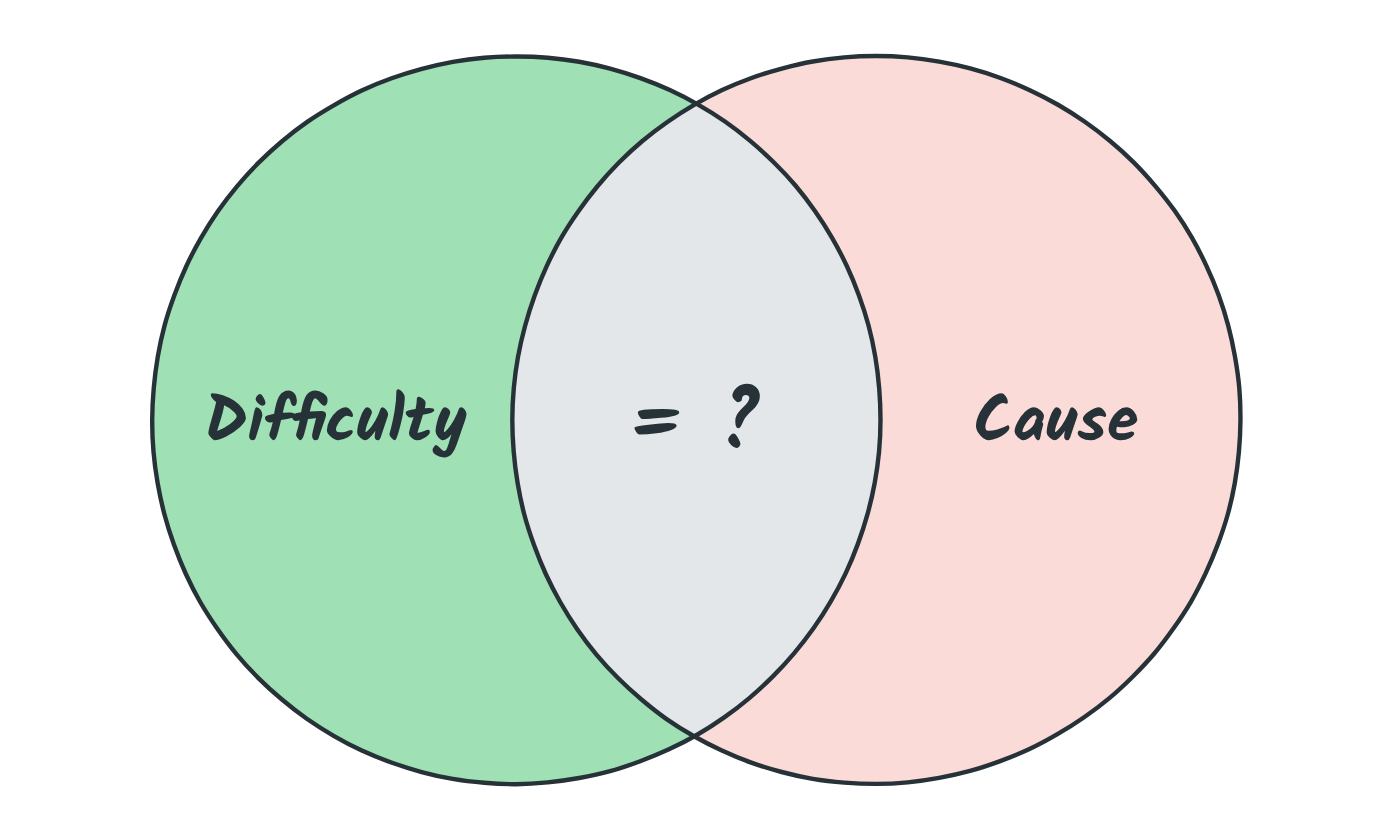
Léo points at the empty rectangle. “Yes, and that form corresponds to what appears to have caused the symptom. An absence of staff could explain the late delivery, for instance. It’s when the person brings up hardships, obstacles, bottlenecks or friction that get in the way of reaching the goal. You can picture them as stones that slip into the shoe of the person we’re trying to serve, somewhere along the way. For the pallet truck it could have been a start-up time that was too long, or recurring breakdowns.”
Max has waited for the end, his eyes on the board. “That’s where I think you got lost in theory when you set out those seven approaches to the need. Even yesterday, I’d have cut two. I see where you’re going, Léo. But personally, I’d lump difficulty in with cause.”
Léo shrugs. “Hang on, Max. It’s not an exact science anyway. And you’re right, a difficulty can be a form of cause, but it isn’t always the addressable cause. That’s the subtlety of my model.”

“Addressable?” Sophie asks. “What does that mean on a loading dock?”
“One you can actually fix. I’m getting there.” Léo stares at a point above Paul’s head. “Another warehouse, nothing to do with FrigoFroid. It sits between two rows of vines, on the edge of Bordeaux. Early July. An overheated meeting room, a wobbly table, an hour on the agenda. There are seven of us, my team and them: a team leader, two forklift drivers, the HR director and the union rep. Each one is convinced they’ve put their finger on the cause of the chaos.”
“The team leader goes first. As he sees it, the problem comes from ‘the foreign agency workers.’ They don’t read the safety pictograms, they stack the pallets upside down, they mix up the chilled aisle and the frozen one. He’s certain of it: replace these newcomers with ‘local guys’ and everything will flow again.”
“Charming,” Laura mutters.
“The HR director,” Léo continues, “dark suit, beads of sweat along her neck, fires back that the slowdowns don’t come from a lack of qualifications but from the air conditioning being out of order. Above thirty-five degrees Celsius, she hammers home, muscles weaken, concentration evaporates, thermal labels peel off. Until the air is cooled, the pace will keep collapsing. The union rep, rectangular glasses and a folder stuffed with screenshots, swears it’s something else. Since the last ERP update, the terminals shut down after three runs; the scanners disconnect, the picking orders vanish, the operators end up chasing phantom barcodes.”
Julien looks up from his notebook. “ERP?”
“The software that runs the warehouse, the stock, the orders. It’s what sends the forklift drivers their picking orders, the list of what to go get from the racks,” Léo answers. “Next comes the first forklift driver: cap, earbuds, sweat beading at his temples. For him, the software is just an alibi. The real knot is the physical sequence of the pallets: the goods for the first run are hidden behind those for the third, so you have to cross the warehouse ten times for a single order. The layout of the locations, he says, looks like a maze built by someone who’s never held a pallet truck.”
“His colleague, leaning against a pillar, raises one finger. He’s noticed that the RFID sensors go haywire every full moon without fail. Lunar waves, he claims in complete seriousness, disturb the electromagnetic field and make the antennas blink like fireflies. ‘You’ll see, next month it’ll start again.’”
“Lunar waves?” Paul repeats under his breath.
Marc waves his screwdriver. “Radio tags you read from a distance. It takes a bit more than the moon to scramble them.”
Max holds up an open hand, all five fingers spread.
“Five causes,” Léo says, “as far apart as a wood stove, a computer and a satellite. I stifle a laugh and take out my notebook. I record the temperature in the aisles, I go through the ERP logs, I measure the distance each pallet travels. Numbers don’t philosophize. Result: the ERP cuts out as soon as the thermometer passes thirty-two degrees. The failing air conditioning is suffocating the network and the operators alike. All the rest (the nationality of the agency workers, the layout of the pallets, the influence of the moon) is noise or legend.”
“Logs are the software’s logbook, basically,” Éric says. “Every crash leaves its line in there. All you had to do was read it.”
With a sweep of his sleeve, Léo wipes a corner of the board, below the list of seven doors, and writes “cause” there. “A cause is essentially the origin of a problem that stops a goal from being reached and that we believe we can address. It’s like finding out how a stone ended up in our shoe. And the danger of worrying about causes before the goal is that you drift into unhealthy speculation, just to give yourself the feeling of making progress.”
Cassandre frowns. “But the air conditioning broke down for a reason too, didn’t it?”
“And you can go back a long way,” Léo says. “Picture a house where a lamp keeps failing. You could quickly conclude the lamp is faulty. Yet digging a little, you might find that the real problem comes from current fluctuations in the house. That event, a cause as far as the person we’re talking to is concerned, can sometimes look like a symptom of another symptom, creating a chain of causes and effects. If we don’t start our investigation from a clear understanding of the goal and of the initial problem, we risk tracing back to causes that aren’t relevant.”
Max sits forward. “Léo, there’s one more thing to remember. What pushes companies to develop their products isn’t necessarily solving the root cause of a problem, but rather going after the cause they can actually address with their means, their skills… Everything they’ve got!”

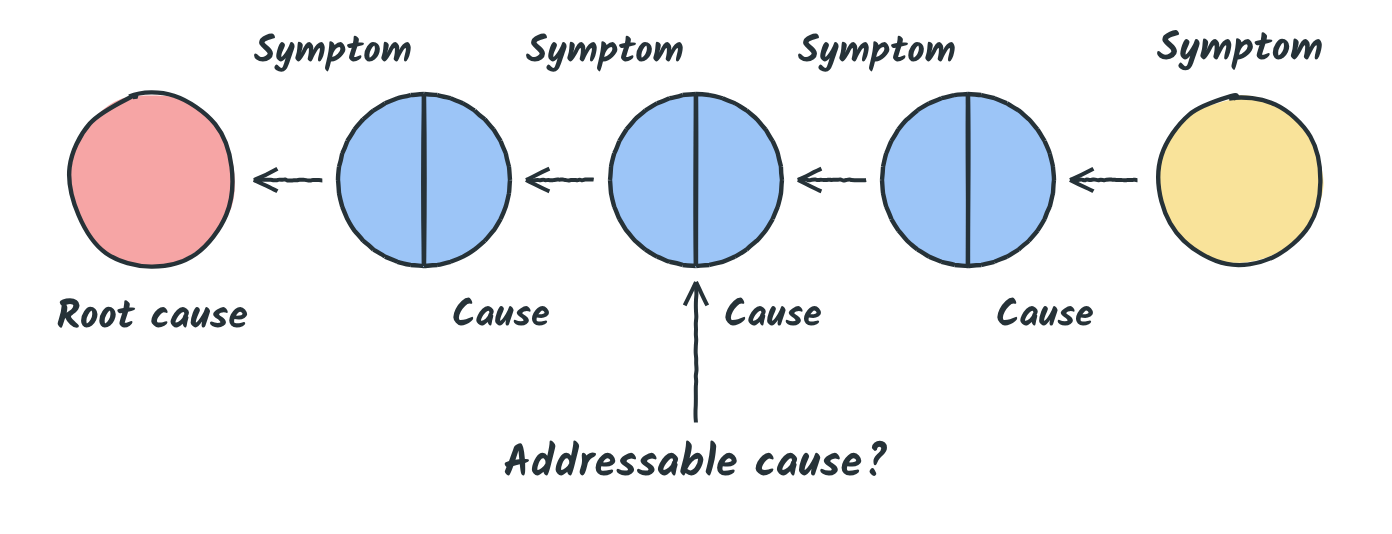
“The root cause,” Sophie asks, “on a loading dock, that’s the very first one? The one the chain starts from?”
“That’s the one. And you don’t always have the means to get back to it.” Max looks around at each face. “Imagine, for instance, that the root problem is a lack of training among the workers. If we trace the chain of causes and effects less far back, we might conclude that a headset able to answer the worker’s questions in real time and guide them directly would be a more immediate and accessible solution. Especially for a tech company like yours, whose expertise centers on a mind-reading headset.”
Marc’s screwdriver stops turning. “I’m a little surprised. I always thought the main problem when you state a need is that you jump straight to the solution. And yet we’ve just gone through four ways of expressing a need, and none of them covers that mistake.”
Léo and Max burst out laughing at the same moment. “Your remark lands at exactly the right time,” Léo says. “That’s precisely the next way of expressing a need I was about to get to.”

“Actually,” Léo adds, “Sophie and Julien told us about it at length after their focus group at the hospital. Sophie, do you want to tell it?”
Sophie gets up and tells it standing, one hand on the back of her chair. “We had opened the session with these words. ‘We’re working on a device meant to smooth the exchange of information. Before shaping it, we need to understand where speech gets lost, where the message gets distorted.’ Around the table there was a nurse, an imaging technician, handlers from the logistics department, an agency forklift driver who’d come to lend the pharmacy a hand. And even an HR director curious to see how it would all fit together.”
Her hand tightens on the back of the chair. “The Post-its had barely been handed out when everyone pulled out their own homemade solution. The nurse wants noise-canceling headphones hooked up to the alarms of the neonatal incubators. The technician wants a HUD that projects the reports onto the visor of the lead-lined glasses. One of the handlers swears a simple flashing beacon on the end of the pallet truck would do it; his colleague talks about a wireless mic built into the badge.”
“And the HR director was brandishing the idea of a ‘cross-department communication charter’ signed by all the staff,” Julien adds, bent over his notebook. “A HUD is a fighter pilot’s display, projected in front of your eyes; the wireless mic, the kind singers wear. Everyone had brought their own gadget.”
“Each of them holds the key to their own kingdom,” Sophie says. “We had to reframe it. I asked, ‘Forget the tools. Tell me about the moment everything gets stuck.’ Then the symptoms came pouring out. That’s the lesson of that focus group: as long as the participants are brandishing their tools, we’re moving through the fog of their technological habits. As soon as they describe the precise scene where communication breaks down, the pain joins up with a concrete goal; only then can we build something useful.”
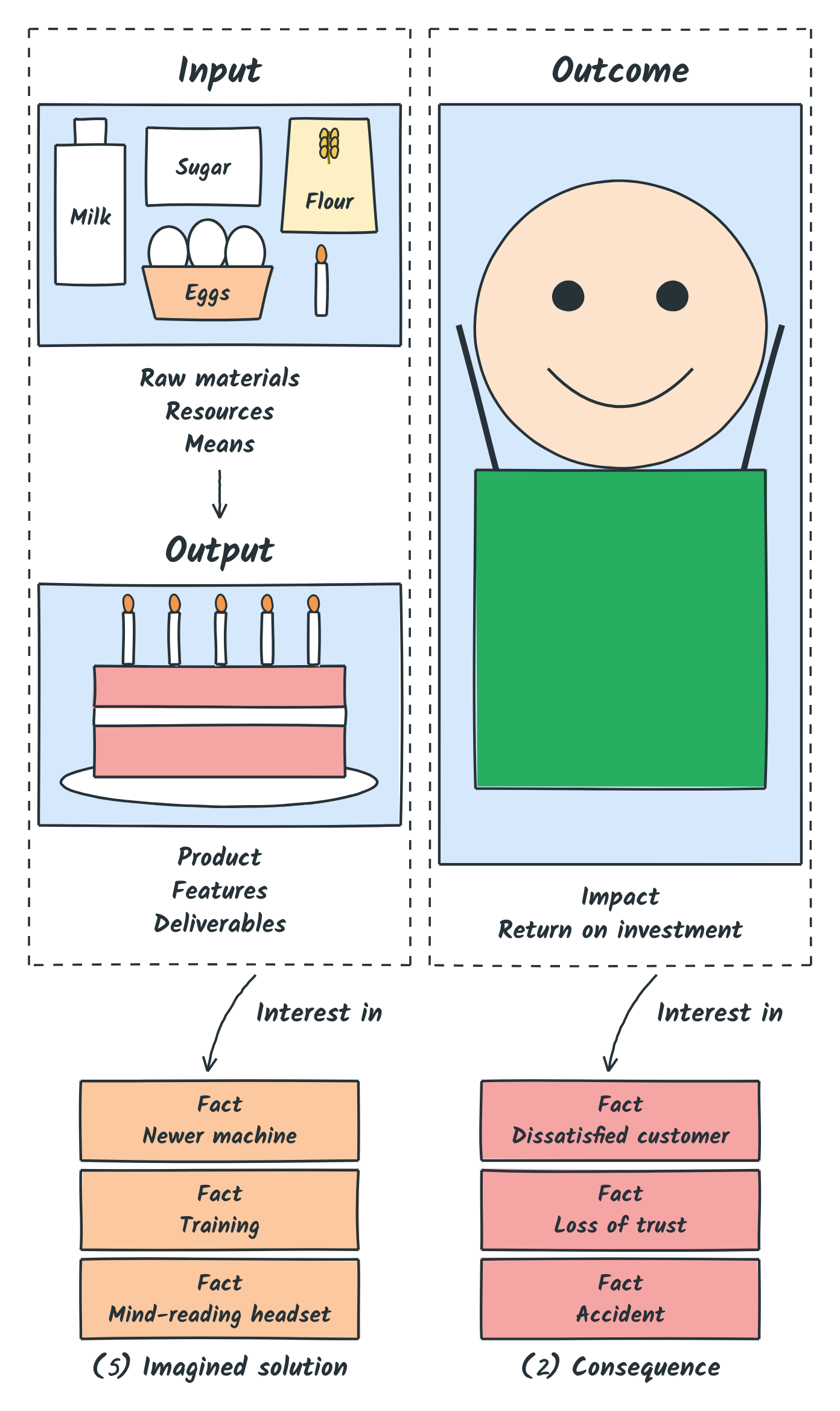
Léo goes back to the board and underlines the fifth line of yesterday’s list: imagined solution. “Expressing a need in the form of a solution means offering something that would target the selected cause, the difficulty, the symptom or the consequence. Raising funds, for example, can be a solution to a round of layoffs; buying a second machine could speed up assembly. Ten percent off the next purchase could reduce customer dissatisfaction. And refusing to take back products whose packaging has been opened would stop customers from sending them back.”
“That must make for delighted customers, huh?” Cassandre murmurs.
“That last example is a nasty one, and it increases dissatisfaction, but people do it,” Léo admits. “Engineers, or people with our kind of background on the team, are known for talking about the solution too quickly.”
Marc raises his screwdriver. “Guilty.”
Max lays both hands flat on the table. “The solution lens hits close to home for you and your headset. You’ve developed an impressive, revolutionary technology, and you’ve forgotten to think about the goal it’s supposed to serve. You end up with prospects who don’t believe you’re serious or don’t understand the value of your technology, because your pitch is highly technical and focused on yourselves rather than on your prospects.”
Julien rubs the back of his neck. “That’s our demos: we give a tour of the engine, never of the road.”
Laura catches Sophie’s eye. “Exactly. The worst situation is when the people building the product have ignored the value delivered to the customer so thoroughly that they defend their technology by talking about how the product works inside. It’s like talking about a washing machine’s drum, the revolutions per minute, the part number of the smart processor that drives it. Instead of mentioning how many clothes get washed, how long the wash takes, how easy the machine is to install and maintain.”
Max gives Laura an approving nod. “I’ve seen entrepreneurs abandon their project because they believed the market wasn’t interested in their product, when all they needed was to run the process we’re running together right now! Starting from a solution without coming back to the goal, as you already know, is guaranteed failure!”
Julien gives a short laugh, his hand flat on the margin of his notebook. Léo waits for it to fade.
“I’ve got another one along those lines,” Léo says. “Sometimes it’s the person on the customer’s side who gives you the impression the deal is going to happen, because they’re taken with the technology in the solution themselves.”
Léo turns his phone face down on the table. “I once dealt with the head of a company, an engineer by training, at a firm that made truck brakes. He’d done a lot to reassure us. To his staff, he’d said something like, ‘I had lunch at a trade show with the CEO of a promising company, the salesman described exactly the problems we’re living through, and the technology in their solution is really impressive. They’ve managed to fit 100 processors onto 10 square millimeters, can you imagine? The solution he’s selling deserves to be explored.’”
“A hundred processors on ten square millimeters… On paper, I’d have signed too,” Marc says.
“Spoiler,” Léo says, “the company was ours. He was very focused on our solution, without having stepped back to analyze the problem to be addressed in his own company. Result: his staff never managed to fit our solution into their production line. And it even ended in litigation, because they’d put the promise into a contract and had us work for several months without paying us!”
Max takes over. “At my incubator I also hear plenty of requests along the lines of ‘We need a word processor to write our articles.’ Here again, the need is expressed as a solution, without really exploring the specific problems people run into with the current tools. Take Google Docs, up against Microsoft Word.”
“Word already existed,” Sophie objects. “What did they see in it?”
“They analyzed in depth what users were doing with the existing tools,” Max answers, “and what they found missing or frustrating there. Programs overloaded with features, not very intuitive for new users. So Google drastically simplified its interface, concentrating on the essential features, the ones most people need. And it bet on the growing need for real-time collaboration: by letting several people work online together, Google Docs answered a need and created a new way of working together. That’s what set it apart from its competitors.”
Julien runs the tip of his pen along a line in his notebook. “So heading for a solution without having stepped back to look at the difficulty, the problem we’re trying to solve, how it’s used, the goal to serve, in short the need, can lead to disappointment. It’s buying the drill before you know where to make the hole.”
“And worse still,” Max says. “Rushing the choice of a solution without a deep understanding of the real problem can take us straight into a dead end, where the solution, far from serving the goal, answers none of the real difficulties. Imagine a manufacturing company ready to lay out a substantial sum for a complex technological system, all because a salesperson recommended it. If the real problem lies in insufficient staff training or in internal processes that leave a lot to be desired, then this new ‘solution’ will only add a layer of complexity.”
“So where do you find the real problem?” Paul asks quietly.
“When you talk about the ‘real problem,’ Max,” Léo says, “you actually mean one of the causes identified in the chain of causes and effects, don’t you? Because if the solution we offer doesn’t sit somewhere on that logical chain, it’ll have no connection to the problem to be solved. And in that case we’ll see no real impact.”
Max nods. “Right. And by taking that ‘solution’ approach, instead of lightening the load we’d have created a new one, without really addressing the underlying tensions. That’s why a careful, targeted analysis of the goal and of what’s blocking it is crucial before making any decision about which solutions to put in place.”
Éric has half closed his laptop. “Maybe I’m an idiot, but we ship versions of the headset, sprint after sprint. So all of that is solution?”
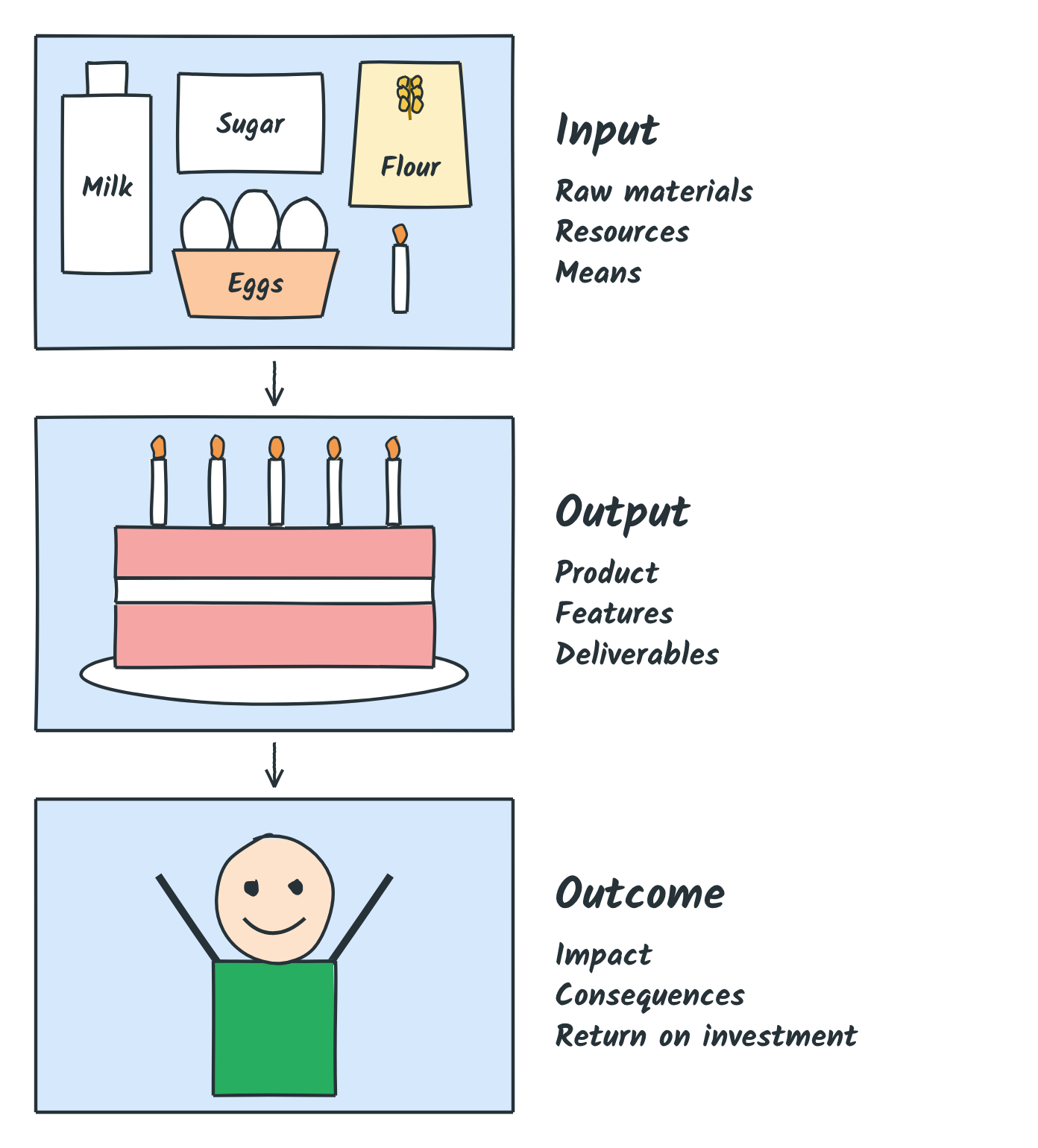
Laura has stood up. Léo holds out the marker; she takes it and draws three boxes and one arrow on the board, writing nothing inside them. “There’s a tool for that: inputs, outputs and outcomes. Inputs are the resources and the activities needed to reach a goal. That could include hours of training, buying new, better-quality sensors, or running user tests.”
She extends the first arrow to the right. “Outputs are the immediate results of those inputs. In this example it could be developing a new version of the headset with improved sensors, or creating a training manual for users. In short, it’s the expected deliverable.”
“Our versions, basically,” Éric says.

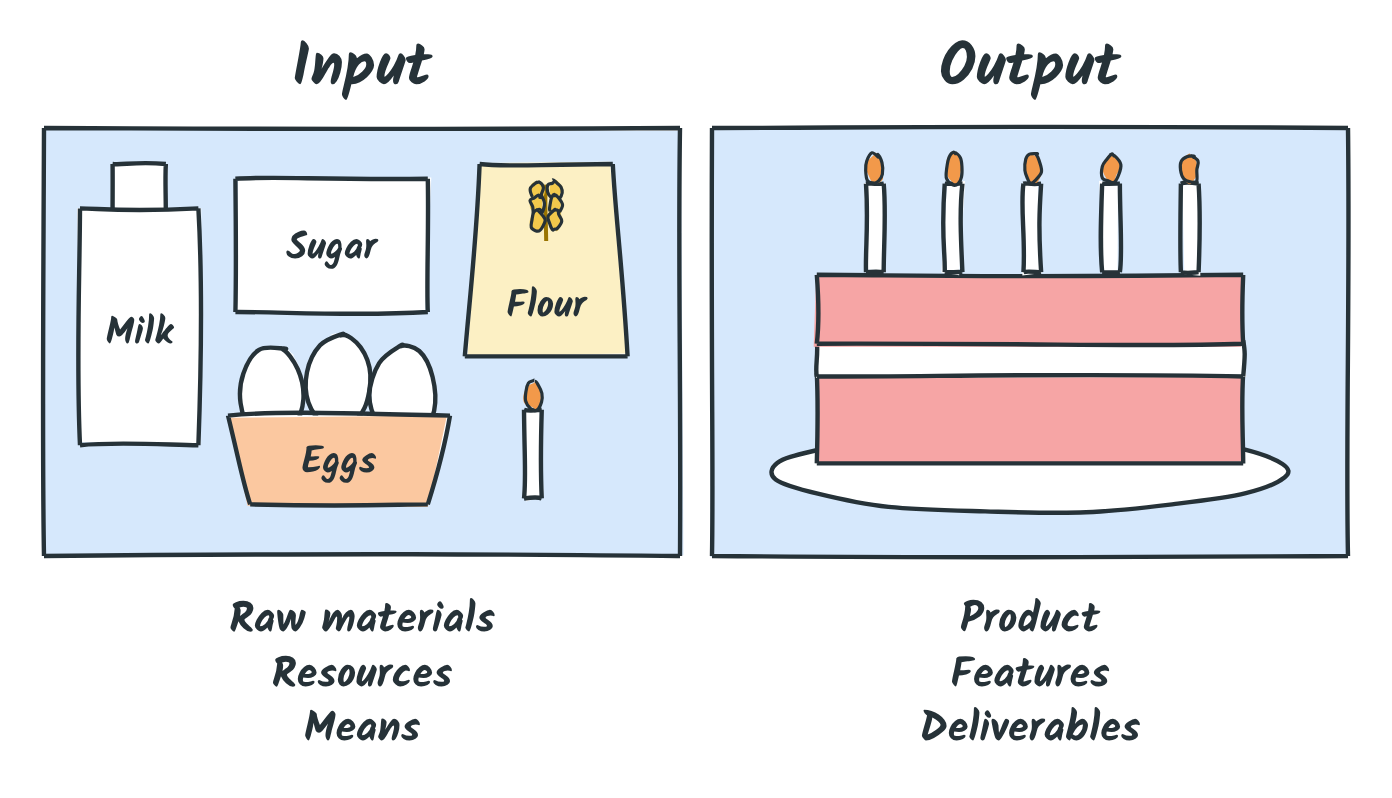
“Take a cake,” Laura says. “The inputs are the ingredients: the flour, the eggs, the sugar. The output is the finished cake, ready to eat. In the same way, the input for getting milk is having a dairy cow.”

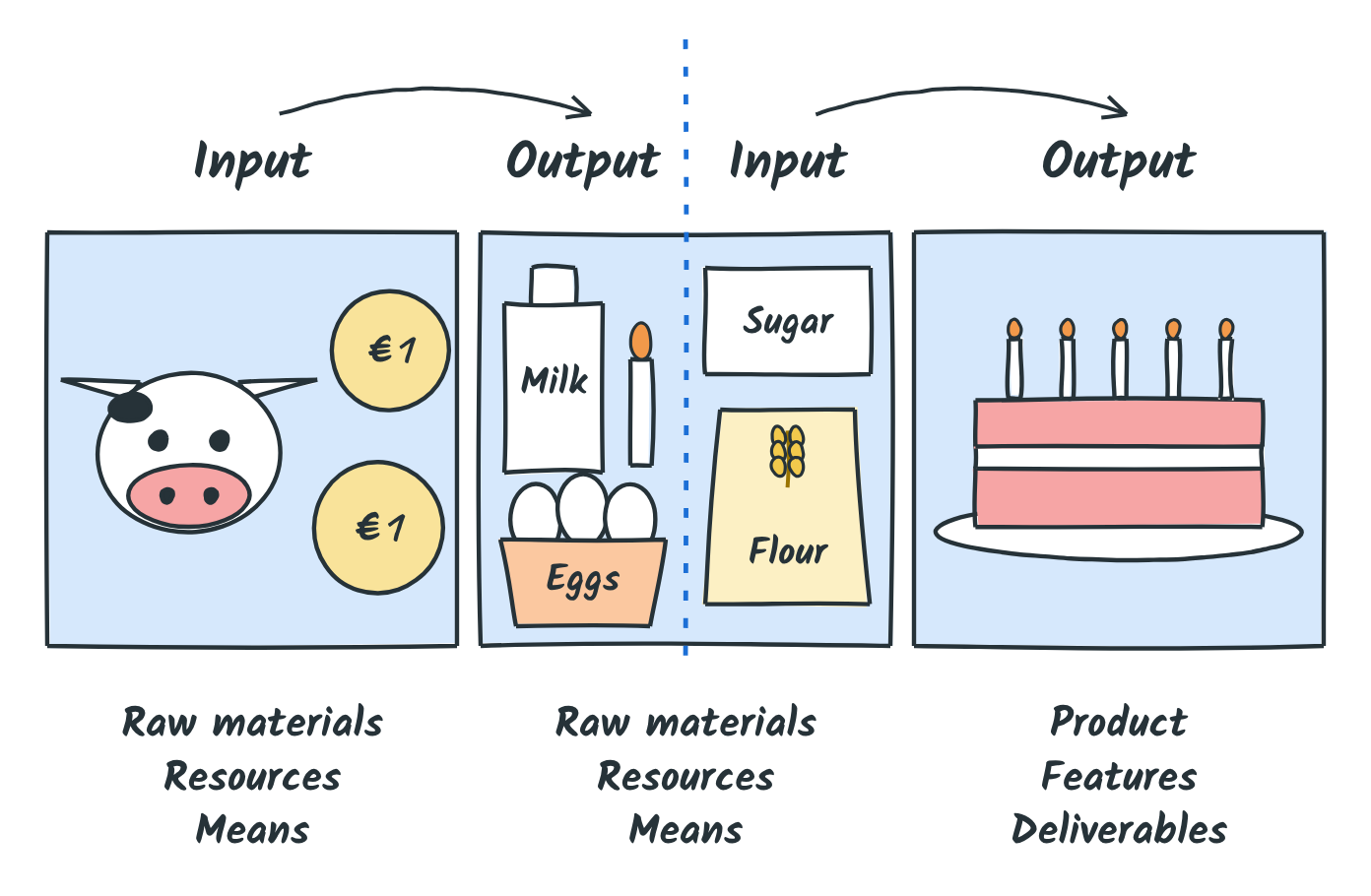
She draws the cake in the second box. The drawing is bad, and nobody tells her so.
“Finally,” she says, drawing the second arrow, “is the cake really what we need? Or is what we’re after a way to celebrate an occasion or to feed our guests? In that case the cake is only a means of reaching that goal. Which brings us to outcomes.”
She taps the marker against the third box, still empty. “Outcomes are the long-term impacts or the real benefits that follow from the outputs. That could be an improvement in customer satisfaction, measured by a rise in satisfaction scores or a drop in product returns. It could also be something closer to actual use, like cutting the time spent on a task. Or, for my cake, it could simply be the guests’ good memories.”

Max claps once, toward Laura.
Marc has set his screwdriver down on the table. “The headset is the output. The patient who finally gets understood, that’s the outcome?”
“More or less,” Max answers. “Laura was already talking about it yesterday. Outcomes are the consequences for the goal we’re trying to reach. People often simplify by saying the outcome is the goal itself, but I find that a little limiting. The goal is the service rendered, while the outcome can take in everything that follows from it, sometimes even indirectly.”
Léo folds his arms and looks at the list of seven doors at the top of the board. “Coming back to where we started: expressing the need in the form of a solution. In reality it’s very close to the output view. When someone states their need as a solution, they’re talking about a tangible result, a deliverable, without necessarily asking themselves about the final goal or the real consequences. In fact, it’s one of the classic confusions in product development: you focus on what gets produced, the output, rather than on what gets achieved, the outcome.”

Éric opens his laptop again and doesn’t type anything. The room smells of marker and cold coffee.
They’ve been dissecting the “white box” for an hour and a half now. Julien closes his notebook. “Coffee break, everyone! Let’s unplug for ten minutes.”
In the kitchen, the tray of shortbread that the head of the startup next door dropped off early in the morning is waiting on the counter.
Cassandre tears off the plastic wrap, and the smell of butter and vanilla spreads through the room. Laura grabs two cookies. Julien fills his mug with coffee, and Marc pours a dash of oat milk into his own. Éric, eyes on his phone, reads out the latest market alert: semiconductors are bouncing back, good news for their sensor supplier.
The high table in the kitchen is too small for eight people. They squeeze in anyway, and Paul leans against the fridge with his mug.
The conversation drifts to the upcoming vacation. Julien is going to rent an old Volkswagen camper van and drive along the Basque coast. Sophie dreams of a week without Wi-Fi at an inn in the Jura mountains, with her son. Cassandre is betting on three days of “workation” in Lisbon, to mix sunshine with scouting out local tech conferences.
“Workation?” Julien asks.
“Working a little on vacation,” Cassandre says. “Or the other way around.”
Between bites, Léo talks about the drought in California and the new refrigerated transport standards it could trigger. Max picks it up at once. “The hotter it gets, the more warehouses are going to suffer. If your future headset can cut the dead time in logistics, rising temperatures are bound to increase the demand for it.”
“Thirty-two degrees, and the ERP cuts out,” Léo murmurs.
Julien glances at the wall clock: ten minutes exactly. He sets down his mug and reopens his notebook to the page where he copied out the seven doors. Five are checked off; context and limitation remain. He taps the table with the flat of his hand, and nobody protests.
“Right, snack time’s over. Shall we dive back in?”