Picture a house in winter. Outside, the wind bites at the windows. Inside, the temperature slowly drops. The thermostat, ever watchful, detects that the room is at 18 °C while the set point is 20 °C. Right away, a command is sent: the heating turns on.
A few minutes later, the heat spreads. But if the system shuts off too late, the room will become stifling; too early, and it will stay freezing.
To avoid these oscillations, engineers designed a subtler mechanism: the PID, for Proportional, Integral, Derivative. This controller does not react blindly. It observes the gap between the set point (what we want to reach) and reality (what we measure), commands an adjusted action, then corrects continuously thanks to permanent feedback. The result: the temperature stays stable, comfort lasts, consumption is kept under control. The system has found its dynamic equilibrium.
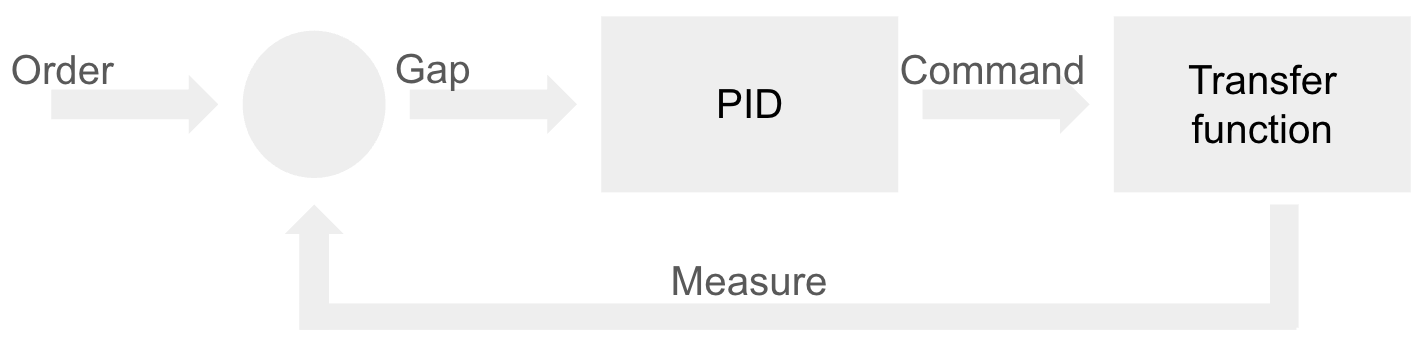

This is exactly what an impact factory does, but at the scale of a human organization. It starts from the same observation: there is always a gap between the current situation and the targeted ambition. Rather than rushing in every direction or following a passing intuition, it sets up its own control loops: observe, measure, adjust, learn. Every action becomes a feedback signal. Every gap, an opportunity to adjust. And, like the thermostat that learns to keep the right temperature, the impact factory learns to hold its course: neither too hot nor too cold, but always moving toward the balance between impact, efficiency and learning.
Human balance
The thermostat makes sure to keep the ideal temperature of 19 °C. It constantly compares the set point with the actual temperature before adjusting the command sent to the heating. But in this house, there are not only walls and pipes: there are people.
In an impact factory, it is not the thermostat that regulates the temperature but the people who adapt their activities. It is the teams who observe, interpret, and constantly adjust the system to maintain the balance between performance, meaning and well-being. They take care to regulate the three imbalances described by Lean Management: Muda, Muri and Mura.
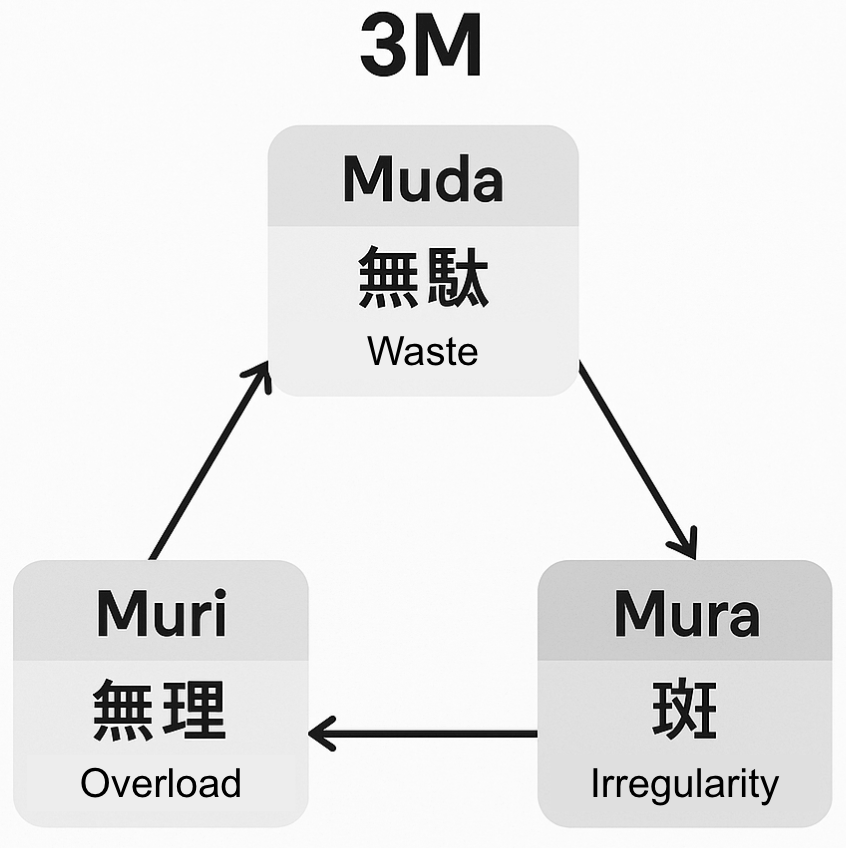

Muda represents the waste of human energy: useless work, meetings without decisions, efforts that serve no one. It is the P of the PID. It embodies collective reactivity: when a team senses that its energy is scattering, it immediately corrects course to focus its efforts on real value.
Muri reflects overload, when people or systems go beyond their limits. It is the radiator pushed too hard, or the team worn out by constant demands. It is the equivalent of the integral control I of the PID, which smooths out these excesses.
It relies on collective memory: retrospectives, feedback, lessons learned from previous sprints. It helps calibrate the workload better and preserve the health of the system, and of those who keep it alive.
At the product level, these are the tools that make it possible to regulate demand in order to focus on the activities that have an impact relative to production capacity.
Finally, Mura refers to irregularity, the variations in pace and intensity that destabilize people as much as processes: activity peaks, shifting priorities, vague expectations. Here it is Derivative (D) control that acts as a form of organizational sensitivity. It makes it possible to anticipate tensions before they erupt, to detect weak signals (fatigue, loss of motivation, misalignment) and to adjust the workflow before the imbalance sets in.
In an impact factory, this human PID is not content with keeping a stable temperature: it seeks a sustainable collective climate, where everyone contributes to the overall balance. The organization thus becomes a living organism, unstable by definition, that never stops seeking its balance in order to best serve its mission over time. It moves forward not by forcing, but by attuning.
Quality is built into the process. This process guarantees both the relevance of the chosen course and the viability of the approach, in the short as well as the long term.
The impact factory brings forth meaningful products (goods or services, and the system around them), recruits and leads committed teams, and puts in place governance suited to its mission. It cultivates continuous self-questioning, learns from its successes as well as its mistakes, and relies on a community that values people, passion and a taste for challenge.
Each factory evolves according to its own maturity, reflecting its history, its choices and the depth of impact it seeks to achieve.