
Cassandre is still holding her folded sheet between her fingers, and she opens her mouth to bring up her question about the interviews again, but Léo, sitting near the door, raises a hand before she can get a word out.
“A little more patience, Cassandre. Let’s first jump fifteen years back, to the moment I start my second company. I’ve just come out of a fiasco: a classified ads platform that went up in smoke for want of real customers. That was my first lesson as an entrepreneur: you can’t build anything without understanding the daily life of the people you claim to serve. That should ring a bell, it’s what you’ve been working on these past few weeks! And yes, you’re not that special!”
Paul laughs first, and Éric, who has been keeping one eye on his commits since the meeting started, pushes the lid of his laptop halfway down.
Léo turns his phone face down on the table and settles back in his chair. “For that second company, I go after a very concrete problem. In the depots, carriers lose hours loading their trucks; the pallets arrive in the wrong order, the delays pile up, the penalties rain down. I learned all that by running interviews and observations in the field. My new company is called InCharge. We promise an algorithm that can work out, in ten seconds, the ideal loading order and the optimal route. I have a working prototype, a few pilot sites, and the naive enthusiasm of a guy who thinks he’s found the magic formula.”
He spreads his hands, palms open, as if he were measuring an aisle between two rows of racks. “I spend my days in warehouses, with the cold coming up off the floor and the beeping of forklifts backing up. I talk to the forklift drivers, the truck drivers, the team leaders. I note their constraints, their worries, their little workarounds. In my head I’m checking every box: expert, actor, user, decision-maker… I think I’m bulletproof.”
He lets a second go by. “Spoiler: the whole thing goes off the rails. At our first customer the numbers are good, but adoption drags. A second site signs, then freezes the project. The months go by, the investors get impatient, and I keep turning my notes over and over.”
Marc stops twirling his screwdriver and leans forward. “A circuit board that passes every test, and nobody plugs it in?”
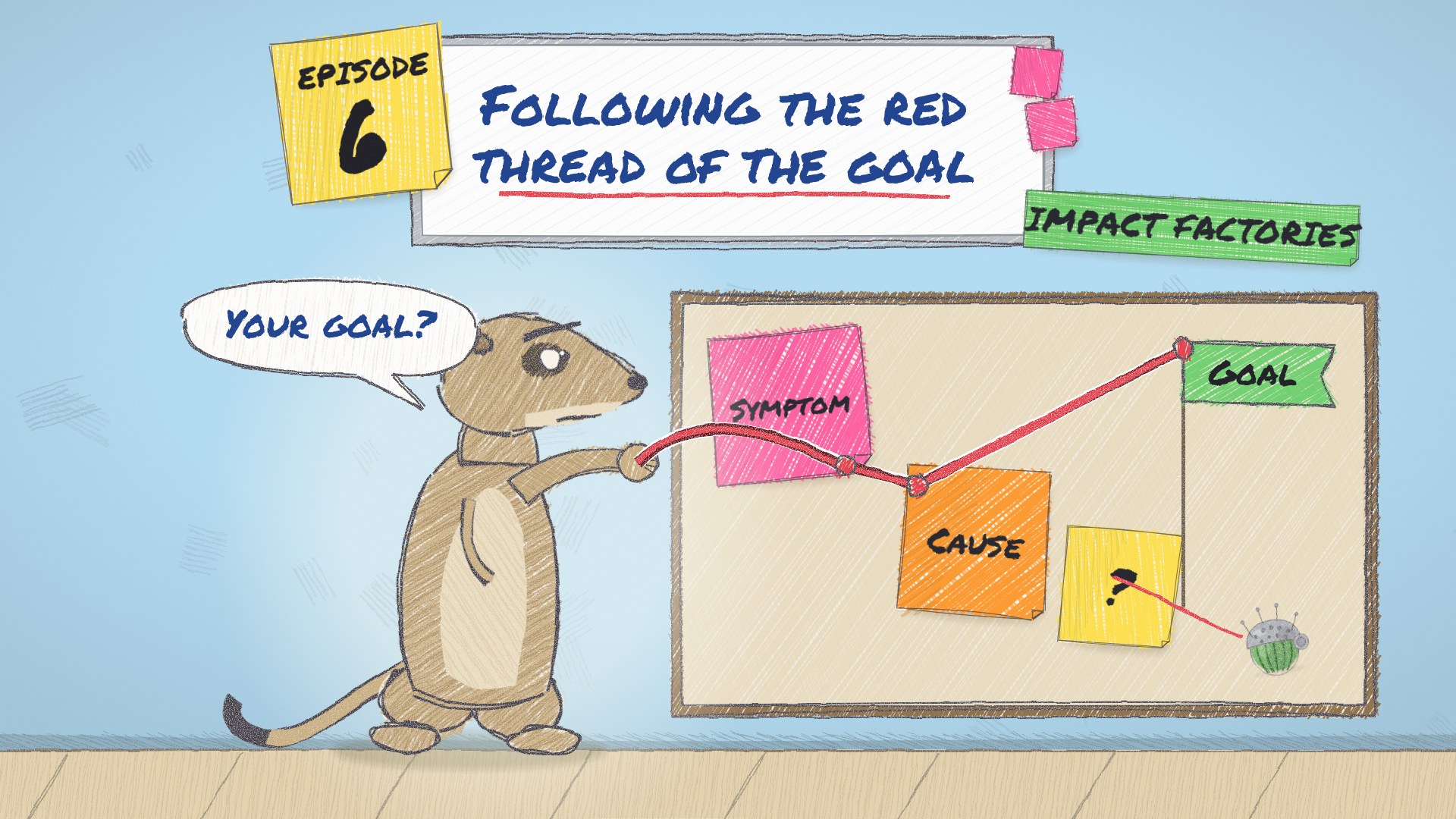
“Nobody.” Léo laces his fingers together. “Until then I had been piling up observations: the lines at the dock, the badly ordered pallets, the lost hours. I thought that describing those situations faithfully, almost clinically, would be enough to convince people. But nothing moved. The pain was there, visible, documented, and yet adoption of my solution stayed at a standstill. So I try something else. I stop talking in terms of problems. With every person I meet, I ask a single question: ‘What’s your goal today?’”
He recites the answers from memory. “The forklift driver tells me: clear the dock before six. The team leader: cut the late penalties. The supply chain director: claw back two points of margin this quarter. I’d been talking about algorithms and about symptoms everyone could see; they were talking about deadlines, bonuses, KPIs.”
Julien wrinkles his nose over his notebook. “Supply chain, KPIs… You sound like an investor deck, Léo. Translate.”
“The director in charge of the whole logistics chain, from the warehouse to the customer. And KPIs are his key performance indicators: the numbers they post on the warehouse wall.”
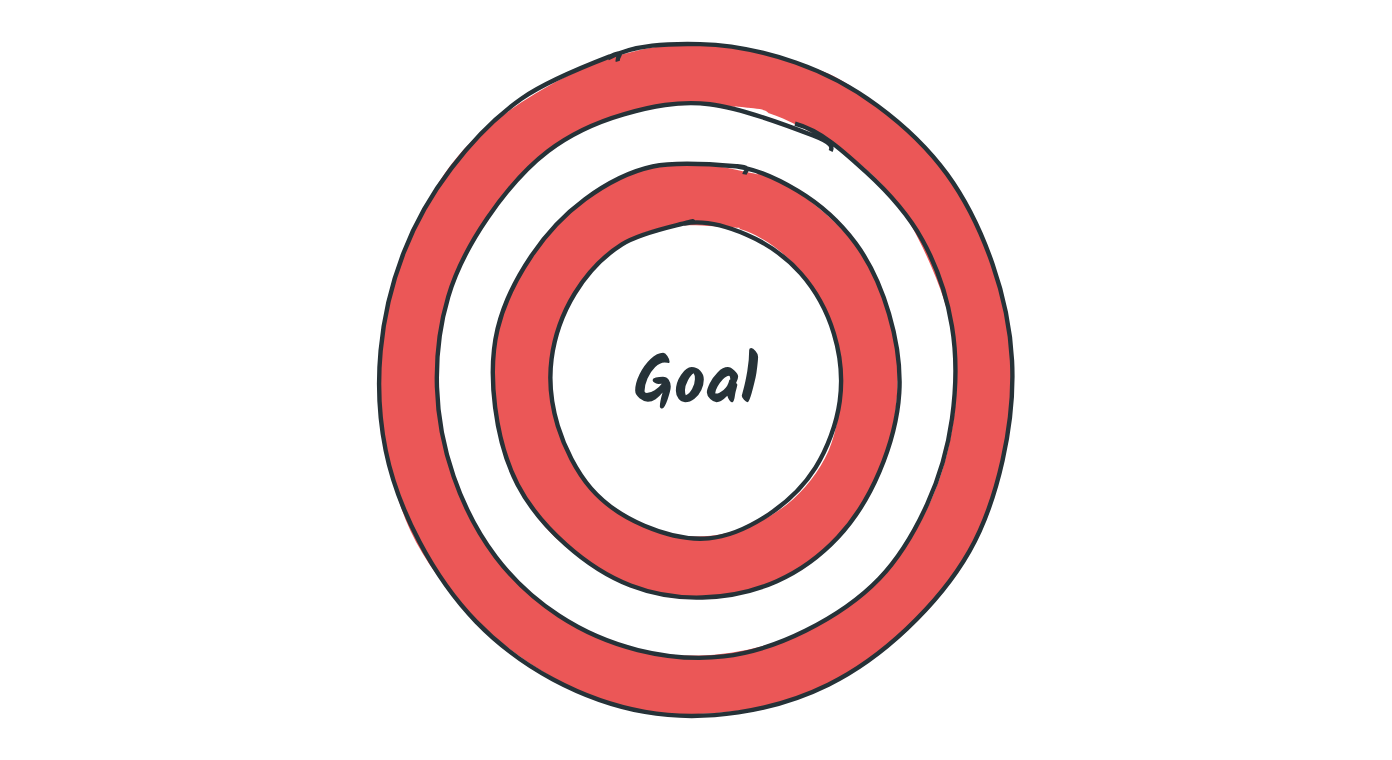
Léo picks up his phone and puts it back down without looking at it. “I had missed a fundamental step. Because pointing out what you see in the field is useful… but what creates a real tension, what makes a pressing need appear, is when an obstacle gets in the way of reaching a clear goal. That’s when the pain becomes actionable. All that time I had been reading my observations through a set of priorities that were mine, instead of taking an interest in the priorities of the people I was talking to. I’d stayed locked inside my own world while thinking I’d opened up to the field!”
He looks around the table. “By asking the same question over and over, I realize that each person describes the goal according to their place in a chain of activities; and that chain has an overall goal of its own, one that connects everyone.”
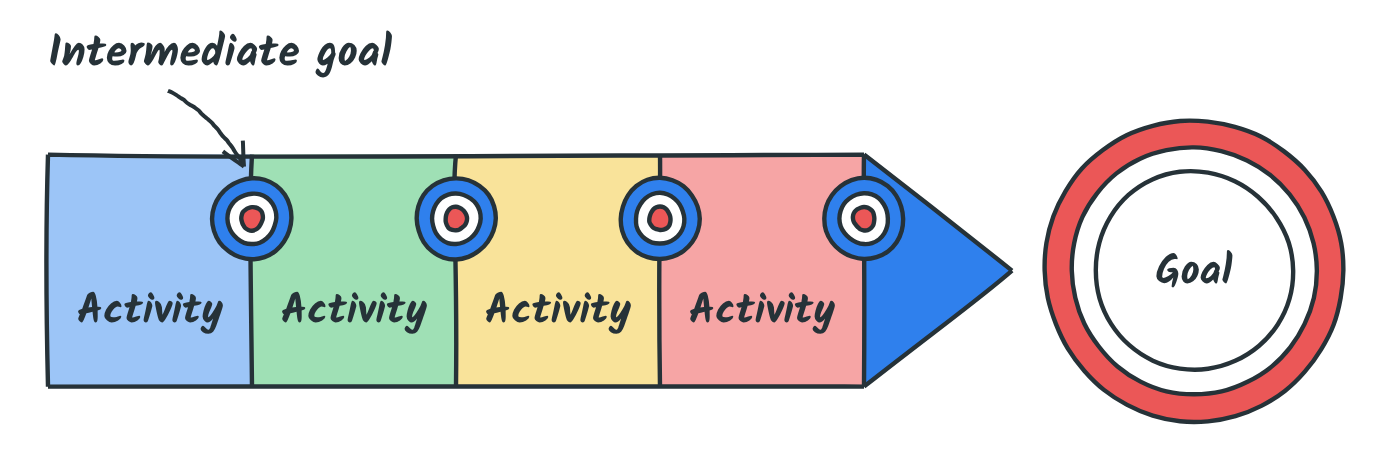
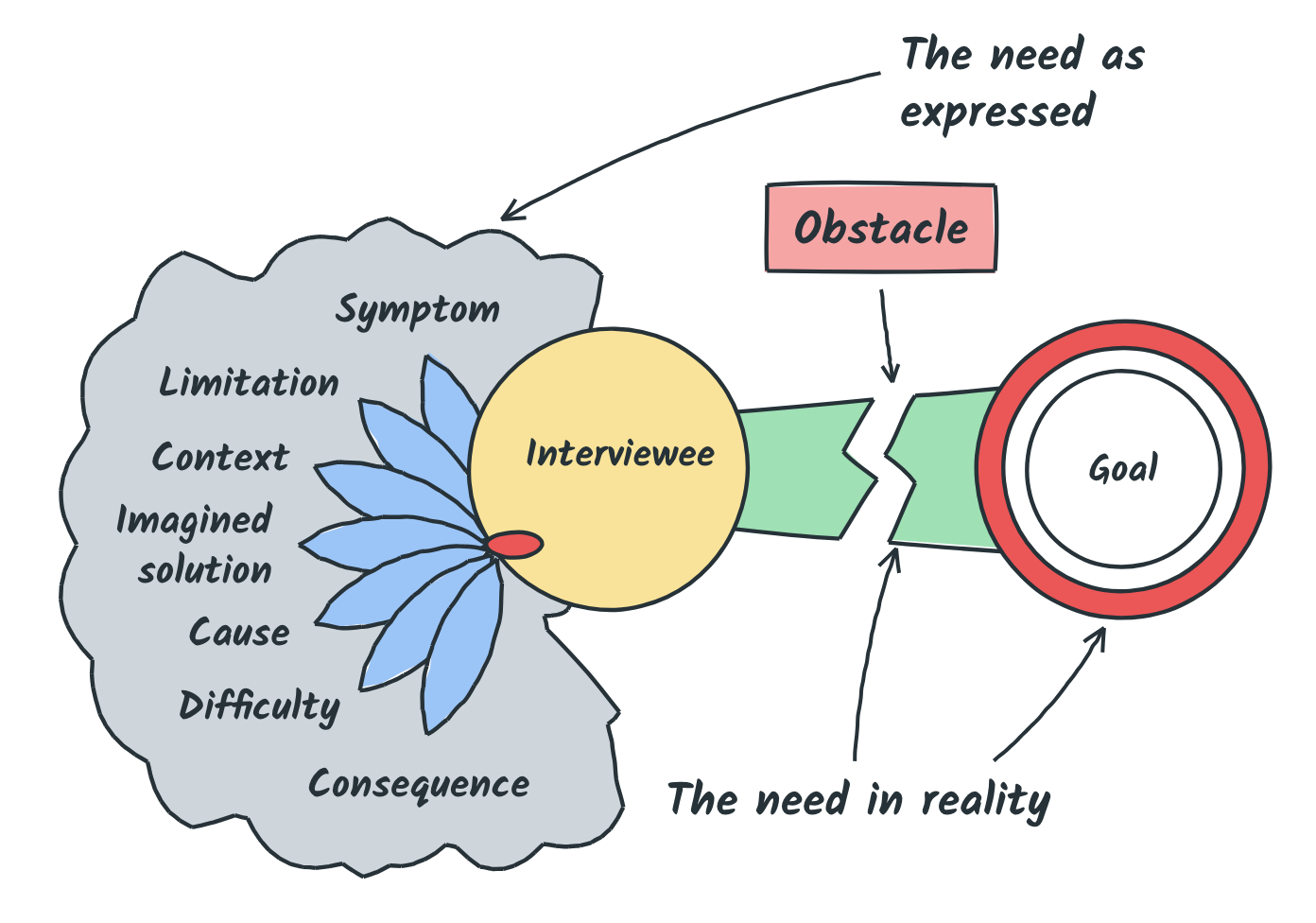
He rubs his forehead with the flat of his hand. “So I ask myself: how could I have missed this? The answer comes down to one simple observation: it’s extremely rare for someone to start by stating a need in terms of the ultimate goal to reach. They talk first about what’s stopping them from reaching their own goal. Some bring up numbers, others the exhaustion of their teams, the clogged flows, the stress, or the end customer who’s waiting. From there, I map out the ways a need shows itself, so I can trace it back to the major goal it threatens. I identify seven of them, seven doors you have to learn to recognize.”
Cassandre turns a page of her notebook while Laura, without waiting to be asked, gets up, takes a marker from the ledge and plants herself in front of the whiteboard.
Léo runs through them. “You can knock on the symptom door: ‘We’re missing the loading window for the goods.’” Laura writes the word as he moves on to the next one. “Or push the consequence door: ‘The penalties are exploding.’ Sometimes it’s the difficulty that comes first: ‘There’s no way to find the pallets in the right order.’ Other times you start with the cause: ‘The picking slips arrive all jumbled.’”
Laura’s marker squeaks on every line. Léo waits until she has finished the fourth.
“It also happens that people show up with the solution they’ve imagined: ‘What we need is an autonomous pallet truck.’ The setting itself can serve as a doorway: the context, ‘On Fridays the work overflows, and the wave of layoffs has thrown the team off balance.’ Finally, some conversations open on the limitation: ‘We don’t have the budget for a full software package.’”
| Way of expressing it | Example from the logistics depot | What it implicitly reveals |
|---|---|---|
| Symptom | “We’re missing the loading window.” | A malfunction that is immediately visible |
| Consequence | “The penalties are exploding.” | The financial or operational impact being suffered |
| Difficulty | “There’s no way to find the pallets in order.” | The concrete obstacle met day to day |
| Cause | “The picking slips arrive all jumbled.” | The supposed origin of the problem |
| Imagined solution | “What we need is an autonomous pallet truck.” | The remedy the person already has in mind |
| Context | “A peak of activity every Friday.” | The specific conditions that contribute to or worsen the trouble |
| Limitation | “No budget for a full software package.” | The constraint that holds back any improvement |
Seven lines cover the board, one under the other, in Laura’s slanted handwriting, and Léo runs his eyes over them in silence, from the symptom down to the limitation, before he continues. “Whichever door you come in through, they all lead into the same corridor: a goal we have to uncover. Every way of expressing a need says the same thing: a goal is being disturbed. But they say it in different words. If you can’t decode those seven languages, you stay stuck on the surface of the problem and you miss the heart of the need.”
Max has kept his arms folded through the whole list; he reads the seven lines on the board again before answering Léo. “Honestly, I would have cut it down to five. I always prefer to simplify when I can. What matters isn’t having a perfect set of categories, it’s knowing how to decode what we’re being told, understanding the intention behind the way the need is expressed.” He unfolds his arms. “But I see where you’re going with the seven. Keep going with your story, I want to hear the rest!”
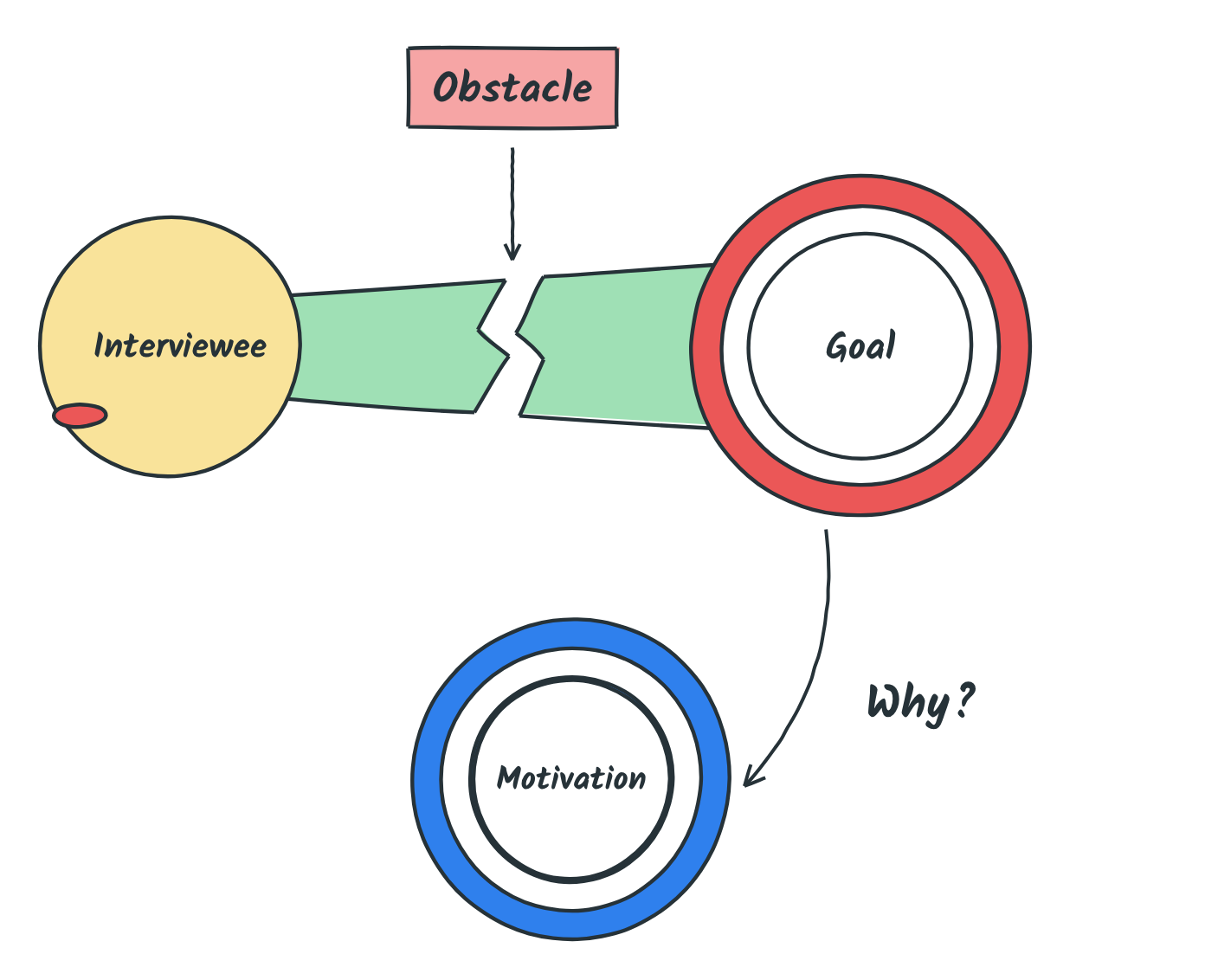
“Then you’re in luck.” Léo tips his chin toward the board. “In that second venture I ran into all seven ways of expressing a need. So every time, I made myself question the motivation hidden behind the way the need was expressed, alongside the search for the disturbed goal. Why is this person telling me about this particular point, at this particular moment?”
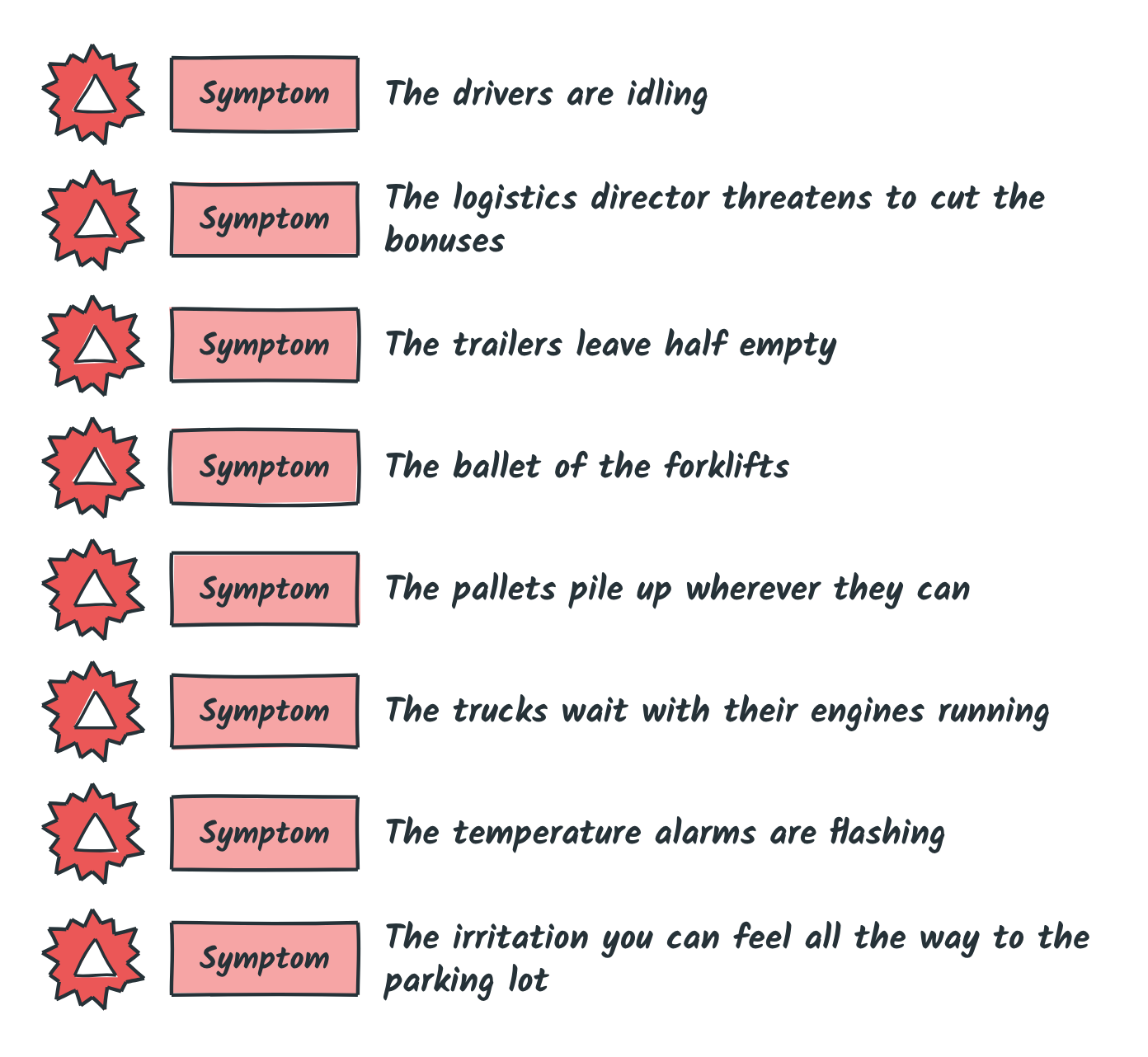
He leans his elbows on the table and lowers his voice. “We’re at FrigoFroid, a cold storage warehouse on the outskirts of Lille: 12,000 square meters, five docks for chilled goods, two more for frozen. It’s eight degrees Celsius in the receiving aisle, the fluorescent lights hum, your breath comes out in little clouds with every word. The dock manager grabs me by the sleeve. He rattles it off in one breath: ‘The drivers are sitting there idling, the trailers leave half empty, the pallets pile up wherever they can, the temperature alarms are flashing, and the logistics director is threatening to cut our bonuses!’ As far as he’s concerned, he’s named the problem: the sentence speaks for itself.”
Léo mimes the grabbing hand, two fingers clamped on his own sleeve. “Me, I’m watching the ballet of the forklifts, the giant timer above the door, the trucks waiting with their engines running, the irritation you can feel all the way out to the parking lot.”
Sophie pushes her pen aside. “And right there, on the dock, what do you say to him?”
“Those symptoms are clear, but I want to know what really matters to him. I start with the obvious: ‘What’s the consequence of this situation?’ He reels it off without thinking: ‘The drivers leave late, the penalties hit, the next route goes off track.’ I’ve got the consequence and the difficulty, but not yet the target all this chaos is putting at risk. I dig deeper: ‘Deep down, what result do you absolutely have to guarantee every day?’ He thinks for a moment before it comes out: ‘A dock that flows, every truck out in its time slot.’”
Léo raises his index finger. “The goal takes shape: keeping the dock flowing. One last question: ‘And for you, personally, what do these delays mean?’ The answer shoots right back: ‘My performance bonus goes out the window.’”
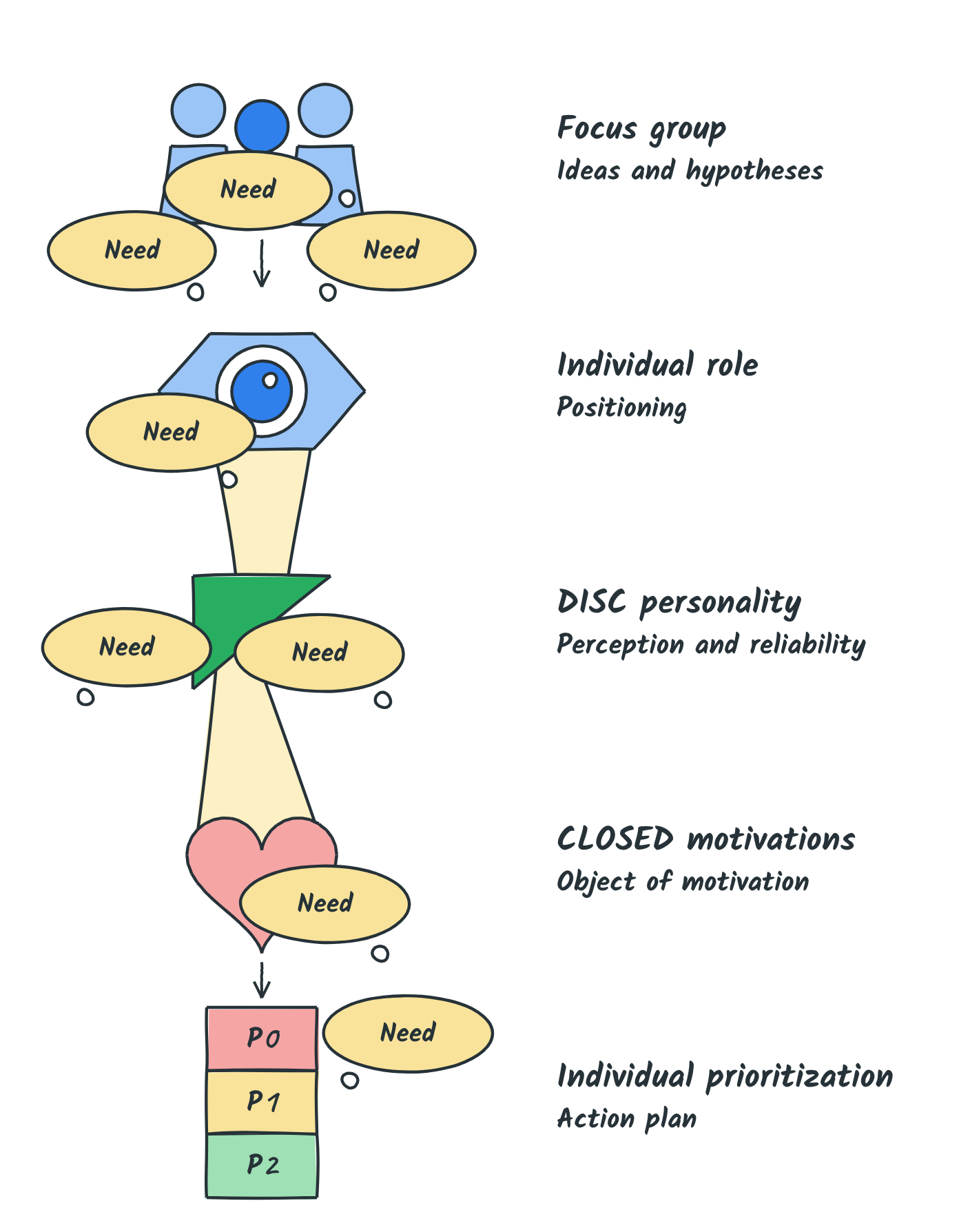
Laura, still by the board, nods at the word. Léo gestures toward her. “Run it through your model, Laura. His need isn’t limited to speeding up the loading. He wants to protect three levers of CLOSED: E for Economy: the lost bonus threatens his income. O for Own image: a punctual dock feeds his professional pride. L for Link: his director’s esteem depends on those trucks leaving on time. What he’s really after is keeping the dock flowing so he can secure money, recognition and his relationship with his boss. If I’d stopped at the simple symptom of the missed slots, I would have missed the target: a financial and symbolic balance he refuses to let slip.”
Éric, whose pen hadn’t left the table since the start of the morning, writes three tight lines.
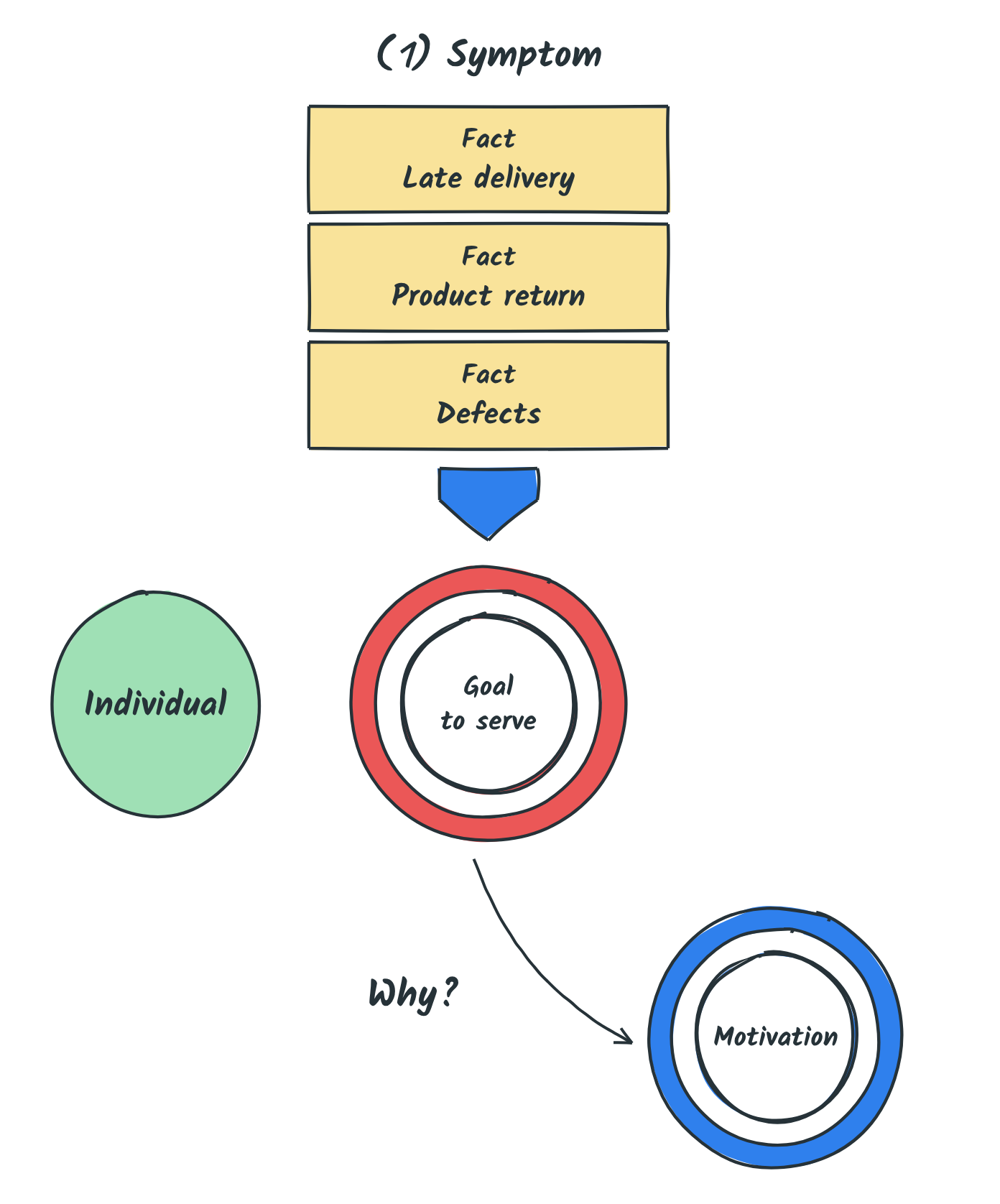
When Éric’s pen stops, Léo takes up the thread. “You see, symptoms are all the defects you can observe measured against the goal to be reached. For example, late deliveries, product returns, observed defects that don’t let you conclude the goal has been achieved.”
“And beyond a warehouse?” Sophie asks.
“This approach through symptoms can apply just as well at the small scale of one person as at the scale of a whole country. There, all the complaints filed by NGOs, the unemployment figures, the public health statistics, the spending flows for social benefits or for help starting a business, and so on, can be used. It’s an observation of a situation from the point of view of the goal that’s been set.”
Max gets up and goes to stand next to the board, without writing on it. “Describing a need through its symptoms is often the most direct route, as long as you keep in mind the goal those symptoms are disturbing. Without a clear heading, the list of warning signs gets longer and nothing moves forward. Sometimes, though, I take on a problem without knowing the goal.”
Marc points his screwdriver at the board. “And then what do you do?”
Max puts a finger on the first line on the board. “Then I pile up a dozen symptoms, the way you’d lay down a trail of white pebbles. Very quickly those clues start to sketch out a direction: the goal shows itself, almost on its own.”
Max turns to face the room. “In most of my projects, it’s that trial-and-error path that took me from the pain people feel to the goal to be reached, then to the need to answer, and later on to the solution.”
“Hang on, Max, I’m not done.” Léo sits up in his chair. “During my investigation at FrigoFroid, I got to talk to other people there, including the financial controller. He doesn’t talk about pallets or timers; he puts an Excel sheet on the table and announces: ‘Our late penalties jumped 27 percent this quarter. At this rate, we’ll lose two points of margin by the end of the year. That could mean layoffs!’”
Léo taps the table where the sheet would have been. “Here, the need is expressed through the consequence. We’re no longer describing the chaos on the dock, we’re putting a number on the impact: money evaporating, margin shrinking, a career on the line. It’s another door, and behind it, the same corridor: the search for a threatened goal, protecting profitability.”
“Hold on, Léo.” Laura has taken a step toward him, the marker still in her hand. “I’d like to share my definition of consequences.”
Sophie looks up from her sheet at Julien, who returns her look.
Léo stops short and holds out an open hand toward Laura. “Go ahead, please.”
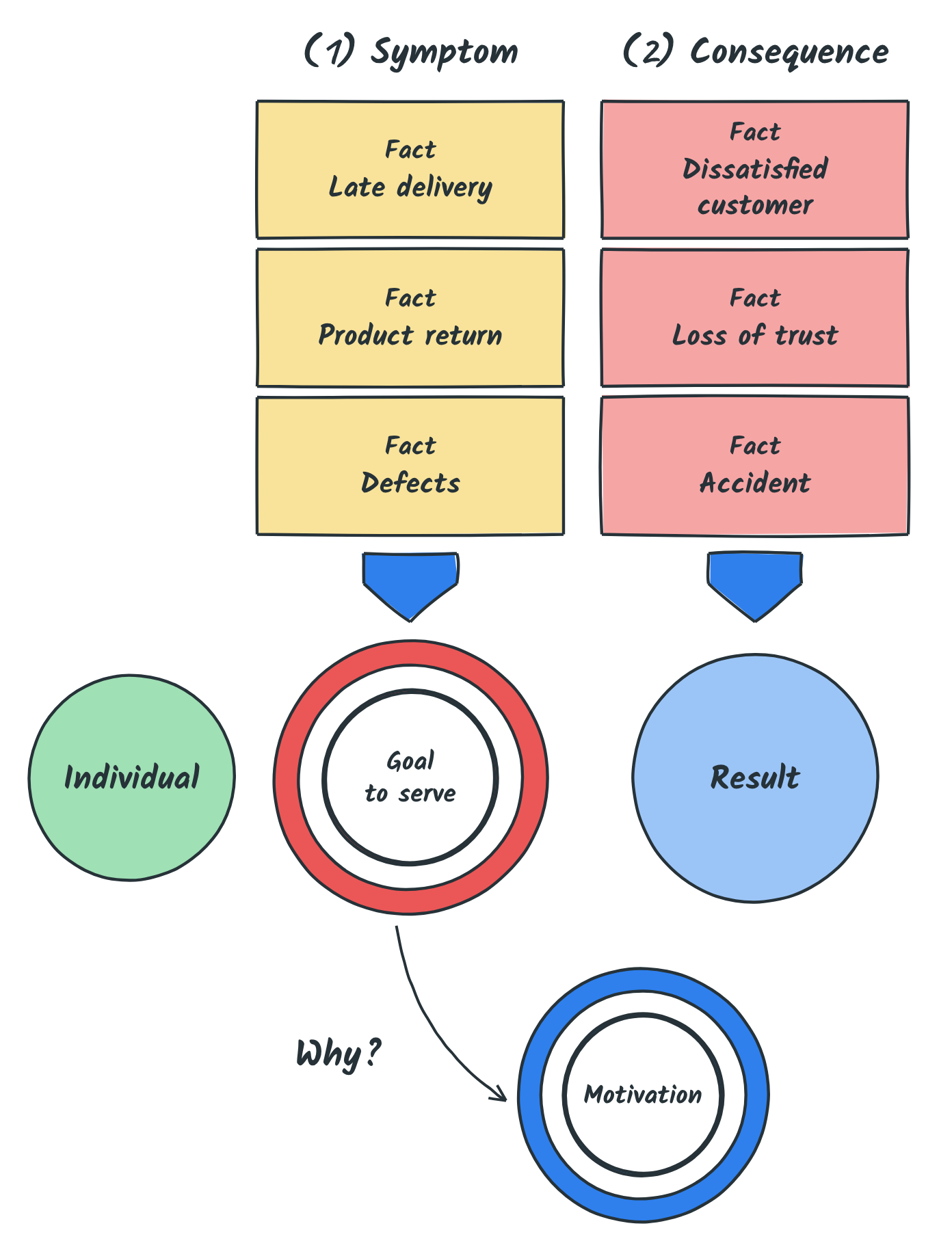
“Consequences are what give symptoms their weight. A symptom on its own is friction, discomfort. But it’s the consequence that gives it all its importance. Stating a need in the form of consequences focuses on what failing to reach the goal has caused down the line. For example, customers losing trust in the company, growing customer dissatisfaction, or accidents while using the product. That way of putting it often stirs up emotion, and marketing uses it a lot.”
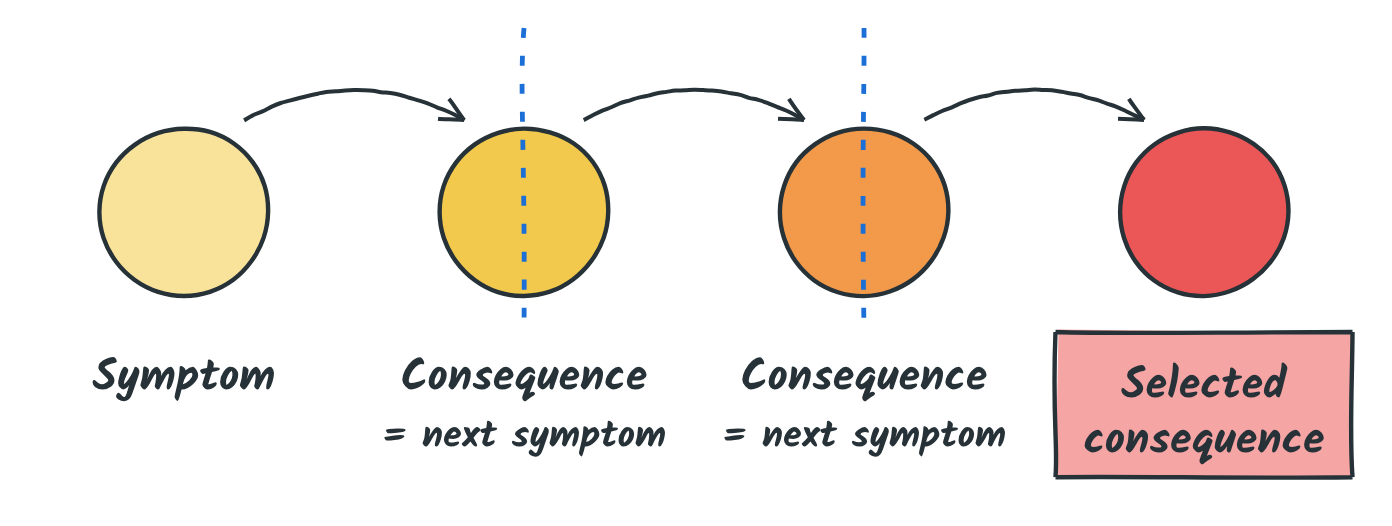
She draws a chain on the board, just below the seven lines, four boxes linked by arrows, and crosses out the last two with a heavy stroke. “And consequences can follow one another; it’s up to us to pick the most relevant one. In another setting, for developers, if a bug slows down a task, it isn’t just annoying: it can hold up a whole production run, generate extra costs, or even lose a contract.”
Marc winces, his screwdriver pointed at Éric, who shrugs and keeps his hand flat on the half-closed lid of his laptop.
“Without a clear consequence,” Laura goes on, “a symptom is only a complaint, something subjective. But once you know what it affects, you can decide whether it deserves to be dealt with first.”
She leaves the marker on the ledge. Léo gets up from his chair, picks it up and pops off the cap. “Thanks, Laura. Let me add a common trap for people who focus only on consequences. Yes, showing the impact grabs attention; it creates urgency. But if you collect numbers without tying them to a specific goal, you go around in circles. Take an overloaded customer service team: people cite the 15 percent rise in complaints, the Trustpilot rating going down, the churn going up.”
Cassandre keeps her voice low. “Churn is customers canceling, right?”
“The ones who leave, yes.” Léo writes “4.5/5” in the corner of the board and circles it. “It’s telling, but as long as you don’t know the goal (for example, keeping the customer satisfaction score above 4.5/5), you don’t know where to strike. Same drift as with symptoms: without a clear cause or a visible aim, you stay on the surface.”
Julien has closed his notebook over his pen, a finger slipped between the pages where he copied down the seven doors, and he taps the cover with it. “So, we hold our course on the disturbed goal. Otherwise we pile up worst-case scenarios, we speculate, we get lost. It’s a GPS that reads you every traffic jam for miles around without knowing where you’re headed.”
Sophie stares at the circled number. “For us, when two prospects ask for different things, how do we choose?”
“That’s the whole question,” Max answers. “Without the goal, there’s no way to judge whether a consequence is strategic or just a nuisance. And above all, no way to prioritize. Say we put a chatbot in place: if our aim is to raise customer satisfaction, the gauge to watch will be the post-interaction rating, not the cut in waiting minutes. That’s where we talk about an outcome: the concrete measure proving that the solution really does bring the goal closer.”
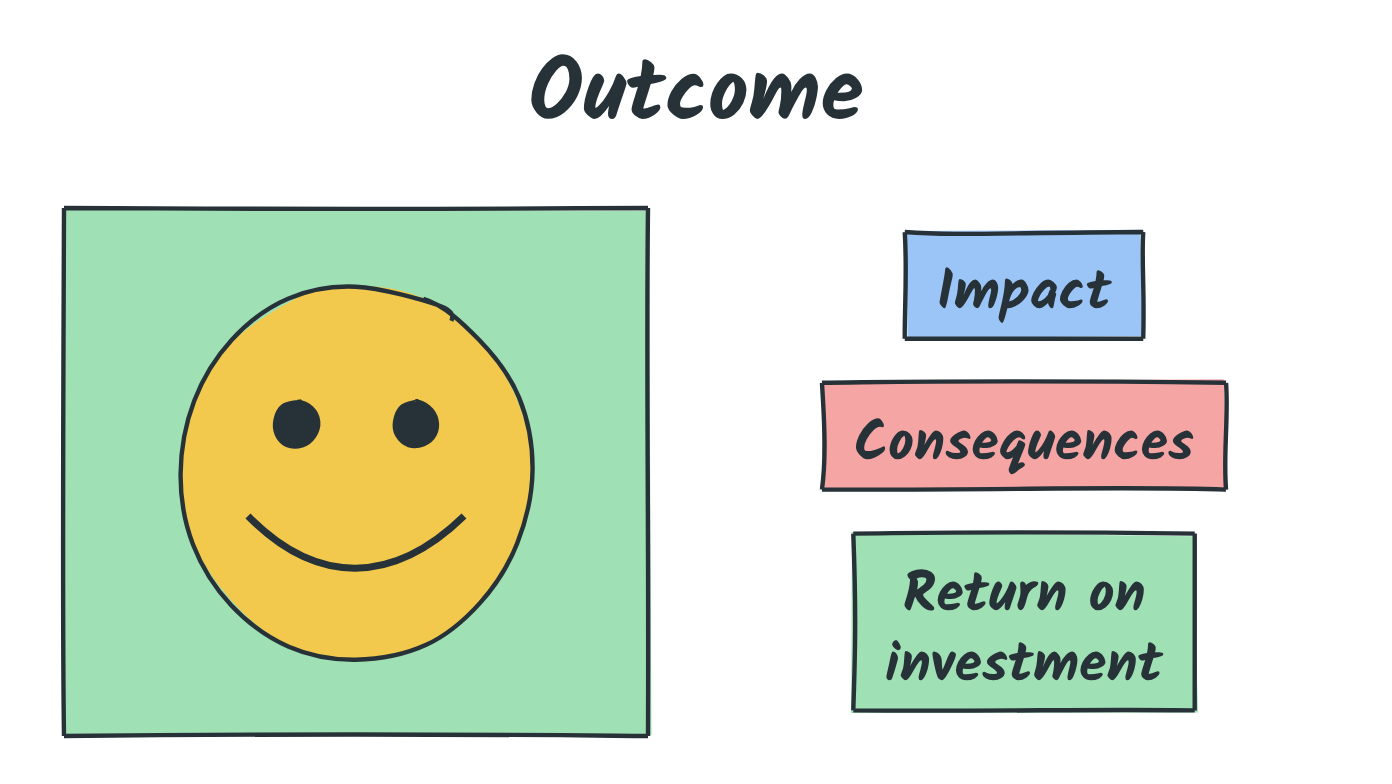
Laura takes the marker out of Léo’s hand. “The outcome, yes.” She writes the word on the board in capitals, next to the 4.5 Léo circled, and underlines both with a single stroke. “They drilled that word into us in business school. When you’re aiming at an outcome, every effort (whether it’s prototyping a headset, rethinking a logistics process or writing a simple procedure) connects directly to the customer benefit. Satisfaction goes up, and the value of our work becomes tangible.”
She touches the number with the tip of the marker. “In practice, a clear indicator plays the role of a compass: the hypotheses we need to test become milestones. A new idea comes in? We judge it by its expected impact on the outcome. A list of features, options or projects to rank? We decide by the same yardstick. As soon as the impact you’re after is explicit, decisions stop being vague bets; they line up naturally with what really matters.”
Two phones buzz on the table, Max’s and the one Léo had turned face down earlier, and the two men look at them at the same time. “Sorry,” Max says, “we have a meeting with one of our biggest partners.” Léo confirms with a quick sign, slips his phone into his pocket, and they gather up their folders.
Laura has already picked up her notebook to walk them out to the hallway when Julien holds her back with a gesture, and it’s Sophie who closes the door behind Max and Léo. Paul keeps his eyes on his screen; Éric opens his laptop again without typing anything.
Six people are left around the table, the four developers on one side, Julien and Sophie on the other. Laura stands by the board, her notebook against her chest.
Sophie looks for Julien’s eyes; he keeps his on his closed notebook. “Laura,” Sophie says, her voice tight, “you’ve been here almost four months, and your work is very valuable. But we’re realizing that you’ve mastered every concept Max and Léo have been explaining to us for three meetings now. How could we have missed that, when the skills were already on the team?”
Laura’s shoulders tighten. She comes back to the table, leaves her notebook there, and her fingers grip the edge of the table while her voice shakes on the first few words, then steadies. “I’ve been uncomfortable from the start. You’d go off to ‘prospect,’ to ‘negotiate deals,’ while I stayed behind turning your vision into tasks for the devs, in the backlog. I tried to talk about user research, interviews, metrics… You were sure of your direction, and I wasn’t going to contradict ‘the visionaries.’ Product owner or not, without direct access to the people we’re building for, I’m just an order-taker.”
Julien opens his mouth. Laura keeps going. “And let’s be honest, you were on the road a lot; we didn’t get many windows to talk strategy. The few times I brought it up, you brushed it off as theory.”
She lifts her chin and looks Sophie in the eye. “The difference today? Max and Léo show up with the same ideas, stamped ‘senior mentoring,’ and all of a sudden they’re worth hearing. I wish I’d been allowed to open that door sooner.”
Between the two of them, the table is covered with the empty cups from this morning’s coffee.
Sophie stiffens. “Laura, if it was that bad, you could have told us on the phone!”
Laura lets out a laugh with no joy in it. “I did tell you. Three times. Remember: the 10 p.m. call when you were on your way back from Zurich, the one in the taxi after the Amsterdam conference, and the one where the line kept dropping every two minutes from Boston airport. Every time, the same routine: ‘Yes, you’re right, we’ll do customer interviews… but right now we’ve got to close.’ Then nothing.”
Julien stares at the seven lines on the board rather than at either of the two women, and rubs the back of his neck. “We weren’t deaf, Laura. We were walking on eggshells. We were negotiating sensitive POCs: trial runs at the customer’s site, where the slightest doubt could kill the whole thing. If we’d brought you into discovery and you’d asked questions that were too open-ended, we’d have risked showing that we didn’t have a handle on our own product.”
“Exactly my point,” Laura answers. “You didn’t have a handle on it. That’s why those questions needed asking.” She leans over the cups. “A customer reads doubt, yes. But they also read blindness. When you claim the latency is ‘clinically negligible’ and we’ve never looked into what’s acceptable to the prospects, that’s risky.”
Sophie shakes her head and searches for words. “We couldn’t have more voices in the room. Every person you add complicates the negotiation, raises the odds of going off topic. Some prospects were already skittish.”
Laura softens her tone. “I understand the fear of muddying the message. But let’s look at the facts: we protected the story… and we haven’t signed a single contract. Not one. For months, I fed the backlog from your meeting reports, not from how people actually use things. The result: we built showcase features, not field evidence.”
Julien takes his eyes off the board. “So are we supposed to conclude we should have taken you everywhere?”
“Not everywhere,” Laura says. “But for a targeted set of exploratory interviews, yes. Even remotely, over video. The point wasn’t to negotiate: it was to understand. You wanted to protect commercial trust; you sacrificed product learning.”
Sophie picks up a pen again and holds it over her sheet, the tip a finger’s width from the paper, not writing, biting her lip. “If we’d kept the channels separate… listening cycles up front, negotiation cycles after…”
“Exactly,” Laura cuts in. “Two separate tracks. Discovery, then sales. As it was, everything was tangled together, and the smallest question turned into an admission of weakness.”
Ever since the door closed, Marc has held his screwdriver still, Cassandre has stopped turning the pages of her notebook, and neither Paul nor Éric has touched a keyboard.
Julien speaks quietly. “All right. The past is behind us. Tell us what you need to get back on the right track.”
Laura takes a long breath. “We’re already doing what we should have done… just several years late.”
Someone shifts a chair. Julien looks down at his shoes for a moment. “The skill has been sleeping here since your first day,” he says. “We smothered it in our headlong rush.”
Sophie opens her mouth, closes it, then says, “We’ll make it right, Laura.”
Laura doesn’t answer. Cassandre unfolds her sheet, the word economy still circled on it, and slides it over to her. Laura’s eyes stay on the board, where five of the seven doors have yet to be opened.








 CC BY-SA 4.0