
Laura takes a step toward the whiteboard to pick up where she left off, and Max speaks first. She steps back and leaves him the board, but she keeps her marker, cap off.
Julien leafs through his notebook, where the use-case ideas they gathered at the hospital are lined up. “We’ve got ideas filling the notebook, and no scale to weigh them on.”
Max doesn’t go to the board. He stays where he is, at the edge of the table, forearms on the tabletop. “A need can take two forms: the absence of something, or the presence of an obstacle that keeps you from reaching a specific goal. When you buy a product, what you’re really looking for is help getting past that obstacle and reaching that goal. Put another way, to measure the value of a product you only have to ask one question: what goal does it allow you to reach?”
He turns to Sophie for his example; she was at the hospital with him. “Take our last session at the hospital. Remember the caregiver who told us about his paralyzed patient, the one who had so much trouble communicating with his family?” Sophie nods, and so does Julien. “In that case the patient’s goal is clear: to keep a social connection, and to be able to alert the caregivers when something goes wrong.”
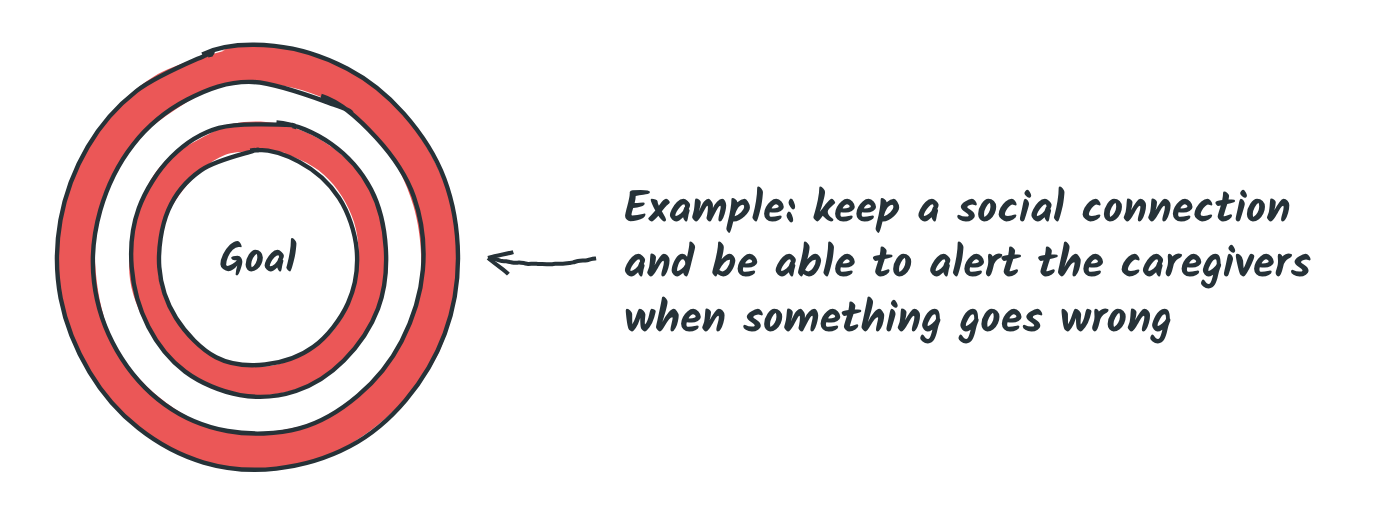
Max lets two seconds go by and scans the faces, one after another. “Once you bring a need back to its fundamental goal, everything becomes clear. You stop getting lost in the details and you see that the real value sits right here: letting the patient communicate at the decisive moment. The problem looks like a maze at first, but as soon as the key goal appears, the way through becomes obvious.”
Laura hasn’t let go of her marker. “Hold on, Max. You’re cutting it short. Too short. A need isn’t always a wall in front of a goal; sometimes it’s a raw pulse, with no intention behind it. A baby crying isn’t aiming at a goal; it’s expressing a vital necessity.”
She walks up to the board and writes, large enough to be read from the back of the room:
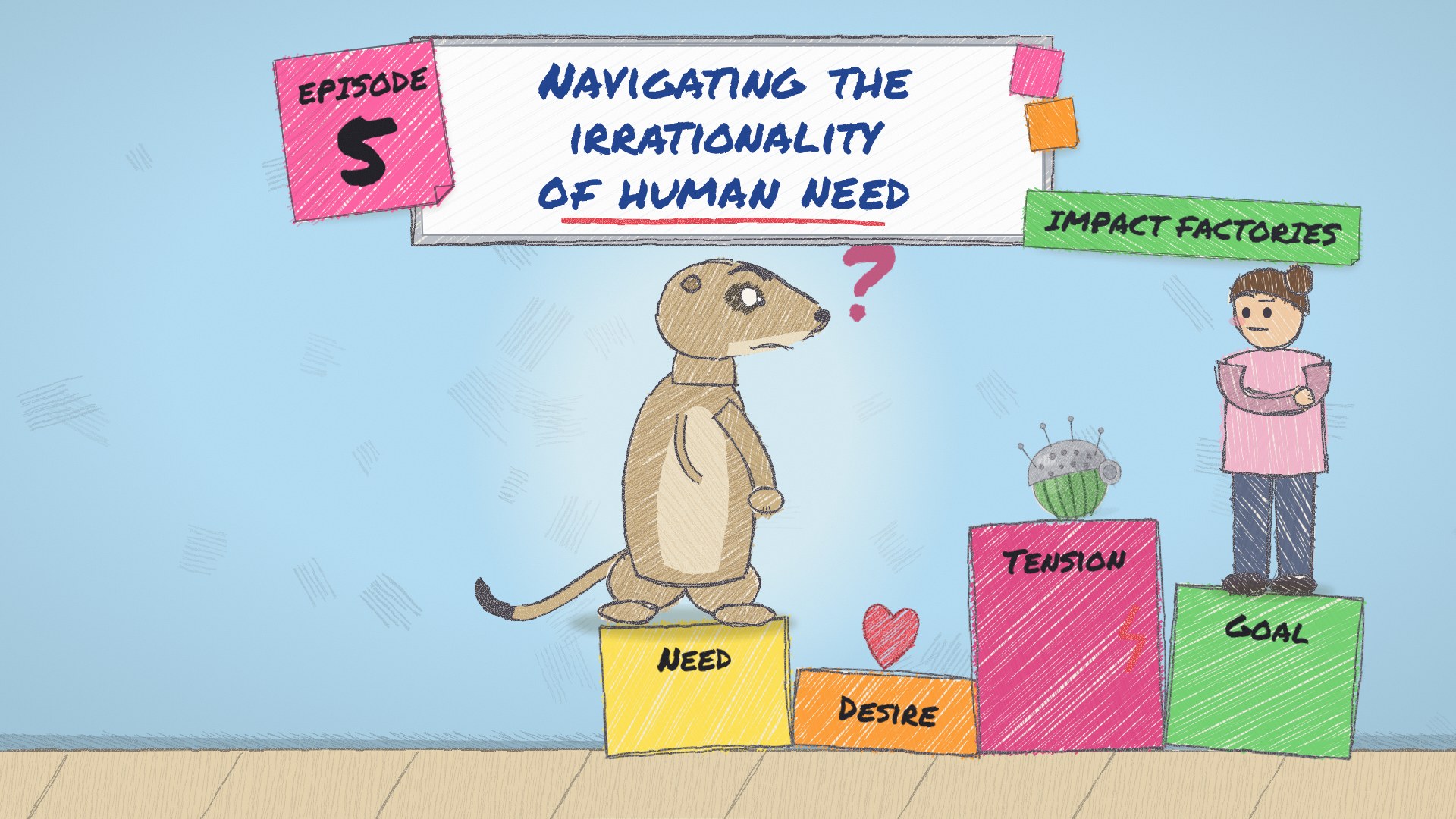
“need → desire → tension → goal”
Four words, three arrows. Laura turns to face the room. “The mechanics are simple. The need is innate: drinking, breathing, communicating. The desire appears when society, culture or the situation gives the lack a shape: a cold drink rather than a glass of water, a voice message rather than a simple signal. That shape creates a tension, the inner itch that pushes you to act. The goal, finally, is the precise action that releases the tension.”
Marc has picked his screwdriver back up and is turning it between two fingers. “An itch.”
Laura points her marker at Paul’s glass of water. “Thirst: need. Wanting an iced lemonade: desire. A dry throat: tension. Opening the fridge and grabbing the bottle: goal.”
Paul slides his glass a couple of inches away. Laura wipes half a word off the board with the back of her hand, without taking her eyes off the team. “Marketing doesn’t create the need; it shapes the desire and draws the goal. Our headset doesn’t conjure up the need to communicate; it offers one route to satisfying a desire for dignity and independence. If we confuse the need with the goal, we risk building a product too narrow to fit the range of desires that come out of the same lack.”
Nobody is taking notes; everybody is watching the board. She clicks the marker against her fingers. “Staying connected is a need. Filming your life in 4K, streaming live or projecting an avatar in VR are desires. Which one are we going to serve? That’s the real question.”
“Broadcasting your life as it happens and wandering around in virtual reality, basically,” says Éric.
Max hasn’t moved from his seat, forearms still on the table. “We agree on that. When I talk about a goal, I mean neither the need nor the desire. I mean the thing to be reached, the one that can be stated clearly and then put back in perspective against the need or the desire. I write the scenario of how the product gets used and what it’s expected to change.”
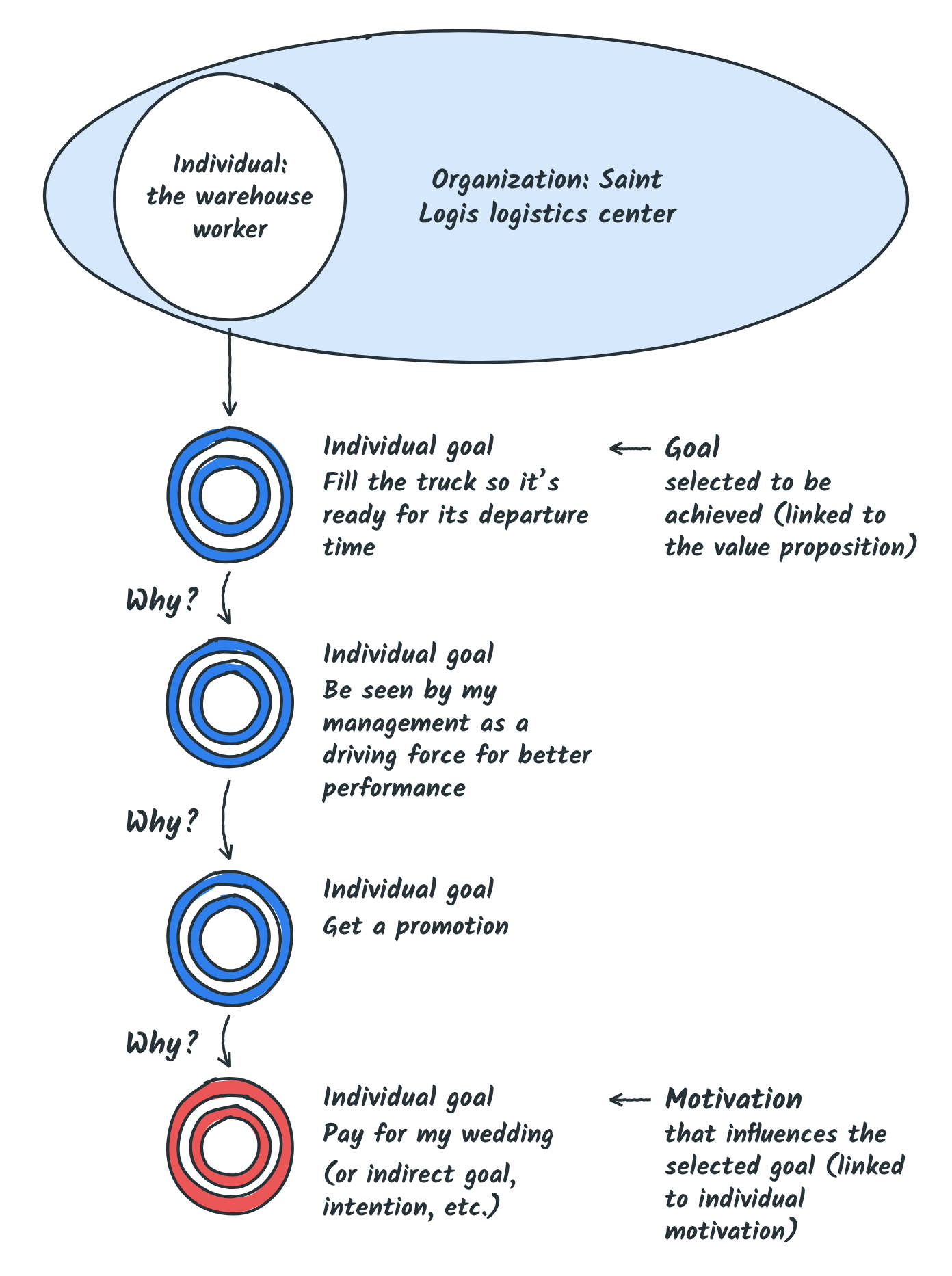
By the door, Léo clears his throat, fingers tight around his cup. “Hang on, Max. I’ve got just the thing, if it helps. I don’t tell this one often.” He has stopped smiling. “A prospect, a logistics center. The warehouse worker had a single goal: load the truck on time. Our autonomous pallet truck was built for just that. He saw the point of it right away; he told me ten times over.”
“The dream customer,” says Julien.
“That’s what I thought. Except that as the sales cycle went on, I couldn’t get past a single stage. He refused to introduce me to his management, he refused to let us test the robot in their main aisle. Everything stayed locked. The guy loved the solution, and he had us going around in circles until we were worn out.”
Léo grips his cup without drinking. “Spoiler: on delivery day I found out the pallet truck wasn’t suited at all to the man’s working environment. Sale in jeopardy. So I dug. Loading the truck on time mattered a lot less to him than making himself look good to management, to get a promotion.”
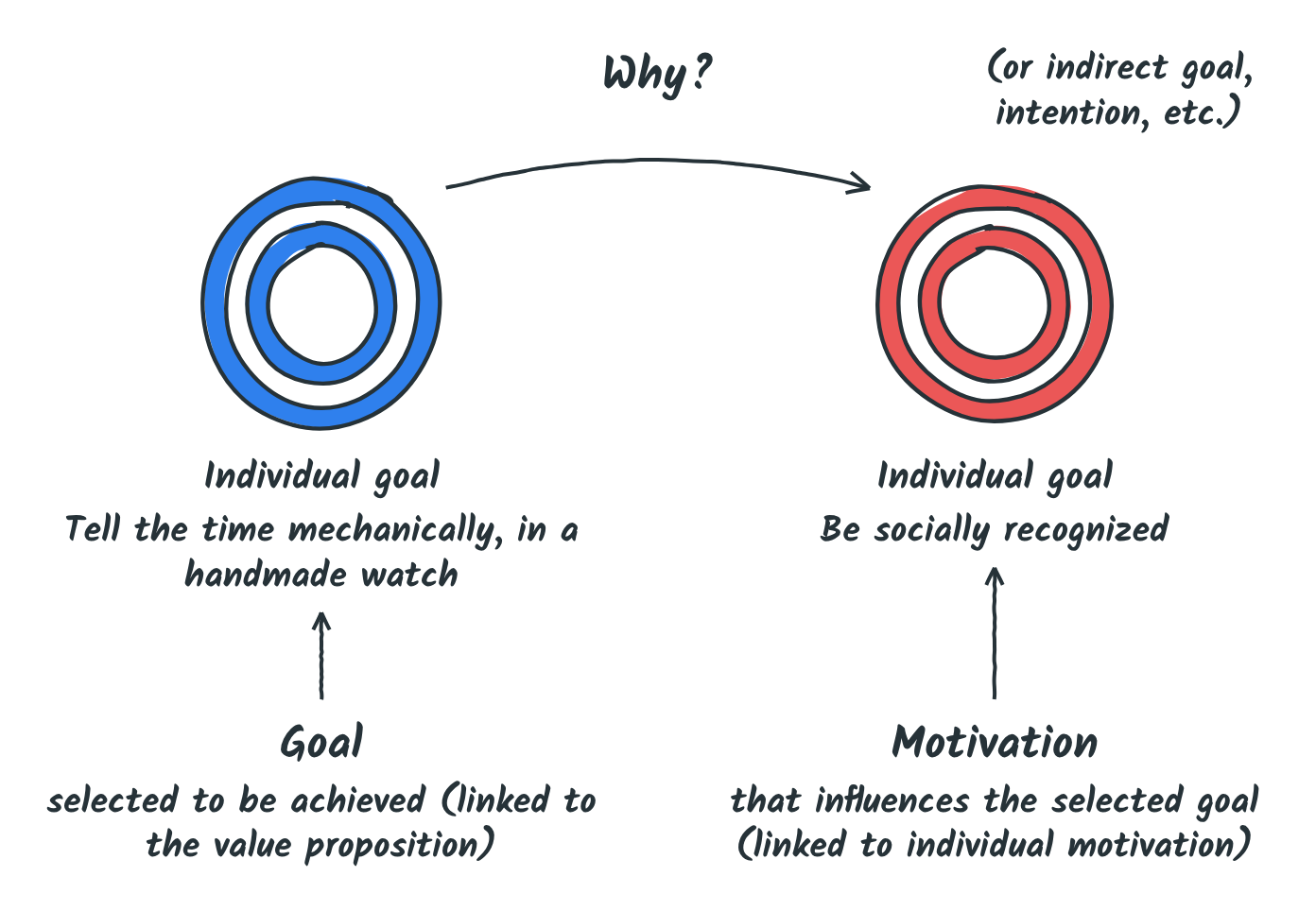
He sets the cup down and puts both hands flat on the table, as if he were still holding the packing slip. “If I’d known that earlier, we’d have gone about it completely differently. What it taught me is that even when someone’s goal looks clear and well defined, it’s crucial to check that it’s true through validation experiments. Until we validate those goals, they stay hypotheses. Goals are always tied to a motivation, to an intention, and sometimes the person even sets a goal without being aware of their own deeper motivation.” His eyes go to Julien, then to Sophie. “Bottom line: there are often several goals to serve before a product gets adopted.”
Sophie hasn’t said a word in a long while. She speaks without raising her voice, her eyes on Léo. “Isn’t that simply human? As entrepreneurs, securing the delivery is on us. As biological creatures, our motivations often drift away from pure logic, whatever the context. Look at impulse buying: a customer walks out with a product purely because a clever display won them over. Cognitive biases and levers of influence weigh more than cold analysis. Sometimes flattering lighting is enough to hide how useless the object is.”
Even so, two heads turn behind the glass, out in the open office.
Laura slaps the table with her palm, a little too hard. “That’s it! I’ve finally got my bearings back. That’s exactly where the need and the desire are hiding: behind the motivations, beyond the stated goal. Your warehouse worker, Léo, is a case in point. Thank you.”
Julien lets out a short “Hmm” and rubs the back of his neck. He’s thinking of one particular meeting a year earlier, which he has never mentioned to anyone here.
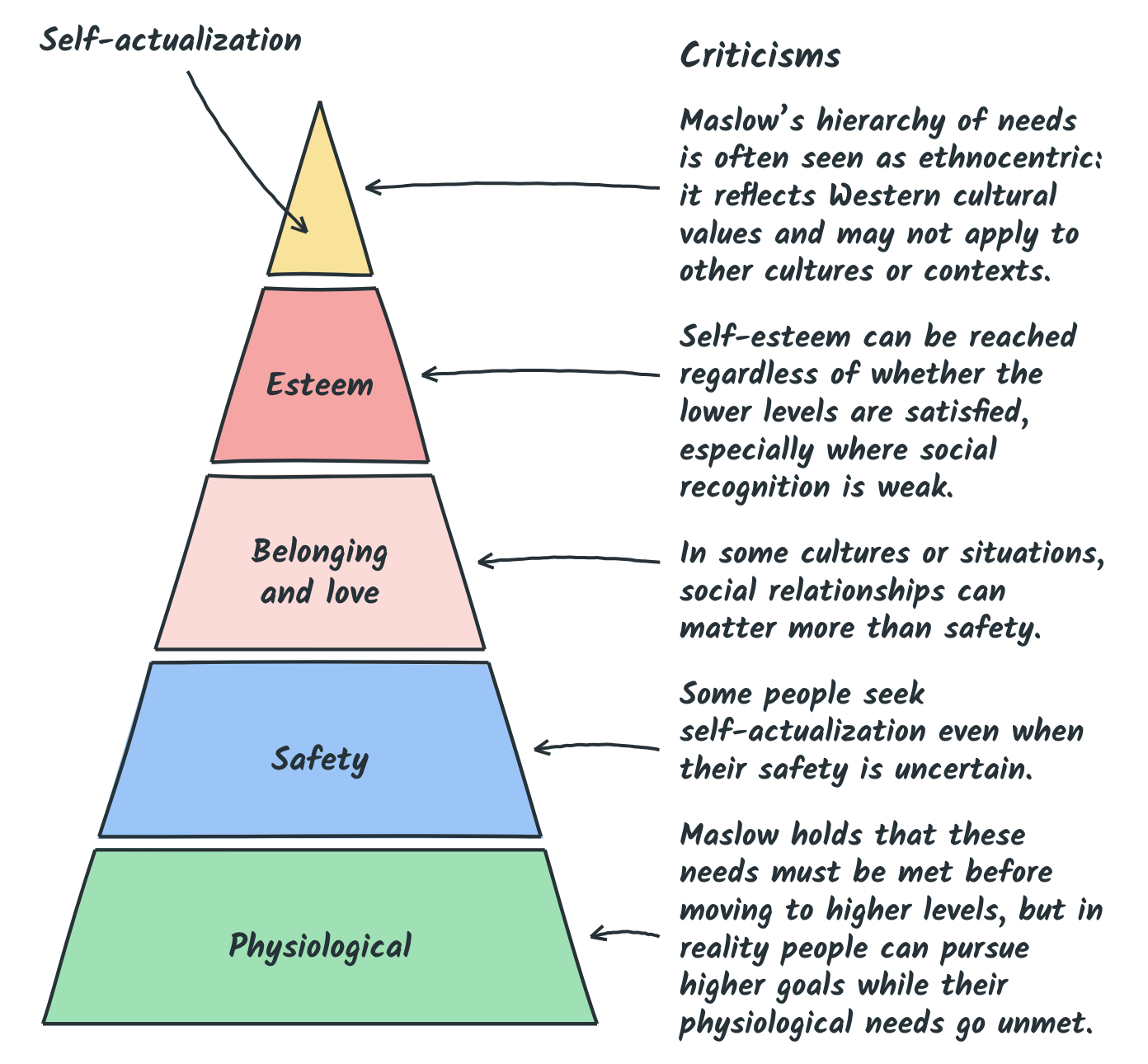
Léo folds his arms and settles back in his chair. Sophie brushes her left temple with the tip of a fingernail. “Funny you should say that, I have a short story about it. Around 1940, in New York, a young psychologist named Abraham Maslow is teaching at Brooklyn College. He watches two older colleagues, the anthropologist Ruth Benedict and the psychologist Max Wertheimer. Their step is sure, their conversation calm, almost suspended above ordinary worries. Maslow, until then fascinated by survival reflexes and competition, realizes there’s no framework to explain that kind of balance. His question shifts: what becomes of a human being once they’re freed from the urgency of surviving?”
At Maslow’s name, Léo unfolds his arms. Laura caps her marker, opens her mouth, then closes it again and lets Sophie carry on.
“From then on, Maslow stops looking for the flaws and starts looking for what we can become at the top of our potential. He studies people he considers ‘complete,’ and observes that they gravitate around different needs depending on their stage: hunger, safety, the sense of belonging, recognition, then personal fulfillment. The famous pyramid comes later, drawn by others, but the main idea holds: a human being isn’t limited to what they fear, they’re also defined by what they hope to become.”
Three of the four developers came across Maslow in a class at some point; none of them has ever used him to sell anything.
Léo reacts first. “Bottom line for us: if our headset touches a need high up the ladder, belonging or recognition, say, we can’t rely on a plain technical argument; we need a story that speaks to the aspiration.”
“And if we stay stuck at the safety level,” Julien adds, “our promise has to be bulletproof on reliability. A parachute that opens almost every time, nobody wants it.”
Sophie looks at Léo, the man with ten unicorns behind him, then at Laura, her product owner, and picks her words. “You’ve got it right, Léo. That said, Maslow’s scientific foundations are often criticized, and the theories have multiplied over time. There are the drivers of human motivation, Robert Cialdini’s levers of influence, and so on.”
Laura uncaps her marker and writes in a column, faster than usual. “In business school they served us a new one every week. To that you can add SONCAS, BJ Fogg, Hooked and the rest. The tools are many, and we could lose ourselves in them. Let’s come back to our own goal: pin down the motivation of the person we’re targeting, so we can read what they say through it, and feed it properly.”
Marc keeps his eyes on his screwdriver. “SONCAS?”
“Six buying triggers they make you learn by heart in first year: security, pride, novelty, comfort, money, sympathy. Fogg put the moment someone takes action into an equation, and Hooked explains how an app turns into a habit.” Laura stops in the middle of a line, cap in the air, and sighs. “What frustrates me is that all those approaches stay parallel. They complement each other, but no single framework really brings them together, not even Jean-Denis Larradet’s SONCAS, and he did try.”
She turns to Sophie. “I completely agree with your reading: keep your feet on the ground and pick the tools that serve the purpose, not the other way around. So I cobbled together my own framework at the start of my career, and I’ve been improving it ever since. It’s the C.L.O.S.E.D. model. And only yesterday I used it in my private life, with a craftsman who’s making me a custom piece of furniture.”
“Picture the scene: his workshop smells of fresh wood and linseed oil. Late in the afternoon, low light crosses the dusty windows and picks out the tools hanging on the wall. I sit down on a stool that’s still unfinished, hands flat on the grain of the tabletop, and I say to him, ‘Do you know why I always come here instead of ordering from Ikea?’ Without putting down his plane, he answers that it must be for his unmatched sense of humor.”
Laura takes out her notebook, dog-eared and full of sketches and crossed-out lines, the one she had open on the craftsman’s workbench, and hunts for a moment for the page where six letters sit in a row in capitals. “I told him I had six reasons for coming back to him. He burst out laughing: ‘Is that all?’ So I started with the first one.”
She speaks to the craftsman as if he were sitting at the end of the table. “First, there’s comfort. What you make isn’t just pretty. It’s pleasant. The chair you made me last month fits the body, and the bowls from last year sit perfectly in the hand. Even the texture of the wood under the palm is soft, soothing. A companion in daily life. People feel that: they want objects that make life easier, that don’t hurt them, that don’t let them down. Pleasure in the using, not just function.”
According to Laura, the craftsman straightened up when he heard that and said to her, “Go on.”
“Then there’s the link. When I buy from you, I know where the wood comes from. I know how you work. I can listen to you talk about your finish, about your choice of screws or glue, about which important customer ordered the same thing. There’s a relationship. When an object carries a story, an encounter, a human trace, or when you put a piece of me into it by personalizing it, I want to buy it far more than when it sits anonymous among its fellows.” At the end of the table, Marc has stopped turning his screwdriver.
That, Laura says, is when the craftsman put down his plane to answer her. “It’s true we’ve known each other a long time. You came into my shop with your parents the day after you were born, to order your very first bed. They’d put you in a makeshift crib in the meantime, and soon found out, using it, that it wasn’t going to last.”
Julien doesn’t look up from his notebook. “A customer before she could walk.”
Laura drops her eyes to the third letter in her notebook and hesitates for half a second. “I’ll be honest: there’s my own image in it too. Pride. I’m proud to have your pieces in my home. They look like me. They say something about my choices. It isn’t showy luxury, it’s an identity I own. I like saying, ‘A craftsman from around here made it for me.’ It’s a quiet but strong way of expressing my sensibility, my values, what makes me different, to the friends around me.”
To play the craftsman, she deepens her voice, badly. “I had a feeling you talked about me, seeing some of your friends turn up on your recommendation. I’d always thought it was out of kindness, when in fact you were using me to show off your standing as a person of taste and means? Well then, Laura…”
A quiet laugh goes around the table. Laura’s cheeks go pink, and she turns the page without dwelling on it. “There’s also security. When I order elsewhere, I know nothing. Does the product contain formaldehyde? Heated plastic? Will it last three months or thirty years? If it breaks early, will you be there to fix the problem? With you, I know. You explain what you use. You choose healthy materials. You arrange to settle any problem within twenty-four hours, even if it means pushing back less urgent deliveries.”
“Formaldehyde?” Paul asks under his breath.
“The glue in some ready-to-assemble furniture,” Laura answers without turning around. “It’s chemical and physical security, but ethical security too. I don’t need to be on my guard. I can trust you. And I know the price you offer me is the fairest one.” She smiles at her notebook. “He came straight back at me: ‘I do try to be as fair as I can: make a living while pleasing this dear Laura I’m so fond of.’”
She moves on to the next letter. “And even though it sounds like a contradiction, there’s economy.”
Marc snickers. “Economy? After the poetry?”
“Wait for it, Marc.” She goes back to her notebook and to the craftsman. “Not the economy of the lowest price. The economy of meaning. Buying from you is investing in an object that lasts. It’s avoiding buying the same disposable product two or three times over. It’s also keeping money circulating locally. It isn’t expensive, it’s fair. And what you make is rare: putting a value on that rarity is part of what I mean by economy.”
Cassandre writes the word economy on her sheet and circles it twice. Laura has reached the last letter. “Finally, there’s discovery. Your objects surprise me. Every time. An angle, a texture, a joint I wasn’t expecting. And above all, I learn. You share, you explain, you even give away your secrets on your blog, which I devour with curiosity and admiration. It’s an experience, not a simple transaction. I buy to be astonished, to feel something, to learn something new.”
Laura goes to the board and lines up six words, one under the other, one per letter, each with a sentence.
| Dimension | Definition |
|---|---|
| Comfort | The search for physical and sensory well-being, through objects that are pleasant to use, simple, ergonomic, and designed to settle gently into daily life. This covers the natural feel of the materials (wood, leather, linen), intuitive ergonomics, and the absence of nuisance (noise, toxicity, visual discomfort).Examples: a ceramic mug that sits perfectly in the hand; a chair that follows your posture; a lamp in wood that is soft to the touch.Associated emotions: satisfaction, calm, sensory pleasure.References in the literature: Physiological needs (Maslow), Sensation (5 Core Human Drives) |
| Link | The need for social connection, human closeness, trust and belonging to a group or a community. Buying becomes a vehicle for a relationship here: with the craftsman, with a place, with a shared story.Examples: buying from someone you know; receiving an object that comes with a personal account; finding a traditional local gesture again. People do not use Facebook or Instagram because those services solve a specific problem, but because they answer a fundamental need for connection and social recognition.Associated emotions: trust, human warmth, a sense of belonging.References in the literature: Belonging needs (Maslow), Sympathy (SONCAS), Unity (Cialdini) |
| Own image | The desire for recognition, for personal expression, and for valuing oneself through one’s choices. Buying becomes a statement of taste, of values, of identity. The point is to show what makes you singular through what you own.Examples: choosing a rare or unique object to show your attachment to craftsmanship; giving a distinctive piece as proof of discernment. iPhones are not only telephones; they stand for constant technological innovation with a clean design and a high perceived quality. People do not buy them only because they need a telephone, but because they want to own a product that embodies innovation and excellence.Associated emotions: pride, admiration, self-affirmation.References in the literature: Esteem needs (Maslow), Acquisition (5 Core Human Drives), Authority (Cialdini) |
| Security | The search for reassurance and control in the face of uncertainty, or an action that reduces a risk or makes a plan possible. This covers trust in the materials, the ethics of the making, durability, and compliance with health or environmental standards. The product becomes a guarantee of peace of mind.Examples: choosing a piece of furniture made without toxic glue; preferring an object whose production conditions you know; making sure the object will last. Buying home security systems or antivirus software is often driven by this dimension, even when no immediate threat is present. People want to feel safe and prepared. Learning in order to acquire a skill that gives access to work, for the sake of survival.Associated emotions: relief, quiet, the absence of doubt.References in the literature: Defense (5 Core Human Drives), Safety needs (Maslow), Commitment and consistency (Cialdini) |
| Economy | The will to optimize resources, to give the spending meaning, and to buy something durable rather than buying repeatedly. It is not always about paying less, but about paying better, at the fair price. Conversely, in some situations buying the more expensive option can also be driven by urgency (the last one in stock, a one-off event) or by perceived scarcity, which strengthens its subjective value.Examples: buying a more expensive object that lasts twenty years; choosing a local product that avoids the middlemen’s margins; deciding quickly on a unique object for fear of missing out.Associated emotions: financial relief, watchfulness, the feeling of having invested well, fear of missing out.References in the literature: Acquisition (5 Core Human Drives), Scarcity (Cialdini) |
| Discovery | The quest for stimulation, exploration, curiosity, surprise and strong sensations. Some purchases are set off not by the product itself, but by the vivid emotion it generates: an unexpected demonstration, a counter-intuitive technique, a live performance or a disconcerting look. Surprise, like a thrill, acts as an emotional accelerator here: it interrupts the routine, creates a pleasant shock, and makes you want to keep a trace of the moment. Our brain looks for those stimuli that make us vibrate or marvel. But discovery is not limited to the instant. It can also take the form of usable learning: the person acquires a new skill, a piece of knowledge, or comes to understand a gesture, a process, a cultural world in depth. That need for personal progress is widely used today in education, in the creative fields and in experience design.Examples: being fascinated by a street sculptor working upside down or with their feet; buying a piece after watching it being made; learning a technique you now understand and might want to try yourself; buying after being electrified by an artistic or sensory demonstration. These are also the mechanics used by theme parks, suspense films and immersive games: they generate a strong emotional tension, followed by a release, which drives engagement or purchase.Associated emotions: curiosity, surprise, wonder, the pleasure of understanding, excitement, thrill, a sense of personal or professional progress.References in the literature: Learning (5 Core Human Drives), Self-actualization (Maslow), Sensation (5 Core Human Drives). |
She claps her notebook shut. “When I’d lined up those six points, my craftsman told me that from the sound of it he was selling emotions. I answered that what he offers above all is a different way of living in the world. That’s how I connect my motivations to a practical model. I think we can apply the same logic to our headset: identify the exact reason why someone would choose it over a product that’s ‘faster’ but impersonal, beyond its technical specification.”
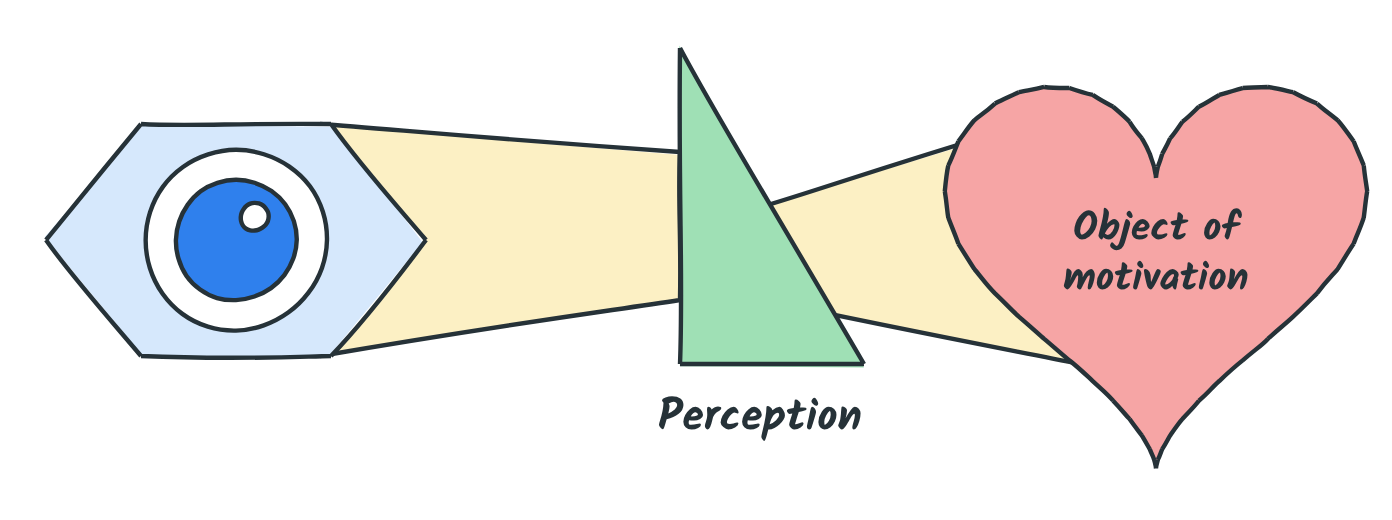
Max has listened to the end without interrupting her, fingers laced in front of his mouth. “Your approach is fascinating. But I think it focuses mainly on the object of the motivation. You know, at the start of my career I did exactly the same thing: I was interested in what people wanted to obtain, comfort, recognition, economy… All the things you tie today to the dimensions of your CLOSED model.”
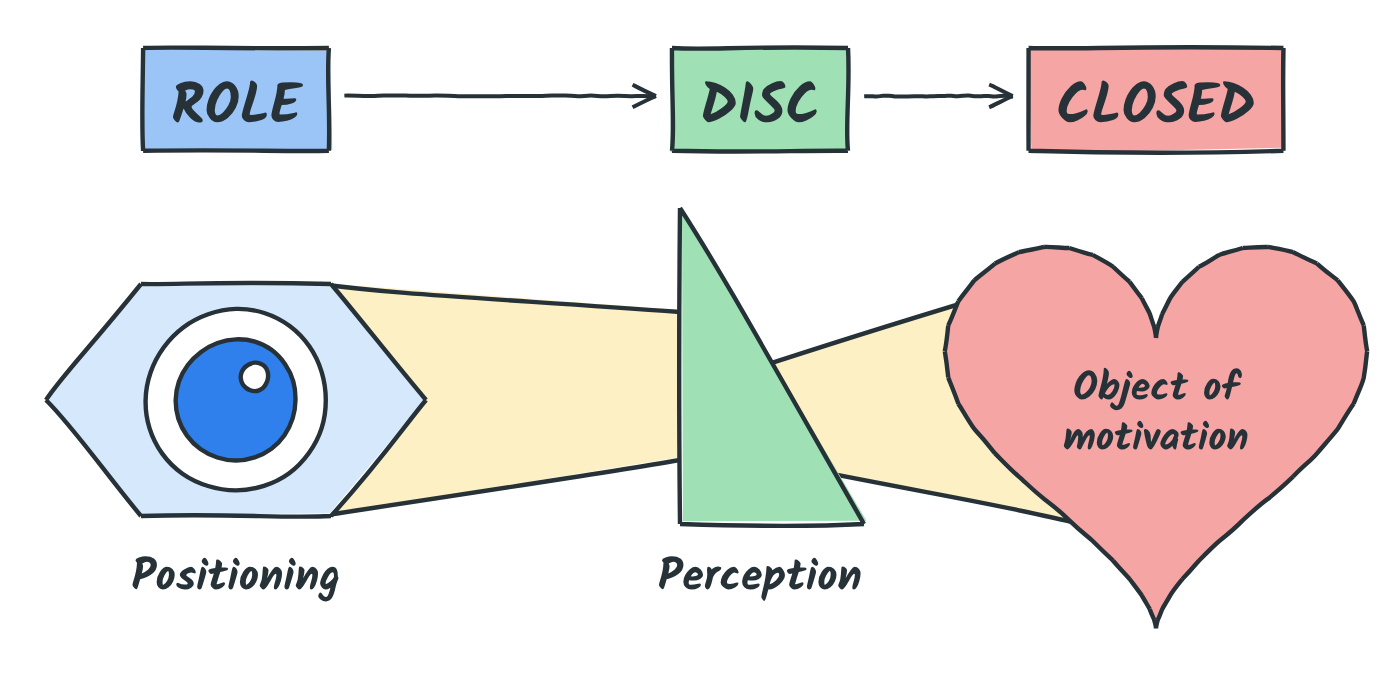
He gets up and takes a few steps along the glass. “And then I understood there was a piece missing from the puzzle: the way each person perceives that need. Because that perception depends on their own pattern of thinking, on their way of being in the world.”
“Can you tell me more?” Laura asks.
Max goes back to the board and picks up a marker in another color. “Two people can want to buy something local, but not for the same reasons, and not with the same emotions. And what struck me above all is that even when you ask several people the same question, their answers aren’t equally reliable. Some will state their motivation very clearly, others will give you a vague or socially acceptable justification with no real link to what made them act.”
Julien snaps his fingers. “The customer who tells you ‘amazing’ and never calls back.”
“That’s it,” says Max. “That’s when I understood we had to go further than the words. I looked for a tool to decode the way they think, their internal structure. And I came across the DISC model.”
“Oh, I know DISC well!” says Laura.
“What’s that?” asks Éric.
Max writes four colors on the board, one under the other. “It’s a behavior-reading grid. There are four broad profiles, shown as colors: red, yellow, green and blue. And the beauty of it is that you can spot them quickly, even in a short exchange.”
Cassandre speaks softly. “DISC stands for something, right?”
Max counts on his fingers. “Dominance, Influence, Steadiness, Conscientiousness. Just remember the colors.”
Marc glances at his watch. “And what exactly does that help with?”
Max answers him with a nod, without irritation. “With two things. First, understanding what the person values deep down: what will click in their head, beyond what they put into words. Second, judging how reliable what they say is. A blue profile, for instance, is often more rigorous in analysis, but can underestimate the emotion that made them act. A yellow profile, on the other hand, will put things into words with enthusiasm… but sometimes rebuild their motivation after the fact, depending on the mood or the effect they want to produce.” Marc folds his arms.
“Leave this one to me, Max,” Laura says. “With Marc, you need a scene. I’ve got concrete examples. Picture a man in a suit, Marc, walking into the workshop. He says, ‘I want something simple, durable, well made.’ He’s direct, factual. There I recognize a blue profile, the analytical one. He’s looking for security, reliability, proof. For him I’m going to highlight the traceability of the materials, how it’s made, the durability. And I know that what he tells me is very close to his real motivation.”
“Did she meet that guy yesterday?” Paul whispers to Marc.
“By contrast,” Laura goes on, “a yellow customer, very expressive, falls in love with a wobbly stool in a corner. She exclaims, ‘This thing is crazy, it tells a story, I want it!’ She puts things into words easily, but I know that what set the emotion off may have been a surprise, an unexpected aesthetic, a personal memory. And that what she tells me is more a staging of what she feels than a deep analysis.”
Cassandre notes something in the margin of her sheet, head down. Marc shrugs. “People sorted into colored boxes. You read the bands, like on a resistor, and you know what you’re holding. What about the greens?”
“Greens are more reserved,” Laura answers. “They’re stable, empathetic profiles. They buy when they feel a relationship of trust, a sincere intention, or a reassuring setting. They won’t necessarily state their motivation clearly, but you’ll see it in their silences, their hesitations, their attention to the human detail.”
“And the reds?” Marc insists.
Max takes over with a wink at Laura. “Reds are a bit like you, Marc: they’re the most assertive. They want to get straight to the point, get a result, stand out. They put things into words very bluntly, sometimes brutally. But watch out: what they don’t say is often what motivates them most, the need for control, for prestige, for efficiency. There again, you have to read between the lines.”
Everyone manages not to laugh except Paul, who can’t. Marc drops his screwdriver on the table. “Red? Me? I’d have put myself in green.”
Max sets the marker back in the tray of the whiteboard, under the four colors. “You see, DISC is a decoder. Once you’ve identified the profile, you can ask the right questions to connect the personality to the real motivation, not just to what the person believes or says they feel. You adjust your reading, your message, your listening. And then you can really activate the right dimension of CLOSED.”
Julien has stood up. “So when we talk to someone whose answers can shape our product, it would make sense to identify the object of their motivation through the dimensions of CLOSED. And to adapt the way we ask our questions to their DISC color. The point being to judge the reliability and the reach of what we collect.” He rubs the back of his neck. “CLOSED is what’s in the box. DISC is how they describe it to you.”
Sophie shakes her head. “It’s interesting, but it looks a little complex to put into practice day to day. When someone squeezes us in between two meetings, I’m not going to go hunting for their color. I think we’d be better off sticking to facts.”
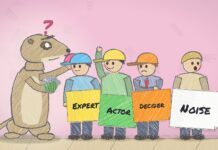
Max smiles. “You’re right on one point: we mustn’t overengineer this. On the other hand, it’s essential to adjust the way we validate answers according to what we know about the person’s profile. That’s where grids like DISC and CLOSED can help. But let’s not forget the type of information we’re trying to get hold of when we question someone, which ties back to the logic of the roles, Expert, Actor, User, Decision-maker, Connector, Influencer and Noise.”
He lowers his voice. “I’ve lost a sale for that exact reason. If we talk to a decision-maker without understanding the levers that shape their decisions, we risk missing what matters.”
“Like pitching the receptionist and thinking you’ve got the boss,” says Julien.
“Flip it around,” Max goes on, “say we lean on someone who has no interest in helping us, or even a hidden interest in steering the conversation. Then even if they hold a central position on paper, the information we collect can be completely false. It isn’t about modeling everything. It’s about adjusting our listening, our hypotheses and our validation to the person in front of us.”
Sophie stares at the board, covered with two systems that don’t touch, six words on one side, four colors on the other. “Fine. But in an interview, which one am I supposed to look at?”
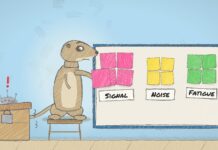
Laura straightens up. “I have a feeling an empathy map would let us tie all of this together. It’s a simple tool, for catching weak signals and connecting what we hear to deeper models like CLOSED or DISC. Weak signals are the things people say in passing, without dwelling on them.”
Sophie grabs a blank sheet. Laura draws a rectangle divided into boxes in the air with her hand. “Put simply, the empathy map looks like a panel divided into six zones: what the person sees, hears, thinks, says, does, and what they feel. When you fill it in during an interview, you take your notes in those sections, so you understand the environment, the emotions, and any contradictions between what’s said and what’s done.”
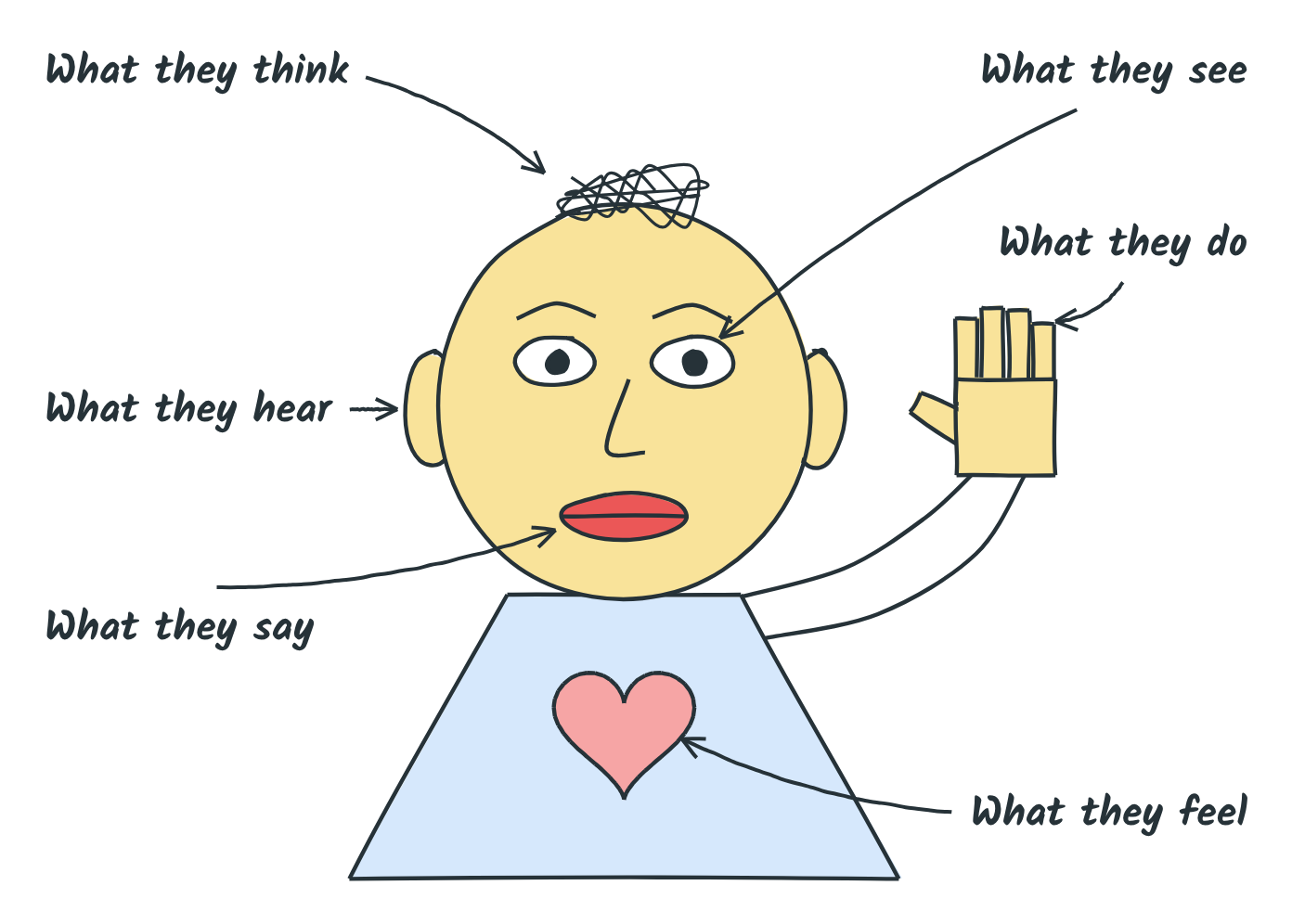
Laura gives Sophie time to copy the six boxes onto her sheet. “The idea would be to adapt it to our situation. First, by adding a checkbox for the dominant DISC color we pick up in the person: red, yellow, green or blue. That helps us adjust the style of our listening and the reliability we grant to what’s said.”
Sophie stops copying. “And CLOSED? Do we ask them what they’re looking for?”
“Definitely not. We don’t ask, ‘Are you looking for security or for recognition?’ That’s far too frontal. We fold the dimensions of CLOSED straight into our observations, listening actively for the signals: does the person talk about risks? About ethics? About the wow effect? About price? About performance?”
“And the roles from earlier?” Sophie asks.
“That’s the third layer, and the most important one,” Laura answers. “The person’s role in the ecosystem. Are they a Decision-maker, a User, an Influencer, a Connector, an Expert, an Actor, or simply Noise? Because obviously we don’t weight testimony the same way depending on their real role in the process.”
Cassandre, almost under her breath, asks, “So we sort the person before we’ve even talked to them, right?”
“As we said earlier,” Laura answers, “we start by identifying their role or roles before questioning them, and we sharpen that at the start of the conversation. We aim the questions at what we hope to get out of the person.”
Laura draws the map for real, on the board, in the last free corner, under the four words from the start of the meeting.
| ✓ | Category | Dimension / Color | What it stands for | Question to ask yourself |
|---|---|---|---|---|
| ☐ | CLOSED | Comfort | A search for simplicity, familiarity, the absence of friction | Does this person insist on ease, on smoothness, on habit? |
| ☐ | CLOSED | Link | A need for belonging, recognition or human connection | Do they often refer to others, to the group, to the community, to how they are seen? |
| ☐ | CLOSED | Own image | A desire for personal standing, status or image | Are they seeking to stand out, to be recognized or admired? |
| ☐ | CLOSED | Security | A wish to avoid risk, a need for control or for guarantees | Do they raise fears, doubts, expected guarantees or a need for stability? |
| ☐ | CLOSED | Economy | Optimizing resources: time, money, effort | Do they put cost, scarcity, return or urgency to the front? |
| ☐ | CLOSED | Discovery | A taste for novelty, learning, stimulation or surprise | Do they get carried away by originality, by the demonstration, by the surprise effect or by gaining new skills? |
| ☐ | DISC | Red | Assertiveness, speed, a search for results and impact | Are they direct, goal-driven, impatient with detail? |
| ☐ | DISC | Yellow | Expressiveness, enthusiasm, communication and a positive outlook | Do they show energy, charisma, a taste for ideas and for people? |
| ☐ | DISC | Green | Stability, listening, a need for consistency and a harmonious environment | Do they talk about well-being, balance, relationships built on trust? |
| ☐ | DISC | Blue | Rigor, logic, respect for the rules and a sense of precision | Are they methodical, analytical, alert to evidence and to the quality of the process? |
The whiteboard is full, and nobody suggests wiping anything off. Julien taps his notebook. “And the day we’ve got a stack of filled-in maps, what do we keep? All of it?”
“Once the map is filled in,” Laura says, “to prioritize our actions, I suggest we pull out the five most salient items: the actionable truths, the warnings, the weak signals that keep coming back. For instance, with our mind-reading headset, if data security keeps coming up, we know it’s a critical point. It also helps aim our priority questions.”
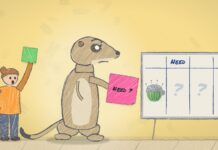
With no room left on the board, Laura takes Sophie’s sheet and writes three words at the bottom, numbering them as she speaks. “We could structure that prioritization as a three-level scale: Essential, Relative, and Unproven. Essential needs, like the safety or the accuracy of the headset, are prerequisites: if they aren’t met, the product risks not being adopted. Relative needs cover expectations that matter but can be adjusted: interoperability, say, or being able to share your readings with others.”
“The headset talks to other people’s software, basically,” says Éric.
“Right. As for unproven needs, they’re hunches or wishes raised by a minority, like entertainment applications or personalization options.”
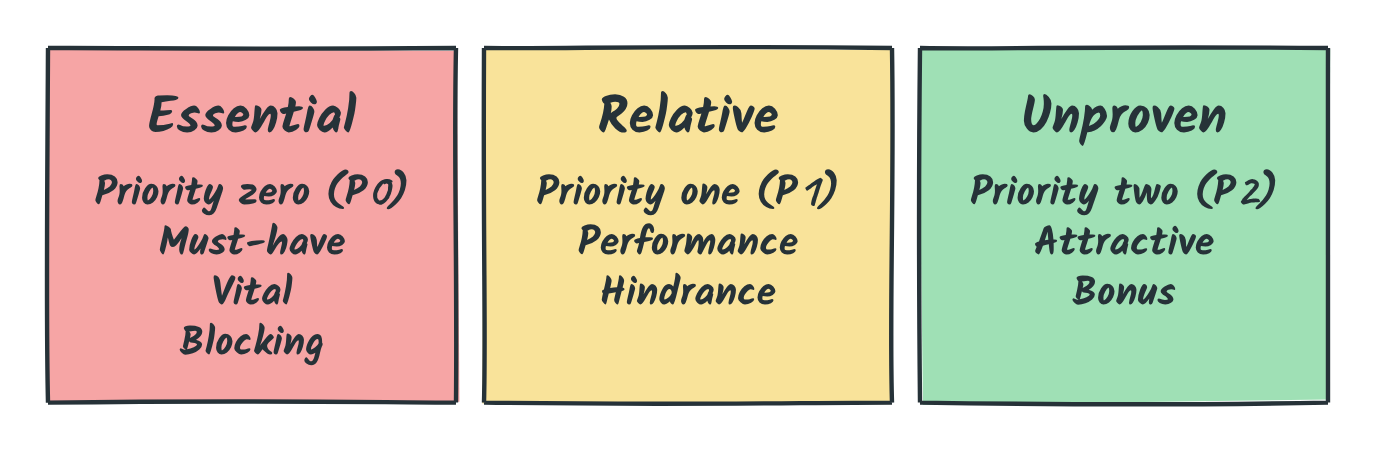
Laura hands the sheet back to Sophie. “By setting those priority levels and updating the needs attached to them as the interviews go on, we prioritize our effort. And we see what our potential customers expect as a minimum from a first version of the product.”
Marc picks his screwdriver back up. “And when a customer asks for some gadget in the middle of an interview?”
“When a new feature or a new need comes up,” Laura answers, “we first check whether it relates to an essential need, like privacy. If not, we weigh its impact on the relative needs, like a more intuitive interface. Unproven needs, like mind games, come later, once the fundamentals are in place.”
Julien leans over Sophie’s sheet. “Huh. It reads like a sequence of decisions. With that scale we know where to start with the headset, and we keep a coherent evolution centered on the need.” He stops, one finger on the sheet. “Only, we now have what we need to judge how legitimate the person is to speak about their need, and what their underlying motivation is, but we’ve planned nothing to get them talking about that need! We’ve got the scale and the weights. What we’re missing is the goods.”
Laura caps her marker. Cassandre leans back in her chair. “Right, if I follow you… We collected ideas during the focus group, and now the goal is to go further by validating those leads. You’ve also set up a scoring grid to judge how reliable the people we talk to are, so we don’t get carried away by biased or anecdotal information. On top of that, you’ve defined a framework for deciding whether a need deserves to be prioritized, based on objective criteria rather than individual perceptions or personal preferences.”
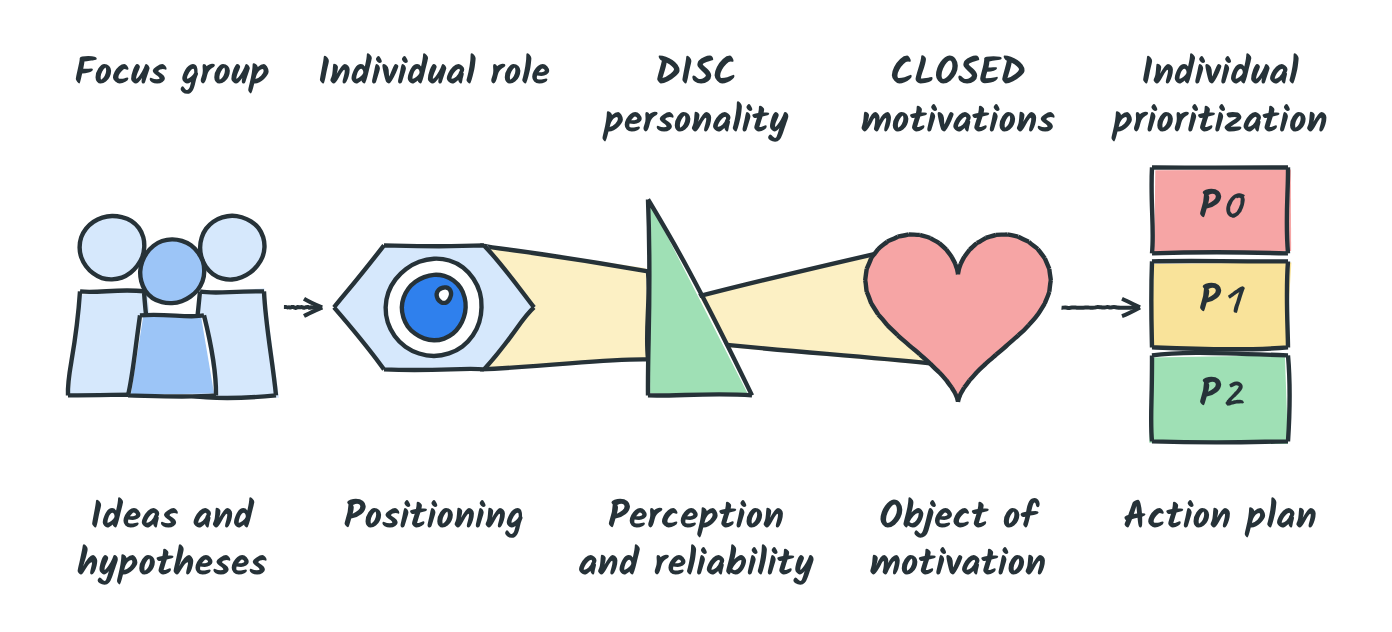
She folds her sheet in half, the circled economy facing out, then glances at Max, at Sophie, and at Julien. “Honestly, this is starting to be well structured. Shouldn’t we start preparing our questions for the interviews? It seems to me we have everything we need to make sure we ask the right questions of the right people.”






 CC BY-SA 4.0