
“At FrigoFroid, the strategy director didn’t let me talk about a single truck. Spoiler: I tried twice.”
Léo turns his phone face down on the table, between two mugs and the crumbs of shortbread left over from the snack. The chatter drops off at once. Julien opens his notebook again to the page with the seven doors, where the context and the limitation are still waiting for their check mark.
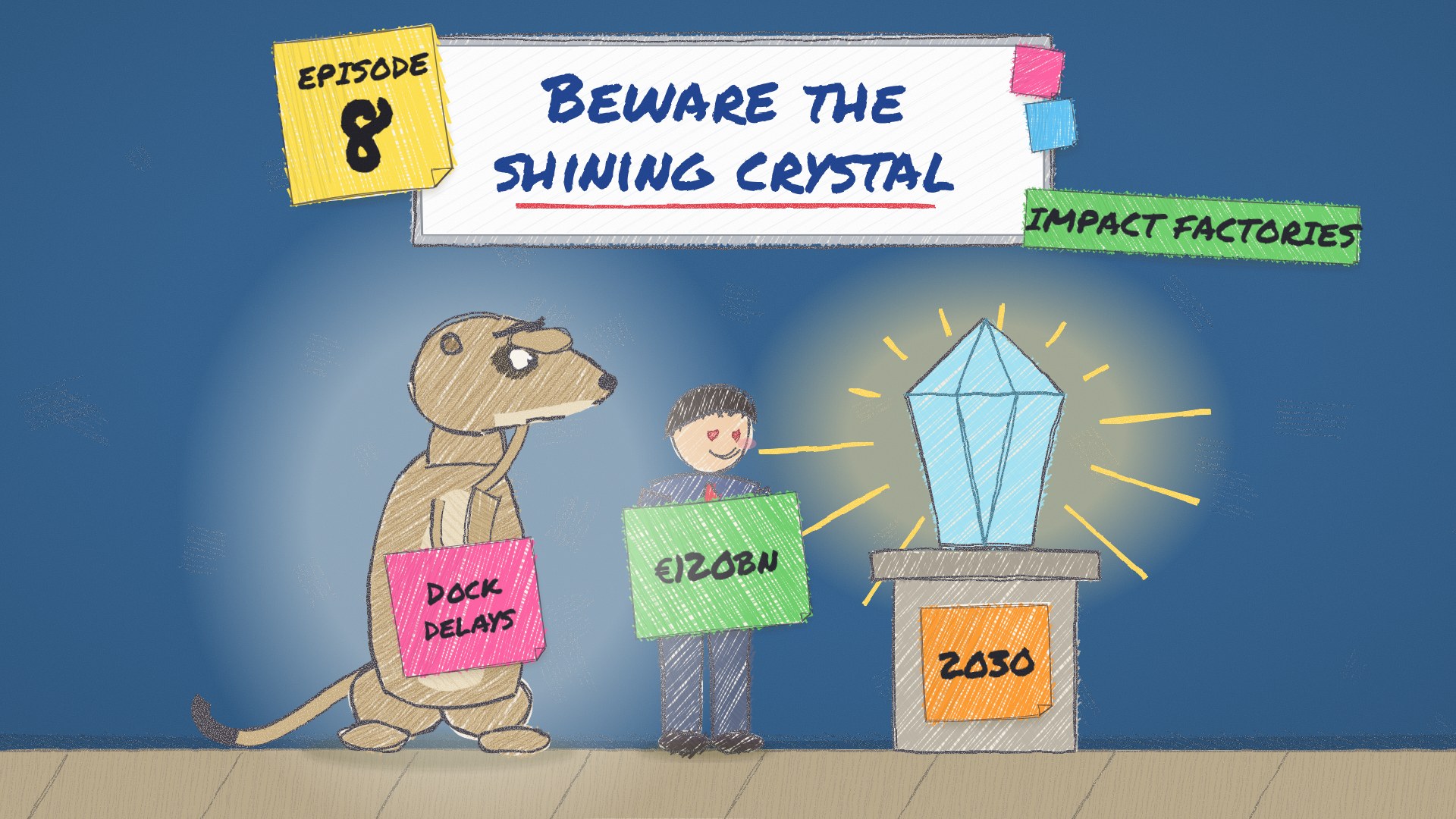
“It all happens at headquarters,” Léo goes on, “an administrative building hung above the cold rooms like a glass cockpit. I’m met by the strategy director, and we go into a meeting room that looks straight down on the maneuvering tractor-trailers. He invites me to sit in front of a giant screen, then launches into his opening. ‘The Frost & Sullivan studies are unequivocal: the world cold chain market will pass a hundred and twenty billion euros by 2030. Urbanization, aging, home delivery: three exponential curves meeting. We have to be ready for the wave.’ Behind him, a curve climbs across the screen. It’ll keep climbing for the whole meeting.”
“Frost & Sullivan?” Paul asks quietly.
“A market research firm,” Léo answers. “And my director goes on without pausing for breath: new WHO standards, double-digit Asian growth, refrigerated corridors extending into Africa. A newscaster’s voice, impeccable, almost hypnotic. So I try a concrete hook. ‘At your Mérignac site, two trucks out of five still miss their loading slot when the outside temperature goes above thirty degrees Celsius. How does that bottleneck fit into your global projection?’”
“Two out of five?” Sophie stops writing. “And what did he say?”
“A blink, barely. He straightens his back against the leather of the chair. ‘Our mission at headquarters is to anticipate the great currents, not to settle local friction.’ I try a second landing. ‘The penalty costs, at that same site, have doubled since January; if the trend holds, your margin will melt faster than any macroeconomic scenario.’ This time his eyes harden. The conversation slides back toward global charts, transcontinental partnerships, the future ‘data platform’ meant to absorb everything.”
Marc stops twirling his screwdriver and holds it still between two fingers. “A data platform? One giant drive where you pour in all the company’s data and hope it sorts itself out?”
“Pretty much,” Léo says. “Every time I try to drop an anchor, I hit a padded wall; I sense he’s taking my questions as a challenge to his role as director. The meeting ends in icy courtesy. He thanks me for my ‘operational insights,’ promises to pass them on to the field teams, then walks me out with a stony smile.”
Cassandre winces. Éric, his laptop half closed, translates for the table. “Stuff from the field, basically.”
Julien taps his notebook with the end of his pen. “Your crystal box from earlier, Léo, with all those little lines shining out of it. He lives inside it, and he can’t see a single truck.”
“That’s it.” Léo goes to the board and picks up the marker from the ledge. “As you can see, there’s yet another very particular way a need can be raised, and it doesn’t really look like effective communication. Some people don’t state their need by describing a precise problem or a solution they have in mind. They talk about the market, about the global environment, about trends or structural shifts that affect reaching the goal. That’s what I call the contextual form, or the context type. Here the need doesn’t come through a specific internal problem but through an external constraint that explains why this difficulty arose.”
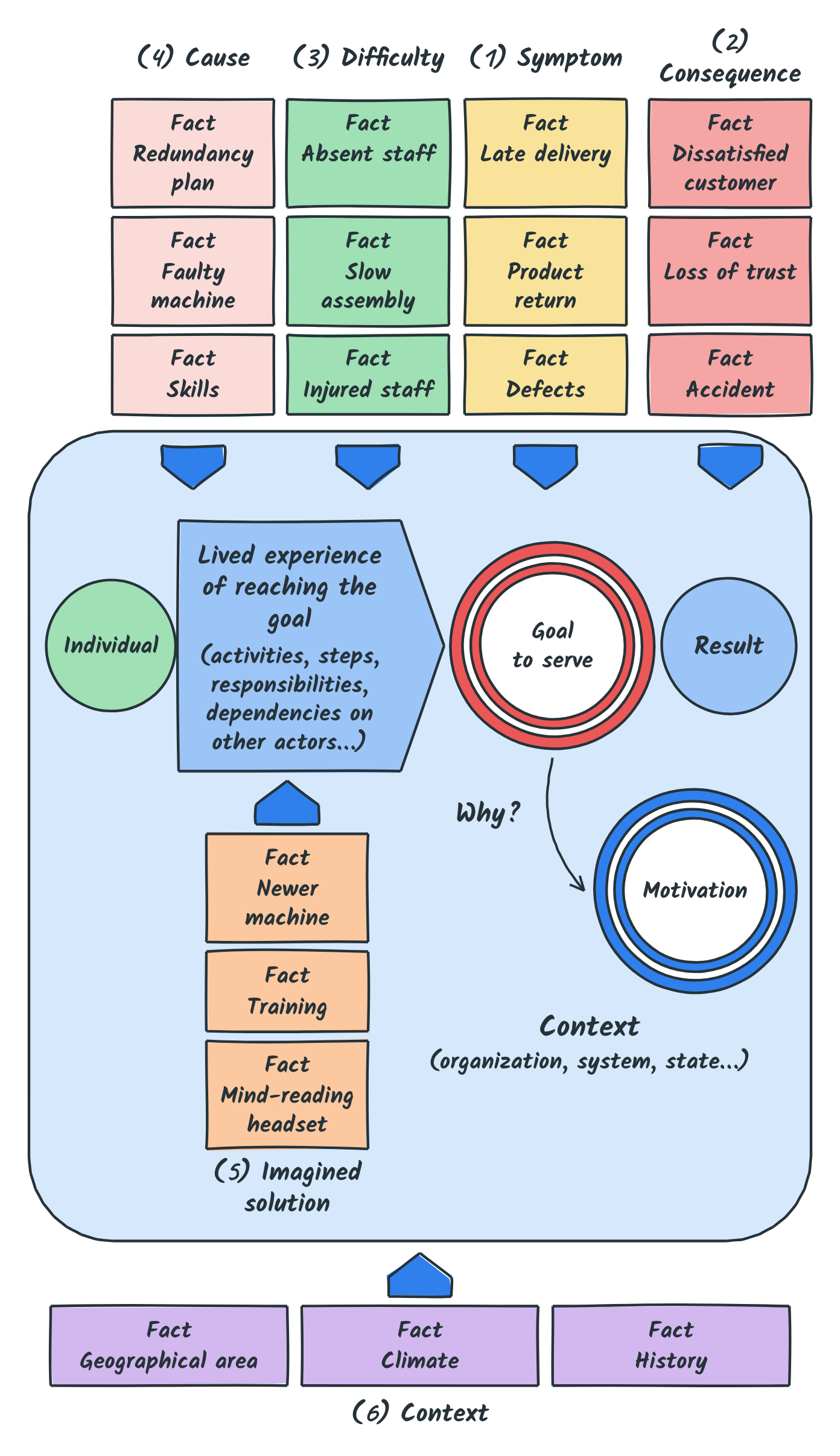
Sophie picks up her pen again. “For MelonsNet, then? You mean that instead of saying ‘we struggle to model our concepts quickly,’ someone might say ‘the aerospace market today demands faster innovation cycles’?”
Léo points the marker at her. “You got it. Instead of naming an internal obstacle, they describe a scene that lets you guess at a problem underneath. A director can state a need without ever putting a finger on the exact flaw: they simply feel the competitive pressure rising, or see the market sliding under their feet.”
Sophie writes “competitive pressure” in her margin. Léo waits until she’s done. “Sometimes the need comes out of a new regulatory landscape; other times out of an old liability coming back to haunt the company. Take a company called out over its safety conditions: the scandal didn’t just stain its image, it put candidates off, caused a labor shortage, then delivery delays, and, in a cascade, its customers’ exasperation.”
Marc spins his screwdriver. “One short circuit upstream, and the whole board burns out, one stage after another.”
“Your short circuit, yes,” Léo answers. “Reading a need from that angle means moving from the local symptom to the fabric of big principles: reputation, trust, adaptation. Politicians are masters of this; they start from a vast context, handled with deliberately vague, non-specific vocabulary, to make you feel a storm is coming, without ever getting straight into the mechanics of the problem.”
Sophie half raises her hand. “Léo, when you say ‘non-specific vocabulary,’ what exactly do you mean?”
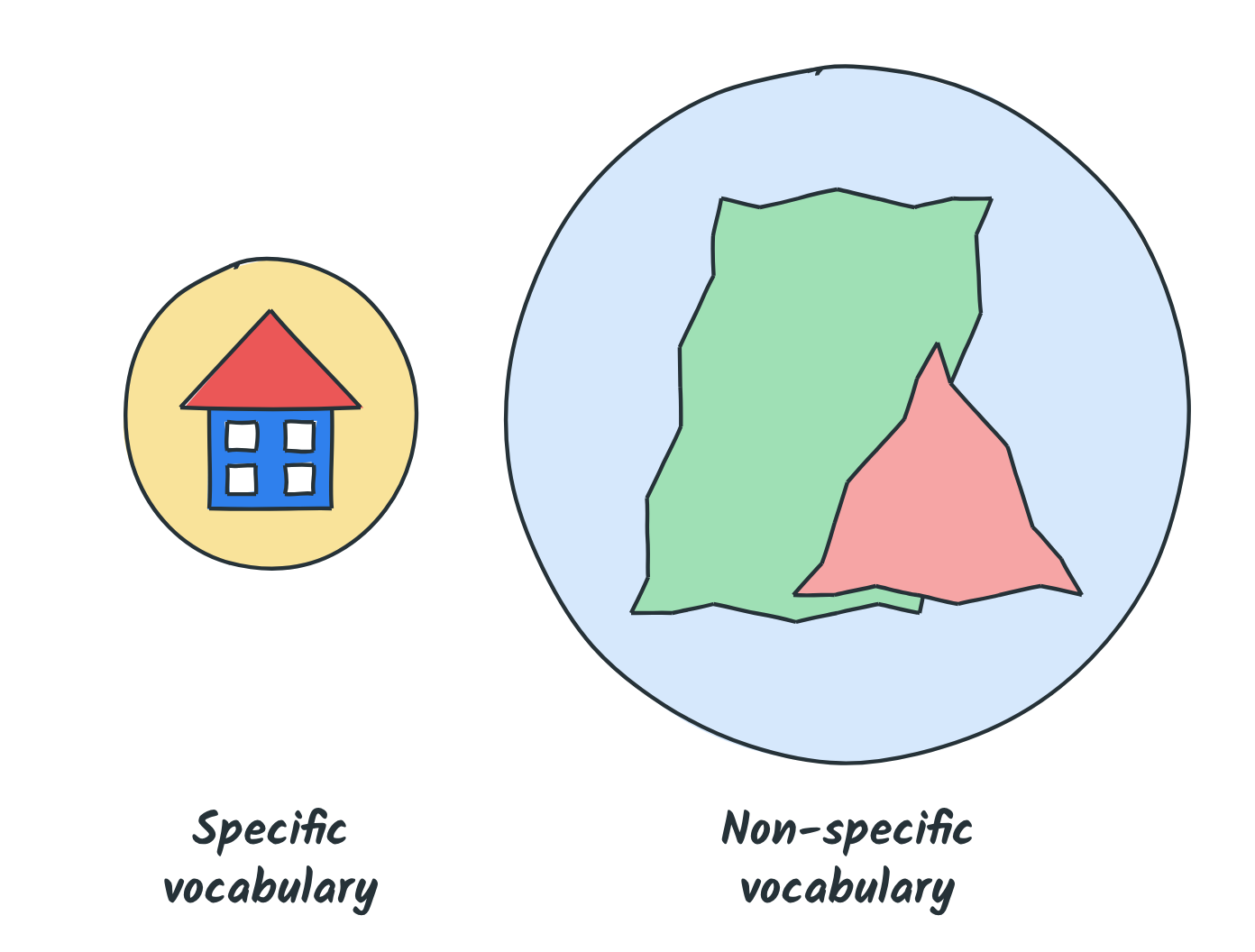
“I mean those vague phrases that give the illusion of precision while delivering none.” Léo draws a big circle with blurry edges on the board. “They lean on the imagination of the audience rather than on the clarity of the person speaking: each listener fills in the blanks their own way, and everyone believes they understand each other without ever sharing the same picture. An example. A worker says, ‘We lose a lot of time in the factory because of the noise.’ The message seems clear, but it isn’t. What noise? How much time? At which station? As long as those blind spots remain, nobody knows where to step in.”
Sophie brushes her left temple. “At the focus group, it was the maintenance engineer who asked your first question. And the worker told us about the presses.”
“Then your engineer got halfway there.” Next to the big circle, Léo draws a small, sharp one with a house inside. “My worker puts it another way. ‘The din of the presses drowns out the end-of-cycle beep; I lose five minutes on every task checking by hand, which is close to an hour a shift.’ Now the vocabulary is specific. We know the source (the presses), the consequence (an inaudible alarm), the cost (five minutes per task) and even the lever to act on (make the signal audible or visible). From a vague problem we move to usable data. That’s the whole difference between a smokescreen and an anchor point for understanding a need.”
Laura lowers the notebook she’s been hugging to her chest. “Hold on. So an HR manager talking about a ‘recruitment problem,’ that would be non-specific vocabulary?”
“Yes,” Léo says. “But if he says, ‘We struggle to recruit machine operators in this region because our salaries are 10 percent below the local average,’ then we’ve moved to specific vocabulary. With non-specific vocabulary we stay in the abstract. With specific vocabulary we get into actionable detail.”
Max, perched on the edge of the table since the snack, sits up. “Politicians use non-specific vocabulary like a foggy spotlight: the light is strong, but the outlines stay blurred. They line up totem words (‘change,’ ‘progress,’ ‘justice’) and each person in the crowd colors that word with their own expectations. Picture a rally in a public square, Sophie. The candidate raises his arms and chants, ‘We’ll bring change!’”
“And nobody asks which change, huh?” Cassandre says.
“Nobody.” Max counts on his fingers, one per voter. “In that same instant, the underpaid employee hears ‘a raise,’ the student thinks ‘cheaper college,’ the farmer translates it as ‘guaranteed prices for the harvest,’ while the business owner sees ‘tax relief.’ The speech hasn’t changed, but four different voters go home convinced the leader was speaking for them. That’s the whole strength, and the whole danger, of non-specific vocabulary. It gathers hopes under a single banner without ever committing to the details that cause trouble. As long as the words stay up in the air, they unite; the moment you anchor them to a concrete plan, the disagreements surface.”
“My strategy director, to a T,” Léo says.
Max lowers his hand. “Your director, yes. The problem arises when you have to get a precise need validated, face to face, by that kind of ‘visionary.’ Asking ‘What exactly do you need by Tuesday?’ amounts to bursting the bubble. The protective haze disappears, and the slightest technical question can come across as doubting their standing.”
Julien rubs the back of his neck. “Visionaries. I know one who played rock star on TV.” Sophie gives him a little nudge with her elbow.
“More or less,” Max says. “And watch out, these politicians aren’t confined to the podium: they exist inside companies too. You meet them on the executive committee, in marketing, sometimes even in the technical teams. They handle the internal slogan (‘innovation,’ ‘operational excellence,’ ‘the customer experience reinvented’) exactly like a campaign speech. As long as nobody makes them come down a level and talk deadlines, budget and metrics, everyone feels aligned. The day you look for sign-off with numbers on it, the unity cracks and the negotiation really begins.”
Sophie closes her notebook on her finger. “That means we have to keep asking questions to turn the non-specific into the specific. Otherwise we stay in the fog, and we run the risk of imagining a solution that answers a false need.”
On the board, Léo underlines the word “context,” sixth on yesterday’s list. “True: talking about a need through the context quickly drifts into vagueness. If you stick to grand speeches (‘the market is changing,’ ‘competition is getting tougher’) you get nothing actionable out of it. But properly framed, this approach can reveal external causes that are crucial and outside our direct reach. A warehouse director, for instance, says, ‘Our deliveries have been running massively late for six months because of the global container chaos.’”
“The global chaos,” Sophie says, “isn’t something we’re going to fix from a loading dock.”
“No. Put that way it’s too vague; we don’t know where to act. Listen to him when he gets specific. ‘Since the port of Rotterdam cut its unloading slots by 30 percent, our trucks wait three hours longer at the docks. As a result we miss the morning delivery window for 40 percent of the supermarkets.’”
“Exactly,” Laura says. “Rotterdam, 30 percent, three hours.”
Léo writes “30%” next to the small, sharp circle and rings it. “The statement stays contextual, since the port and its slots are outside his control, but it becomes specific: we understand the exact impact on the chain and the place where a logistics buffer or a different schedule could compensate. In other words, the key is to turn the context into concrete data; that way even an external factor lights up the right internal decision. And when I say concrete, what I really mean is ‘close to us’ or ‘something that lets us identify levers to act on.’”
Éric opens his laptop again, without typing. “Maybe I’m an idiot, but context also makes a great excuse. ‘It’s the market,’ and you move on.”
“Not an idiot at all,” Léo answers. “If the analysis isn’t properly aligned from the start with the specific goal we’re aiming at, it can quickly lead us to criticize very broad and sometimes barely relevant aspects. Take an assembly plant, for example. If we observe that the production targets aren’t being met, we might be tempted to blame the strict safety standards, the geographical location that limits access to certain resources. Or even the company culture inherited from a long shared history among the staff, without necessarily giving any detail. And to impose a new way of working that runs against that historical culture.”
“Culture’s a handy thing to blame,” Paul puts in.
Léo writes “standards,” “location,” “culture” on the board, then crosses them out with a single stroke. “At that point, if the goal to be served and the real difficulties in reaching it are neglected, there’s no reason for the situation to improve.”
Julien checks off the context in his notebook. “One door left.”
Léo sets the marker on the ledge. “I saw the last one at dawn. I’m still at FrigoFroid, in the truck departure yard, five in the morning, streaks of frost on the asphalt. Pascal, a seasoned trucker, is adjusting his straps before the Lyon to Saint-Étienne run. We’re chatting over a scalding coffee when he says, resigned, ‘You know, Léo, our real problem is the A47. Every Friday it turns into a parking lot. There’s no way to deliver before noon. Until they widen the highway, there’s nothing we can do.’”
Léo raises both hands, palms forward, and puts on the driver’s voice. “Bumper to bumper, move along, it’s blocked.”
“A jammed highway, there’s nothing you can do about that, huh?” Cassandre asks quietly.
“That’s what he thinks,” Léo answers. “He states his need as a limitation: a barrier he considers absolute and out of reach, the road. In his mind, there’s only one solution: two extra lanes over twenty kilometers. As if the whole logistics universe depended on a ribbon of asphalt he’ll never control. So I ask him where the goal is behind that dead end. He shrugs. ‘Me? Deliver on time and get back before the weekend truck ban.’ In other words, what’s at stake for him isn’t the highway; it’s the delivery slot.”
“And that missed slot, what does it cost?” Sophie asks.
Léo picks the marker back up, writes “4 hrs” on the board and rings it twice. “We work it out together: his goods spend four more hours under refrigeration to hold the cold chain. Four hours cost a lot. I offer an alternative: push the departure back by two hours, load an express delivery module for the most urgent stores, and shift the rest to a relay platform on the outskirts. Pascal stares at me, puzzled. Then he sees that the goal, delivering within the slot and avoiding the penalties, can be handled without new asphalt.”
“He wanted a wider road,” Julien says, “and what he needed was a different alarm clock.”
“You got it,” Léo says. “Very often, when people connect only to their daily tasks, they believe they’re facing a wall. Always trace it back to the goal: it lights up routes you never see from the cab of a truck stuck behind brake lights. That wall illustrates the last way of expressing a need: the limitation.”
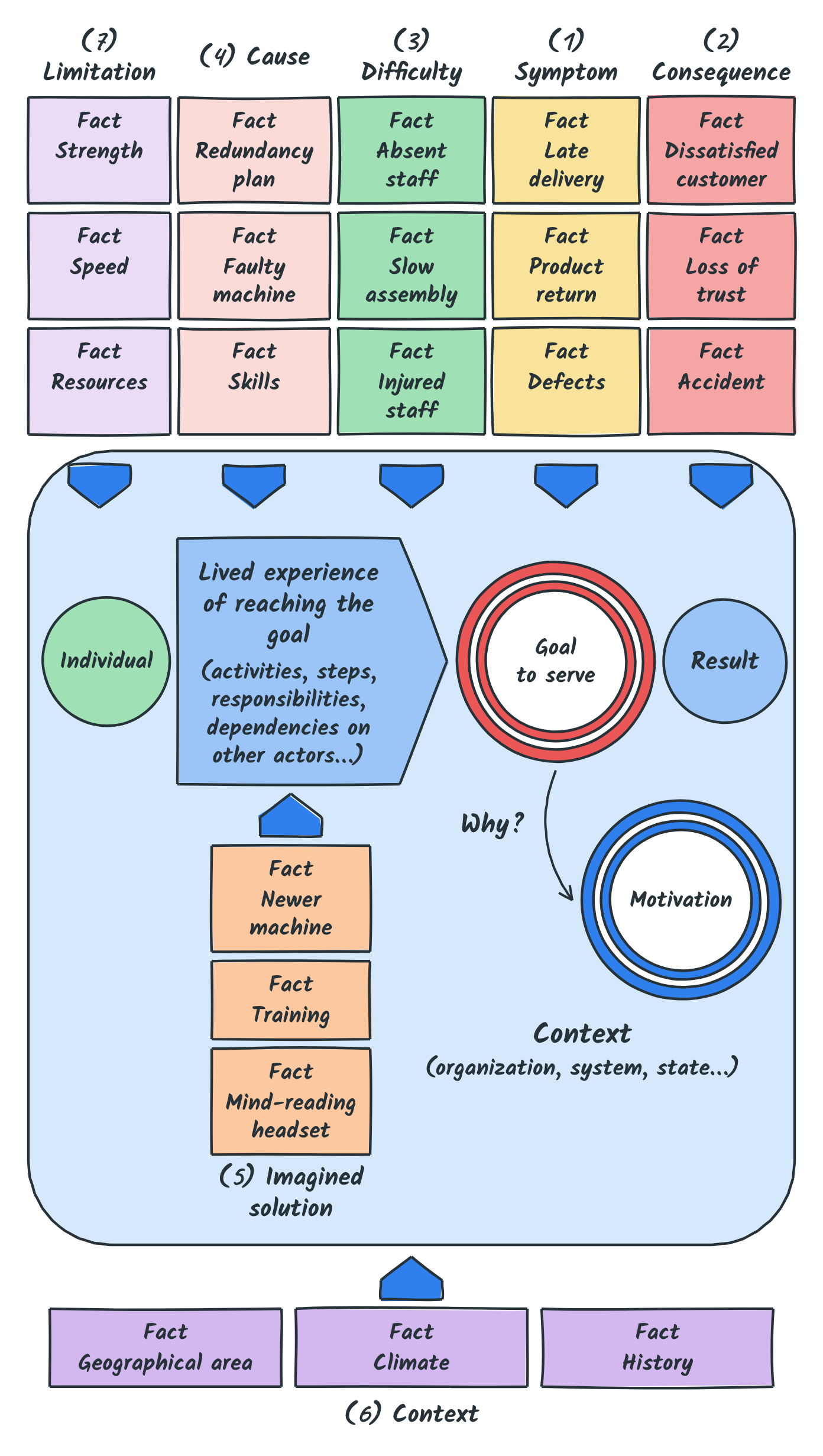
The word is barely out when Max folds his arms. “To me, that’s exactly the same thing as the context, simply with a more specific focus.”
“Hang on, Max,” Léo says. “Expressing a need as a limitation is indeed close to the contextual form. But instead of leaning on global trends or external constraints, it attaches to the immediate barriers a person or a tool runs into. It’s no longer a market in flux or competitive pressure, but an obstacle felt directly in the use or the execution of a task. For example, the limited strength of a person carrying a part that’s essential to assembly along the production line, limited resources for the daily work. Or a skill being asked for that isn’t in the job description.”
“An undersized component,” Marc says. “It does what it can, and it overheats.”
Léo nods. “It’s a fairly concrete, pragmatic view, and rather a pessimistic one, which can come across as a flat refusal. You meet it in complex organizations where people feel they no longer have any power to improve their own environment. Fortunately, once you step back and set the problem at the scale of goals to be served and of an experience with concrete difficulties, suitable solutions can start to grow!”
“Right,” Max says, and unfolds his arms.
Léo turns to the whole table. “I’ll say it for the seventh time. Whatever form a need takes, the key to a coherent analysis is always to start by bringing those elements back to the main goal we’re trying to achieve. If we don’t properly validate that alignment, we risk going after the wrong problem.”
Then he copies the seven forms out neatly, each with an example and the question that brings you back to the goal. Julien checks off the last door in his notebook.
| Way of expressing it | Examples | Questions that bring you back to the goal |
|---|---|---|
| Symptom | “We’re missing the loading window.” “Three alarms go off at the same time in the neonatal unit.” | What exactly does that stop you achieving? How do you measure how serious this symptom is? |
| Consequence | “The penalties are exploding and eating two points of margin.” “The Trustpilot score is down to 3.2 out of 5.” | What result did you have to guarantee before this consequence appeared? What are you losing if nothing changes? |
| Difficulty | “There’s no way to find the pallets in the right order.” “I cross the warehouse ten times for a single order.” | If this difficulty disappeared, what would you gain in concrete terms? At what ideal rate would you want to operate? |
| Cause | “The picking slips arrive all jumbled.” “The Wi-Fi drops in aisle 7 at the slightest heat peak.” | How does this cause threaten your main goal? What evidence do you have that it really is a cause? |
| Imagined solution | “What we need is an autonomous pallet truck.” “We should fit everyone with connected noise-canceling headphones.” | What result do you expect from this solution? If this solution didn’t exist, what would you be trying to achieve? |
| Context | “The cold market is growing 120 percent by 2030.” “The new WHO standards will tighten the inspections.” | Which internal goal does this trend put at risk? What happens in your own operation if you don’t anticipate this context? |
| Limitation | “The A47 is jammed, there’s no getting there before noon.” “No budget for a full software package.” | What are you trying to reach in spite of this constraint? What options are left to you to achieve the goal another way? |
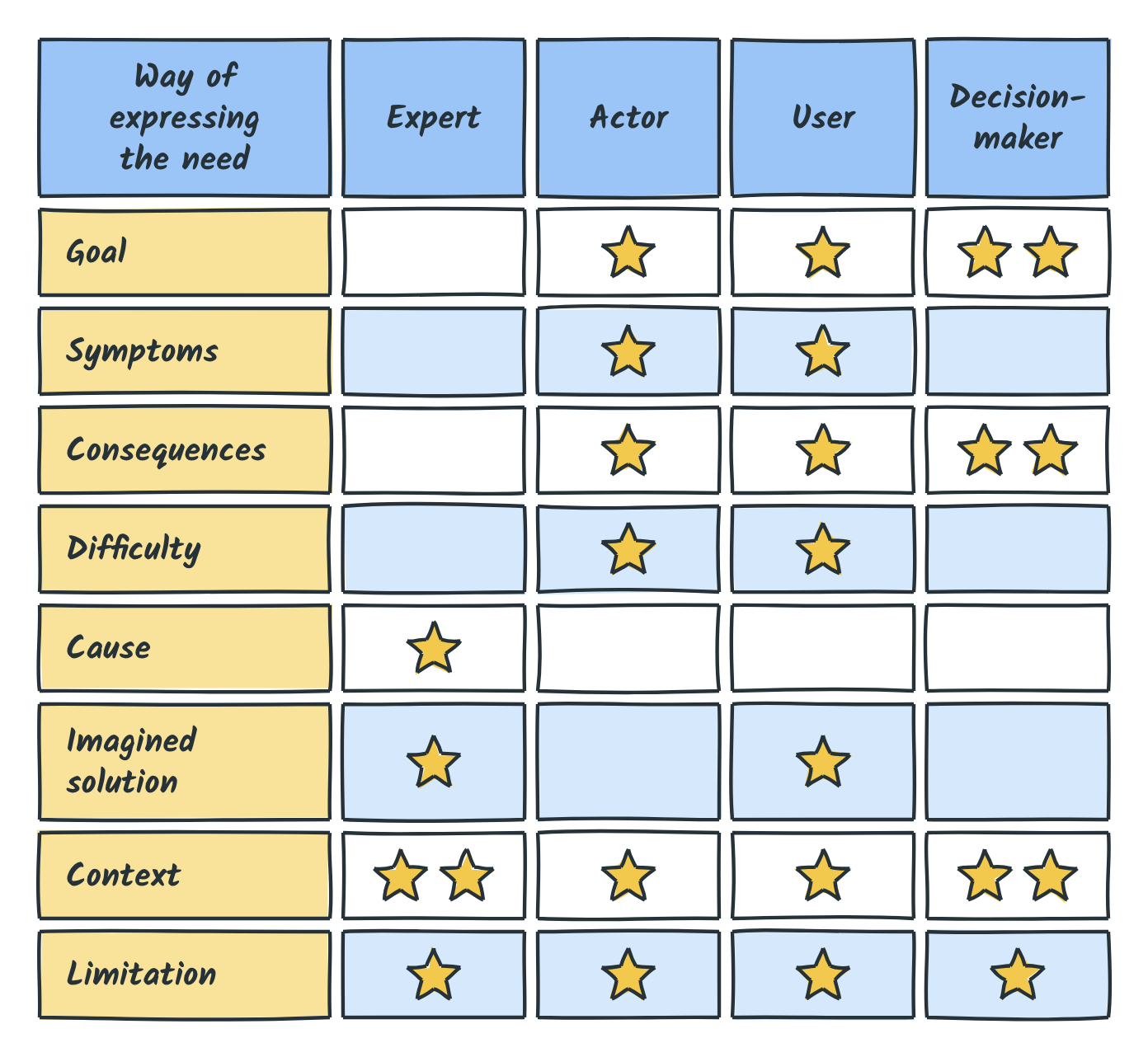
Julien talks without looking up from his page, his pen still moving. “We’ve got the seven doors, and we’ve got the roles: expert, actor, user, decision-maker. What we’re missing is who holds the key to each one. If we could tie each way of expressing a need to a specific category of stakeholder, that would give us a powerful tool for gauging the legitimacy of the information we receive. For example, a field expert might be better placed to describe symptoms or contexts, while a decision-maker could tell us more about the goals or the strategic constraints.”
Sophie glances at the margin of Julien’s notebook, where he keeps recounting the months of cash they have left, then looks at Léo. “Wait, Léo, I think I’m getting a little lost. We wanted to prepare the one-on-one interviews, and now I feel like we’ve traveled several light-years away. Can you explain how all this connects back to preparing our interviews?”
Éric looks at his watch, looks at it a second time, and taps the dial. “Do you realize it’s already one o’clock? We were so caught up in the discussion that we completely forgot to eat!”
Léo comes back to the table, turns his phone over and stares at the screen for a second. “We did get quite a conversation going. And that question deserves a proper answer. How about we pick this up after lunch?”
Max claps his hands. “Listen, I have an idea. There’s a great little restaurant three hundred meters from here. My treat!”
A silence, then Paul laughs, and the whole table follows. Julien closes his notebook over the margin and its months of cash. Sophie copies her question at the top of a page in her notebook, and everyone packs up.
Outside, it’s raining a little. Nobody takes an umbrella. At the restaurant, the window is fogged up and the talk drifts away from work, toward personal plans and past trips. Then the conversation wanders to neighborhoods, high schools, soccer fields. Max and Marc end up comparing theirs.
Max turns to Marc. “You live over there too? Frankly, that’s crazy, our parents probably know each other!”
Marc’s eyes widen. “Seriously? No way, don’t tell me we grew up on the same street without ever realizing it!”
Max bursts out laughing. “I think we did! It really is a small world.”
At the end of the table, Sophie’s notebook is still open next to her plate, at the page with her question.








 CC BY-SA 4.0