
Eighth episode of a ten-episode series on the weight of politics in the success of a product. Earlier episodes spoke sometimes of networks, sometimes of politics. A network helps you discover, connect, trust and vouch; politics begins when a decision binds those who never signed it.
Two ways to get the same charger
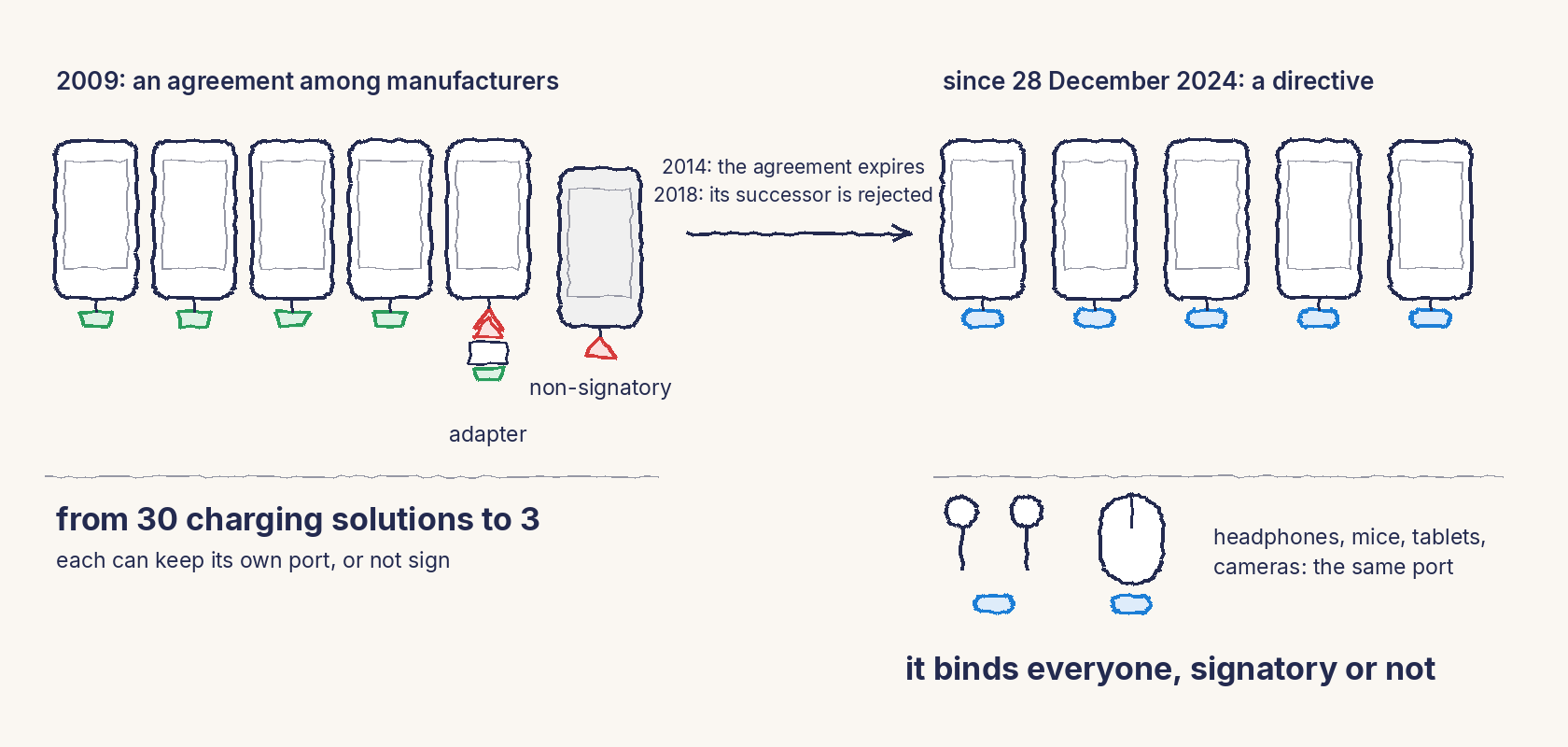
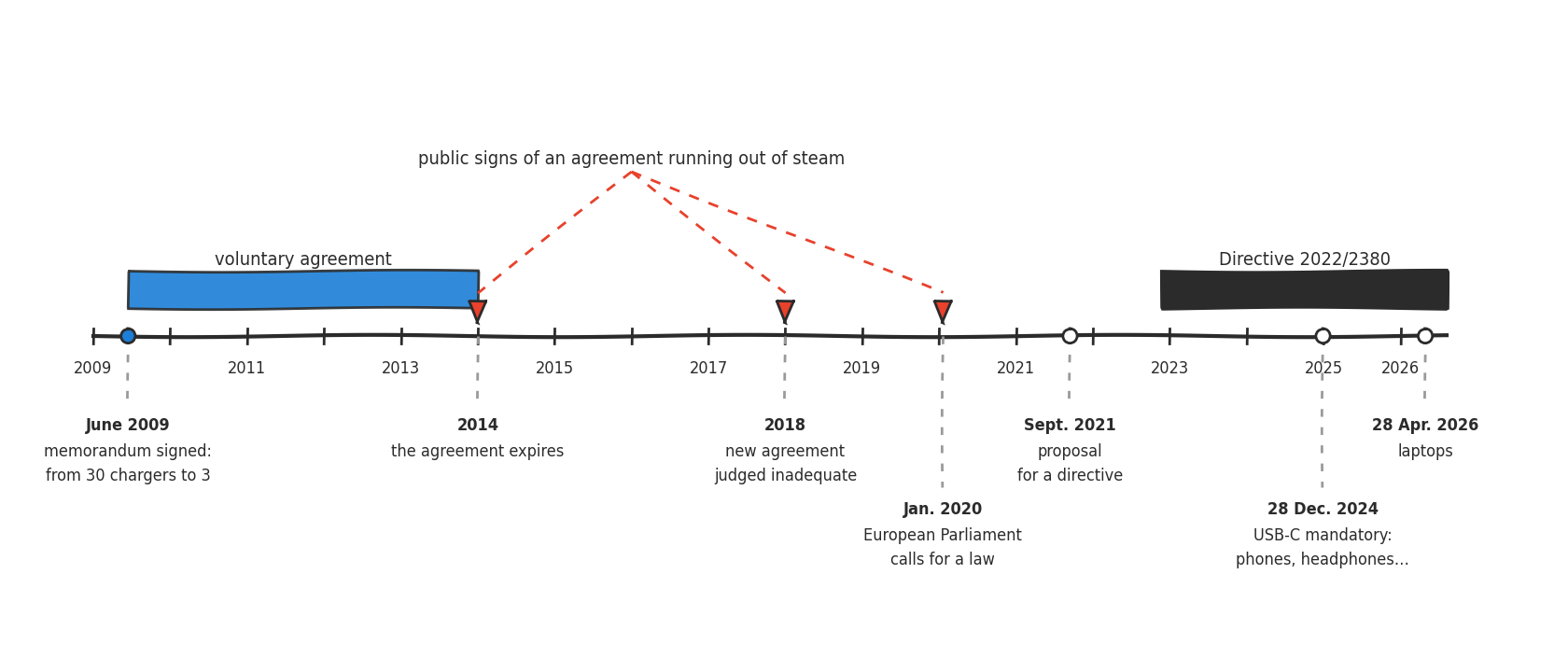
In June 2009, at the request of the European Commission, the major phone makers signed a memorandum of understanding. In it, they committed to adopting a common charging connector based on micro-USB. The fourteen signatories included Apple, Samsung and Nokia.
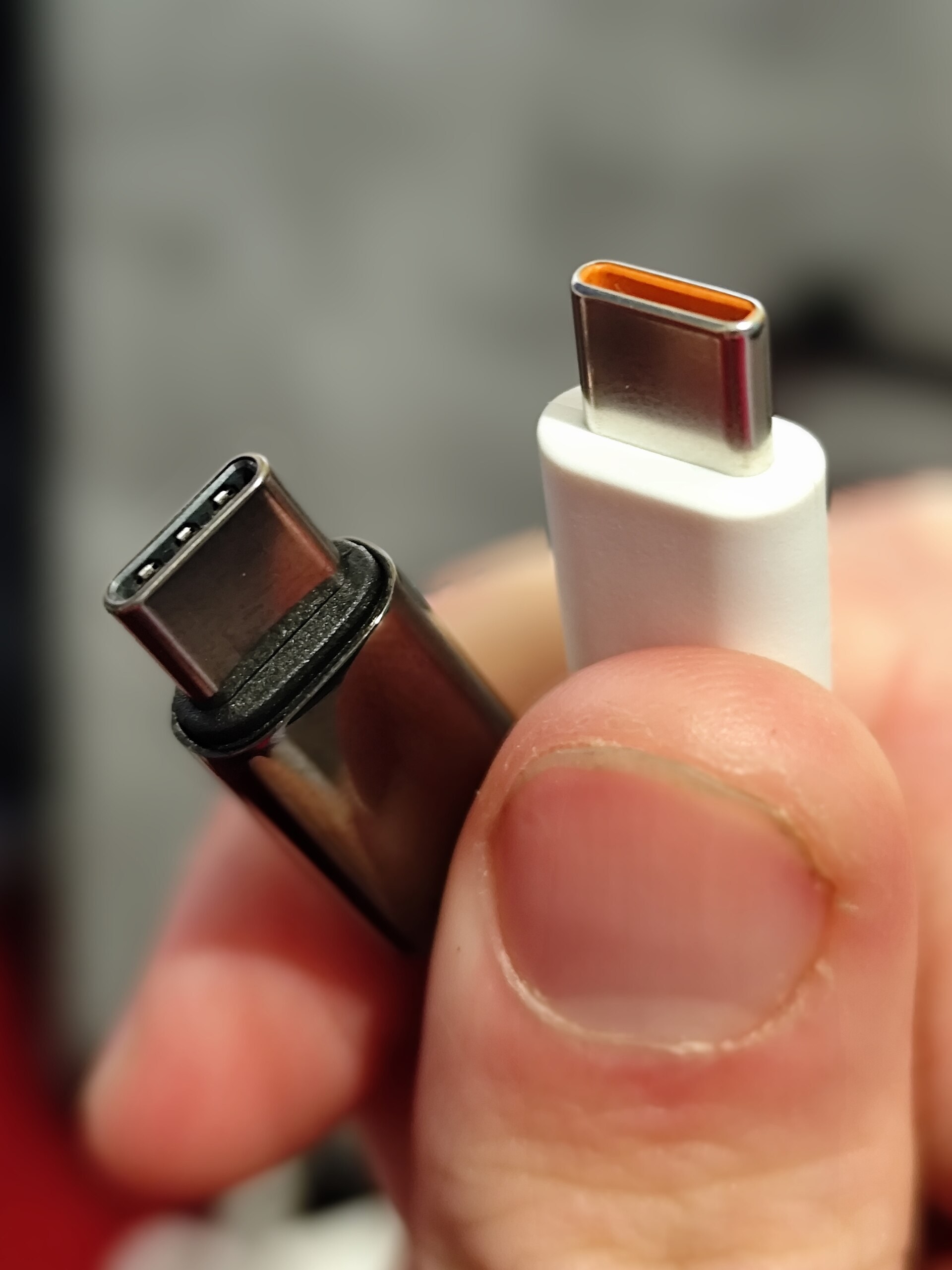
The agreement partly worked. The number of phone charging solutions fell from thirty to three. But it allowed an adapter for phones that kept their own port, and it expired in 2014.
In 2018, the manufacturers proposed a new agreement. The Commission judged it inadequate. Its diagnosis fits in one line: voluntary agreements of this kind are not legally binding, so they are not applied uniformly.
So it changed instruments. Directive (EU) 2022/2380 has required USB-C on all phones, tablets, cameras, headphones and mice sold in the Union since 28 December 2024, and on laptops since 28 April 2026. Apple had opposed it, arguing that a mandated port would hold back innovation. The rule applies to Apple all the same, as it does to everyone else.
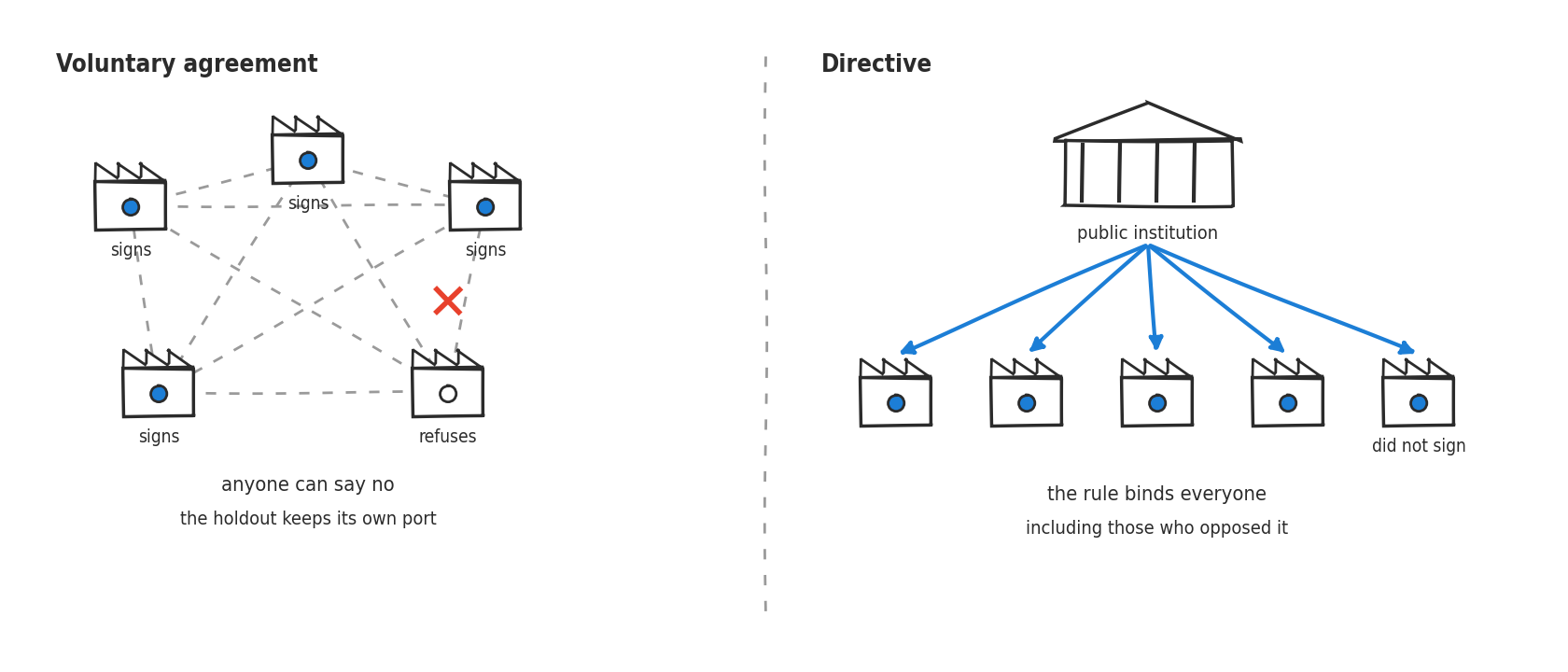
Same goal, same technology, two instruments. The first is a network: companies that reach an agreement, each of them free to say no. The second is political: a decision that binds everyone, signatory or not.
The whole episode comes down to one question: can the party receiving the request say no? If it can, you are in the network. If it cannot, you are in politics.
What a network carries
In business, a network is defined by what it carries. The sociologists and economists who have measured it find four things: discovery, the bridge, trust and vouching. The first two were measured on careers, the last two on companies.
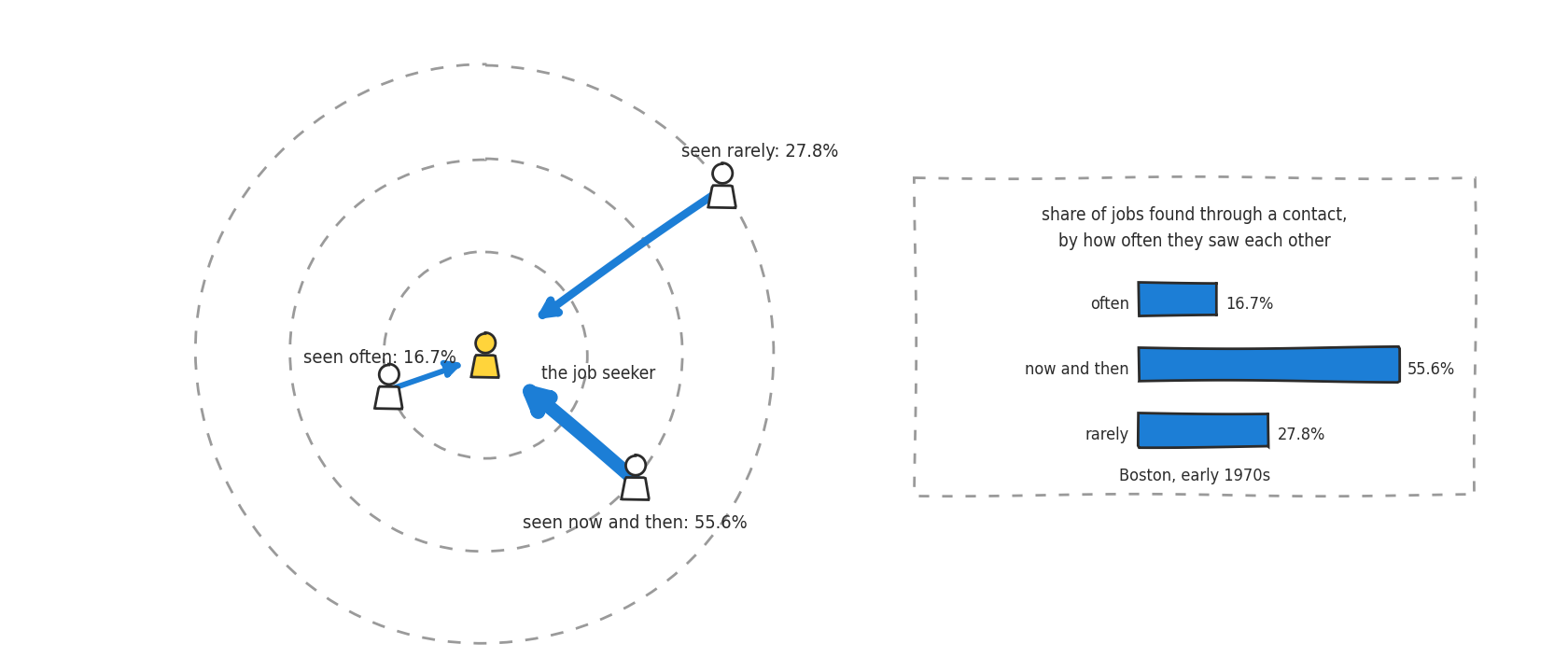
Discovery: what a distant contact teaches you. In 1969, the sociologist Mark Granovetter interviewed managers and technicians in a Boston suburb who had just changed jobs. Among those who had found their position through a personal contact, 16.7 percent saw that person often, 55.6 percent now and then, and 27.8 percent rarely, once a year at most. In 1973 he drew from this the idea of weak ties: the acquaintances you seldom see move in circles other than yours and bring information your close circle does not have.
In 2022, researchers from LinkedIn, Harvard, Stanford and MIT put the idea to the test on the social network’s contact-suggestion feature: randomized experiments on more than 20 million people over five years, with 2 billion ties created and 600,000 jobs found. Weak ties did increase job changes, but only up to a point: moderately weak ties, measured by the number of mutual connections, produced the most mobility. For a product team, this is the channel through which news arrives of a neighboring market, of a need no current customer expresses, or of a rule in the making.
The bridge: the position of whoever connects two groups. A structural hole is the absence of a tie between two groups that would gain from talking to each other. The sociologist Ronald Burt starts from an observation: opinions are more alike within a group than between two groups. Whoever connects separate groups therefore sees options the others do not. In 2004, Burt measured this among the managers of a large American electronics company: higher pay, good evaluations, promotions and good ideas were concentrated among those whose network spanned these holes.
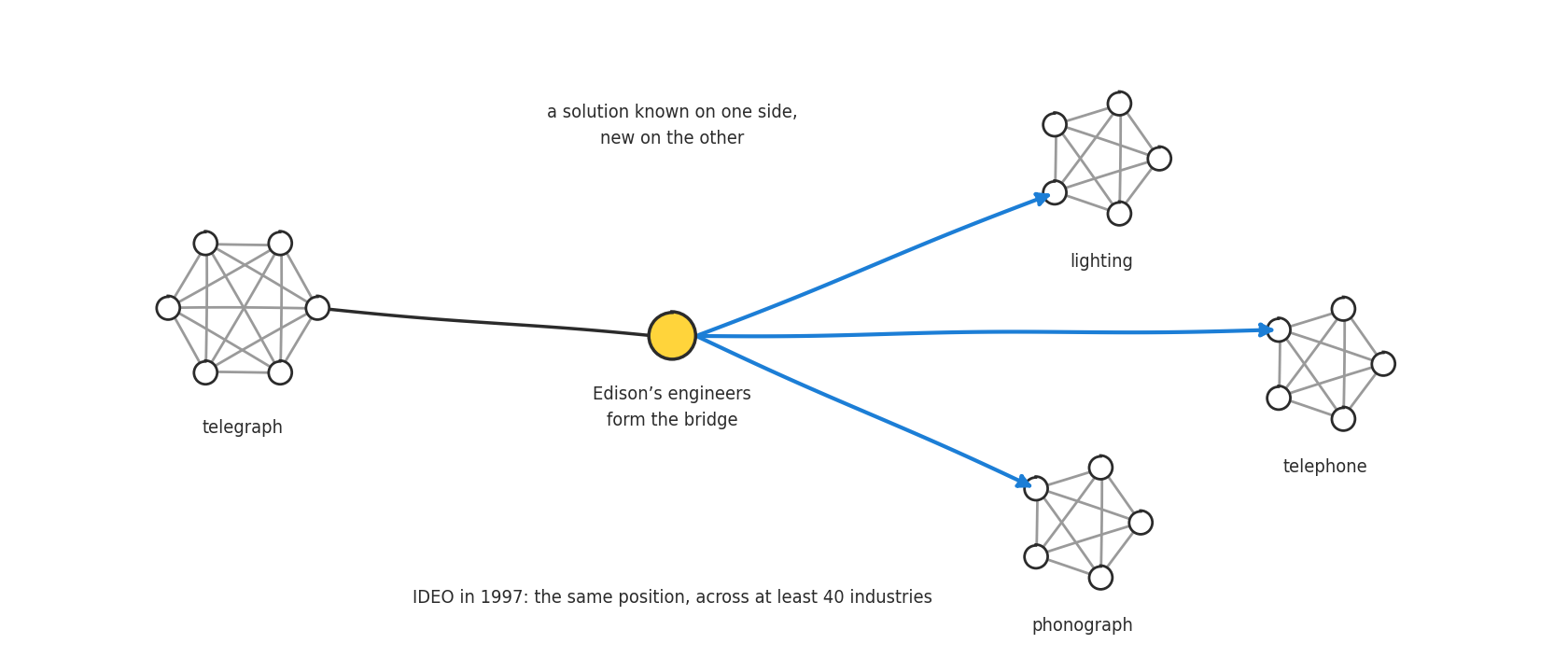
A company can hold the same position. In 1997, Andrew Hargadon and Robert Sutton described the design firm IDEO, which at the time worked for clients in at least forty industries: it spotted a solution known in one industry and carried it into another, where no one knew it. They recall the precedent of Edison, whose engineers, trained in the telegraph industry, carried what they had learned there over to lighting, the telephone and the phonograph. Inside a company, it is often the product manager who plays this role between engineering, sales and customers.
Trust: what speeds up exchange. The sociologist Brian Uzzi followed 23 apparel firms in New York and published his observations in 1997. Between partners who trust each other, exchanges move faster, and agreements aim to make both sides better off rather than to split a fixed pie.
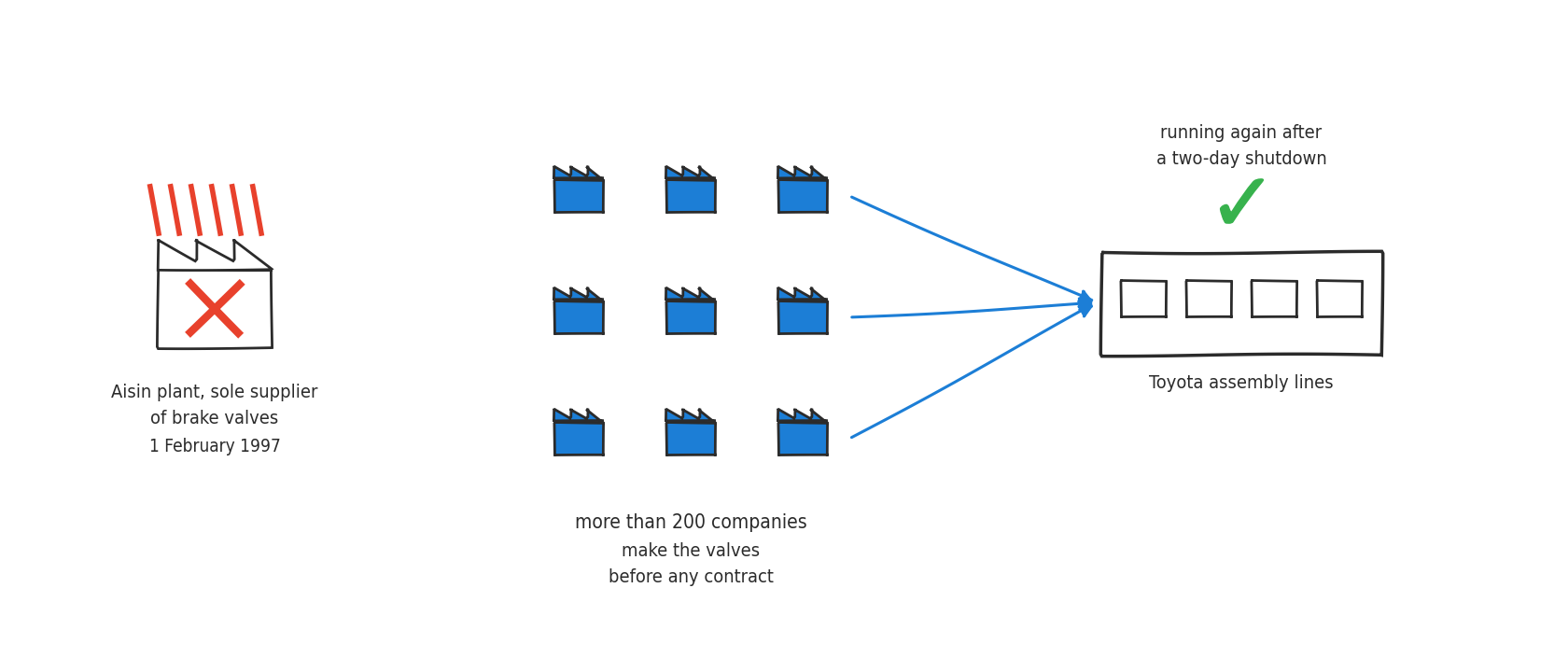
On 1 February 1997, a fire destroyed the Aisin Seiki plant that made the brake valves for every Toyota vehicle; Aisin was the sole supplier, and the plants worked just in time, with two or three days of stock. More than 200 companies, inside the Toyota group and outside it, joined the effort before contracts and prices were settled; about 70 of them made these valves in their own workshops. Toyota’s assembly lines reopened after a shutdown of only two days.
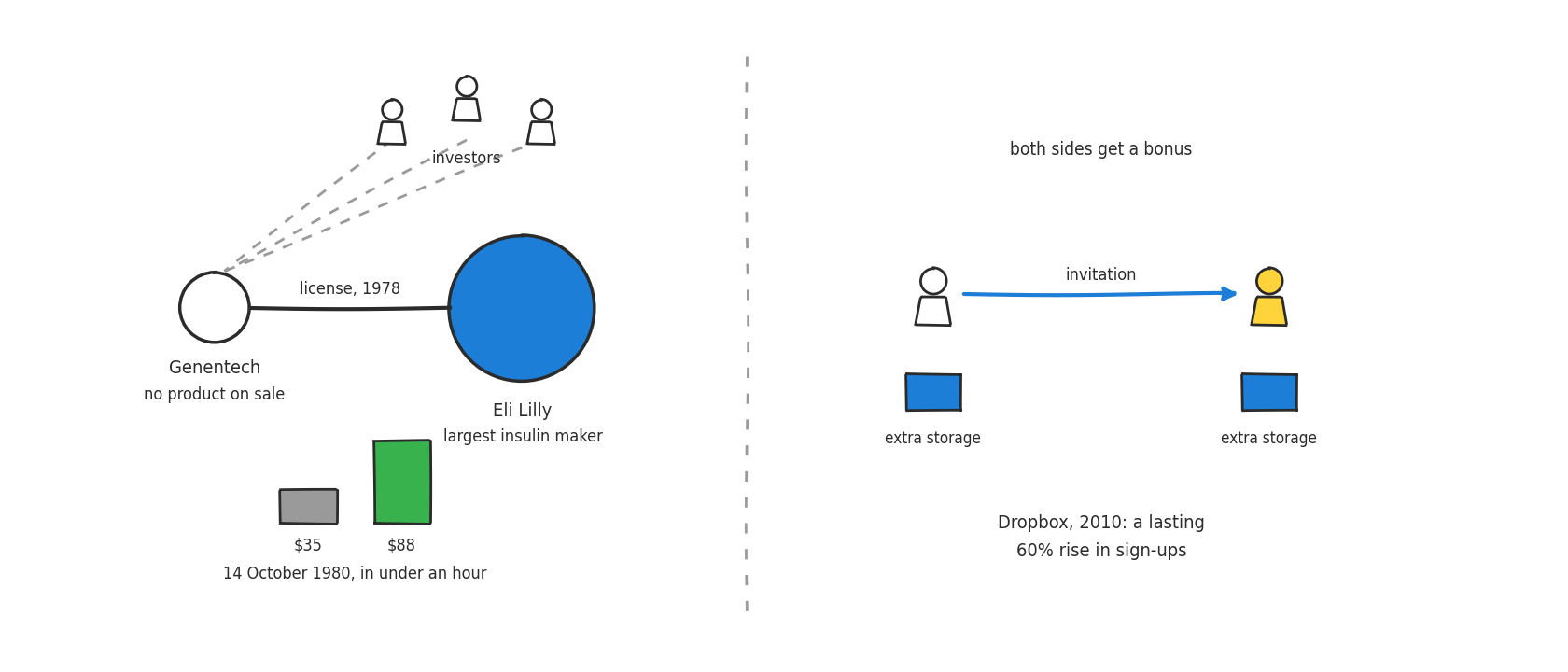
Vouching: the reputation a third party lends you. Faced with a young company of uncertain quality, outsiders judge it by its partners. Toby Stuart and his colleagues showed this in 1999 on venture-backed biotechnology firms: those with prominent allies went public faster, and at higher valuations. Genentech is the founding example. In 1978, it licensed its human insulin to Eli Lilly, the largest insulin maker in the United States. On 14 October 1980, it went public with no product on sale: the share, offered at $35, reached $88 in less than an hour.
Vouching works for customers too. In 2011, three researchers followed about 10,000 customers of a large German bank for nearly three years: a customer who came through a referral was worth on average at least 16 percent more than a comparable customer acquired some other way. Dropbox measured it on its own product. In a 2010 presentation, its co-founder Drew Houston reported that the referral program, which rewards both the person inviting and the person signing up, had permanently raised sign-ups by 60 percent, and in April 2010 users sent 2.8 million invitations in thirty days.
These four things have one feature in common: none of them flows without the consent of whoever gives it. A contact may not pass the information on, a partner may refuse to help, an ally may withdraw its backing.
What a network cannot do
Each of these four functions has its limit, and that limit has been measured too.
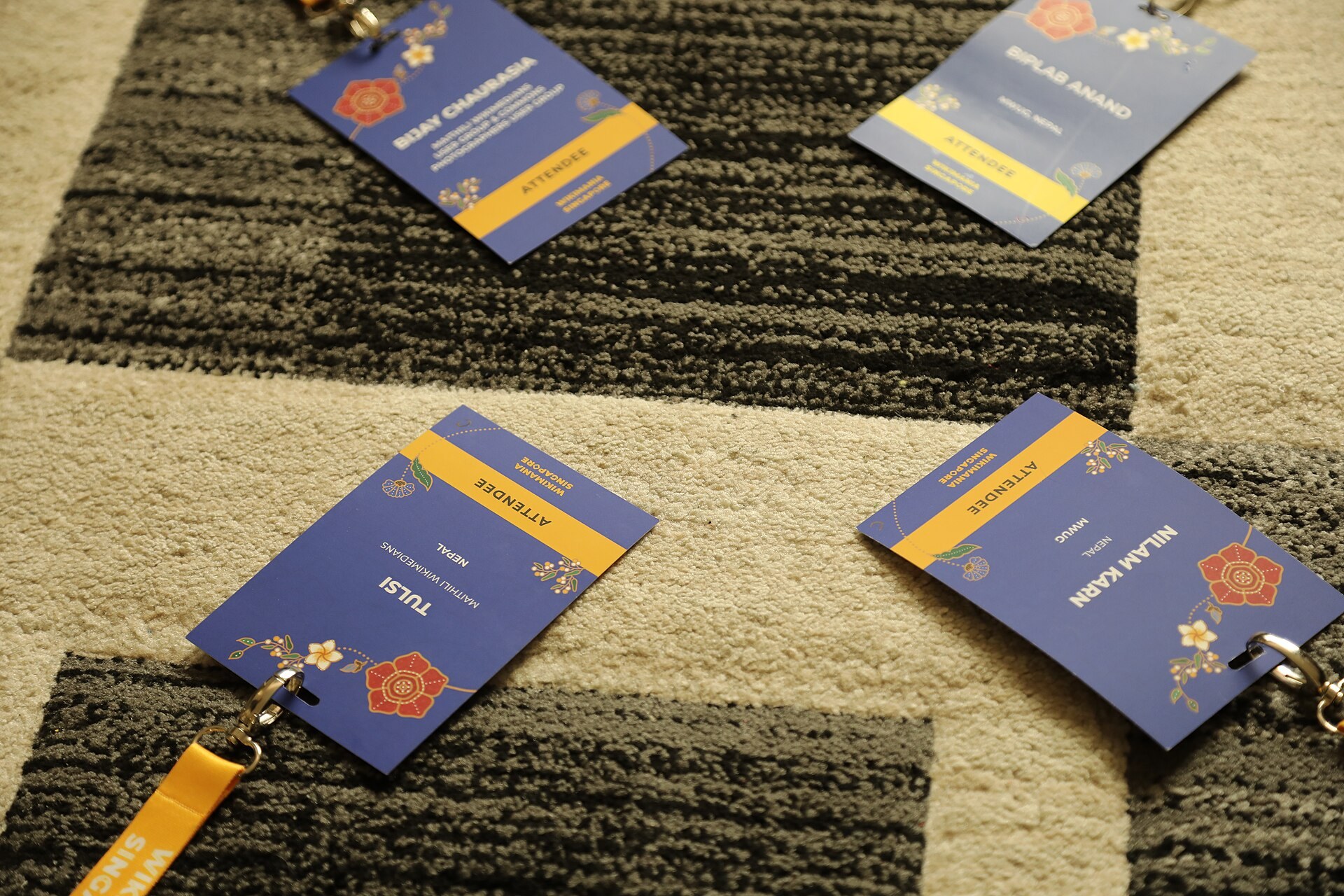
Making contact costs more than you would think. In 2007, Paul Ingram and Michael Morris fitted electronic name tags on about a hundred professionals gathered for a networking mixer. Almost all of them said they had come to meet new people. Yet they were far more likely to end up with people they already knew.
Trust has a threshold. Uzzi writes as much himself: beyond a certain point, ties that are too close make a firm vulnerable to outside shocks. They also cut it off from information circulating outside its network.
That leaves the fundamental limit, the one the charger shows. In a network, everyone can say no. The 2009 memorandum reduced the mess, and no more: a signatory could keep its port with an adapter, and a non-signatory was bound to nothing. A network only carries what each party agrees to give.
Where politics begins
In 1995, the economist David Baron distinguished two environments for a company. The first is that of markets and private agreements. The second, which he called nonmarket, runs through public institutions.
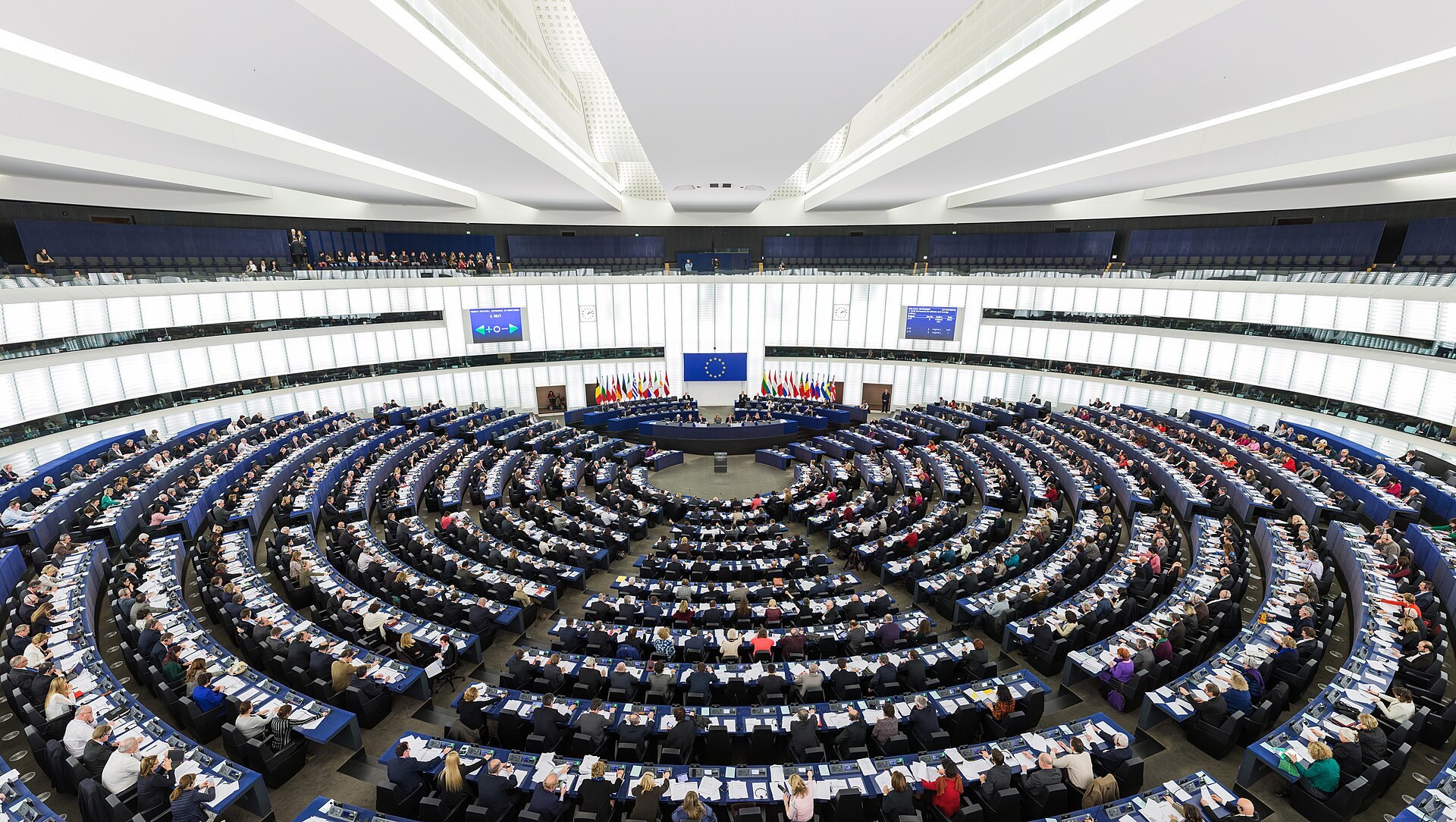
The difference lies in what flows. A network carries information, bridges, trust and vouching. Politics carries a fifth thing: obligation. A decision taken by a public body binds those who did not sign it, and even those who opposed it.
The charger shows it in sequence. First an agreement among manufacturers, which moves forward as long as each of them finds it worthwhile. Then, when the agreement stalls, a law that settles the matter for everyone. Apple had not accepted it, and USB-C has been binding on Apple since 2024.
When a buyer writes the law
The line is not always this sharp. The state is also a customer, and a customer can turn a contract into a rule.
Section 889 of the US defense law for 2019, the John S. McCain National Defense Authorization Act passed in August 2018, works in two stages. Since 13 August 2019, the US federal government can no longer buy telecommunications equipment made by Huawei or ZTE, nor certain video surveillance and telecommunications equipment from Hytera, Hikvision or Dahua. That is still a buyer’s decision.
The second stage is of a different kind. Since 13 August 2020, a federal agency can no longer sign a contract with a company that uses this equipment anywhere in its organization. That holds even when the use has nothing to do with the government contract. Every bidder must declare it, after a reasonable inquiry into its own systems.
The supplier keeps one way out: giving up the federal market. If it wants this customer, the rule comes into its house, all the way into its offices that do no work for the government. The contract has served as the vehicle for an obligation.
A minister is not always politics
The question applies to the request, whoever makes it. A minister can perfectly well act within the network.
Episode 5 told the story of the 2021 chip shortage. Germany’s economy minister, Peter Altmaier, wrote to his Taiwanese counterpart, Wang Mei-hua. He asked her to push TSMC, the world’s largest foundry, meaning the largest manufacturer of chips on behalf of other companies, to produce more for German carmakers. In 2020, the automotive industry accounted for only 3 percent of TSMC’s sales.
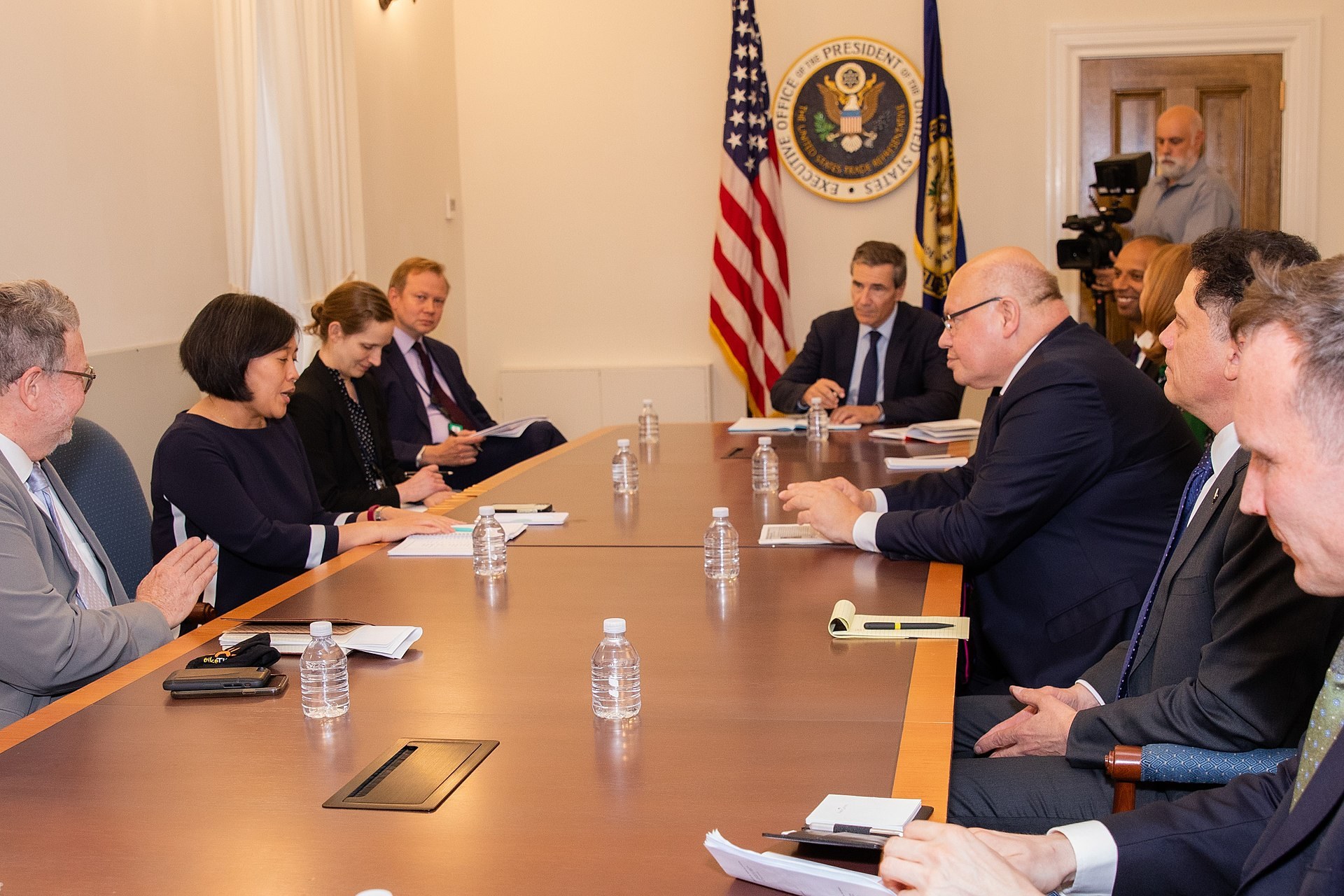
That letter obliged no one. It changed no rule, and TSMC remained free to answer as it chose. This was networking carried out by public actors: a request for a favor, backed by the weight of a state. The carmakers borrowed their minister’s vouching, for want of enough of their own.
The result was meager. TSMC had put automotive chips at the top of its priorities in mid-January, before the letter became public. Taiwan’s economy ministry replied that the company would give them priority if it managed to increase its capacity, and pointed out that it was receiving the same request from the United States, the European Union and Japan. Most carmakers, moreover, do not buy their chips from TSMC, but from parts suppliers that buy them from TSMC. The shortage lasted all year: in 2021, Germany produced 3.1 million cars, its lowest level since 1975.
The charger directive and Section 889, by contrast, are politics in the strict sense. They apply to companies that asked for nothing and agreed to nothing. A state can therefore play in the network or in politics. The question settles it: TSMC could refuse Altmaier’s request; Apple could not refuse the directive.
Vouching, the currency between the two worlds
Episode 5 showed where the two worlds meet. You get into the rooms where standards are written, the rooms of episode 4, with proof that others sign: a measurement from a third-party lab, a customer’s attestation. That proof is vouching, and vouching is earned in the network.
When the network does not provide it, you look for it higher up. The German carmakers, too small as TSMC customers to carry weight on their own, went through their minister. The charger agreement, too weak to prevail, ended as a directive. In the first case, public vouching was not enough: borrowed from a minister, it remained one request among others, which TSMC could meet at its own pace. In the second, the weakness of the network turned into an obligation, and the obligation produced the common charger.
The reverse also happens: a political rule reorganizes networks. The directive does not target phones alone, but also keyboards, mice and headphones, and with them a whole ecosystem of manufacturers. Section 889 requires every bidder for federal contracts to review the equipment it uses.
Two readings, two moves
For each of your dependencies, a single question tells you where you stand: who can say no?
If everyone can refuse, you are in the network. The work then consists of diagnosing which function is missing. Perhaps you lack discovery, and need more distant ties. Or a bridge to a world you cannot see. Or trust with a key partner. Or vouching lent to you by someone with a reputation.
If a decision can be imposed on you without your consent, you are in politics. The work is of a different kind. There, you carry weight through coalitions, public consultations, trade associations or evidence filed on time. You also read the weak signals: a voluntary agreement running out of steam can herald a law.
For the charger, thirteen years separate the 2009 agreement from the 2022 directive. In the meantime, the agreement’s expiry in 2014, the rejection of the new draft in 2018, then the European Parliament’s January 2020 resolution calling for legislation were public. Anyone who read those three signals knew where the rule was heading.
To apply this question to your own objective, the tool below asks fifteen questions, identifies the lever required, compares the strength you have with the threshold the objective demands, and proposes an action plan. It opens collapsed, and nothing you enter leaves your browser.
What this episode does not say
It does not say that the studies cited hold everywhere. Each has its own ground. The 2022 experiment concerns jobs and LinkedIn. Burt’s study covers a single electronics company, Uzzi’s 23 New York apparel firms. The referral study covers one German bank, and the networking mixer brought together about a hundred people.
Nor does it say that politics comes down to law. A widely adopted private standard, the specifications of a large buyer or a label can weigh almost as much as a legal obligation: you can refuse them, but at the price of a market. The question “can the party receiving the request say no?” is therefore best read as a scale, from a refusal that costs nothing to an obligation that leaves no choice. In between, ask yourself what refusing would cost you.
What this article rests on
The common charger
Section 889
The German minister’s letter
- Reuters, January 2021, Peter Altmaier’s letter to Wang Mei-hua and the automotive share of TSMC’s 2020 sales
- CNBC, from Reuters, 25 January 2021: TSMC will give automotive chips priority if its capacity allows
- Bloomberg, 25 January 2021: requests from the United States, the European Union, Germany and Japan; priority announced by TSMC in mid-January
- Taipei Times, 25 January 2021: most carmakers do not buy directly from TSMC
- VDA, 4 January 2022: 3.1 million cars produced in Germany in 2021, the lowest level since 1975
Studies on networks
- Baron, “Integrated Strategy: Market and Nonmarket Components,” California Management Review, 1995
- Granovetter, “The Strength of Weak Ties,” American Journal of Sociology, 1973
- Franzen and Hangartner, “Social Networks and Labour Market Outcomes: The Non-Monetary Benefits of Social Capital,” European Sociological Review, 2006
- Hargadon and Sutton, “Technology Brokering and Innovation in a Product Development Firm,” Administrative Science Quarterly, 1997
- Nishiguchi and Beaudet, “The Toyota Group and the Aisin Fire,” Sloan Management Review, 1998
- Kleiner Perkins, Genentech case study: the 1980 IPO, from $35 to $88 in less than an hour
- The Scientist: Genentech’s IPO on 14 October 1980, with no product
- Genetic Engineering & Biotechnology News: the 25 August 1978 agreement between Genentech and Eli Lilly on human insulin
- Drew Houston, “Startup Lessons Learned,” Dropbox presentation, 2010










 CC BY-SA 4.0