

Annonay, 1782. In the fireplace, the fire crackles. Joseph watches the ashes rise, drawn up into the flue. The smoke curls up with a strange lightness, with no wind to push it. Still holding the log he was about to throw on the fire, he crosses the house in long strides, to the door of the workshop where his brother Étienne is fitting a piece of wood into a press.
“I think we can make something fly,” Joseph says in a low voice, the log still in his hand.
Étienne looks up from his press. “With wings?”
“No. No wings. No machinery. Just… using whatever makes the smoke rise.” Joseph finally leaves his log on the workbench.
There is paper everywhere in the workshop, in reams on the shelves, in sheets drying on lines. It is the family trade, and it will be the material of the invention. Étienne raises an eyebrow; Joseph already looks as if he is flying. They ask the question that will become their thread: Can an object be made to rise without movement, without a machine, carried simply by the air itself?
They have no theory and no plan, only an intuition. Joseph thinks the smoke has a power: it is the smoke, he believes, that pushes upward to the sky. The two brothers make a cube of canvas and paper, stretched over a thin wooden frame, and light a small fire of wool and rags underneath it. The balloon swells, blackens, seems for a moment ready to take off… then collapses, heavy, damp with soot.
They start again. The fabric blackens, the smell catches in their throats, and nothing rises.
“That’s not it,” Étienne murmurs.
He holds his hand over the embers and snatches it back. The smoke has nothing to do with it. What carries the balloon is invisible, subtler: the heat.
They change their method: a clean fire, dry wood. The fabric slowly stretches taut. Then, without a sound, the balloon lifts off. One meter, two… It floats. The brothers look at each other without daring to speak. Their intuition, corrected, stays aloft, and the next need appears at once: What if it could carry a load?
They tie bags of sand to the basket. The balloon hesitates, sways… then climbs again. Less quickly, less high, but it climbs.
“We’re on to something,” Joseph breathes.
“And now?” Étienne asks.
Joseph doesn’t answer. He is already looking at the basket. Can it carry living beings?
They build a sturdier basket and put a sheep, a duck and a rooster in it. They send them up at Versailles, in front of the whole court and the king himself. Some laugh, others pray. The balloon rises and, three kilometers further on, it comes down; the animals are safe, and thoroughly shaken. One question remains, the wildest of all: Can a man fly too?
First comes a tethered flight. Four men hold the rope by hand as the balloon rises, and in the basket, standing, shirt flapping in the wind, is Pilâtre de Rozier. When he comes back down, he brushes off his shirt. “I waited to be afraid,” he says, “but nothing came.” So they must try a free flight.
Paris, November 21, 1783. A dense crowd has gathered: scientists, notables, children on their fathers’ shoulders. The balloon is immense, stretched like a sail. In the basket, Pilâtre de Rozier and the Marquis d’Arlandes. The air is clear, the wind light.
The fire is stoked, the envelope swells, quivers and, without a jolt, leaves the ground. Nobody speaks as the two men climb, pass over the rooftops and glide above the city, so slowly that the children have time to point at them. Twenty-five minutes later, they come down on the Butte-aux-Cailles, laughing and in one piece.
To get there, the Montgolfier brothers did not explore every possible way of making a balloon fly. They chose one path, hot air, with no certainty but with patience. They failed, corrected, tried again. Each time, they formulated a need. For each need, a hypothesis. For each hypothesis, a test, and sometimes another hypothesis to test. And with each step forward, a new need came to light.
“Incredible!” Marc says when Max falls silent.
He has listened without moving, which hasn’t happened to him once all day, and his screwdriver has stayed at the bottom of his pocket.
The ground has dried since the noon shower. At the foot of an old oak in the park, the whole MelonsNet team has settled on the warm grass, laptops closed, and the sun comes through the branches in a golden light. Sophie has her notebook open on her knees, at the page where she copied her question before lunch: how does all this connect to preparing the interviews?
Max lets a silence pass, then holds up two fingers. “There are two things I’d really like you to remember. The first is that one need often leads to another. What you aim for at the start isn’t always what you’re looking for at the end. And sometimes, what you’re looking for at the end… you would never have found it if you had waited to understand everything before you started.”
“So we take off first and read the manual in midair,” Julien says.
“More or less,” Max answers. “The second is that the story I’ve just told you, the one about the Montgolfier brothers, is a beautiful one. But it’s simplified. It’s a straight line. A neat logical sequence. But the reality is that every time a need shows itself, especially when it shows itself as a blockage, it isn’t an answer waiting to be found. It’s a fork. A crossroads.”
“Give us a balloon that won’t take off, and we’d have taken it apart to see why,” Julien says.
Max lowers his voice, and the circle draws in on the grass. “When their balloon doesn’t take off, it isn’t simply a failure. It isn’t even a problem yet. It’s just a signal. A wobble in the progress. And the whole question, at that precise moment, isn’t to understand why. It’s to decide whether it’s worth understanding why.”
“There has to be a reason, huh?” Cassandre asks.
Max counts on his fingers. “There are a thousand, at that moment. Maybe the canvas is too heavy. Maybe the heat is escaping through the opening. Maybe the fire isn’t strong enough. Or maybe the whole idea is wrong. But around all that, there are also other needs that could emerge, like secondary bubbles: how do you control the direction of the flight? How do you keep the height steady? How do you stop the passengers from breathing in the smoke?”
“And we’d have bolted on a rudder,” Julien says. A few laughs.
“So at the fork, how do you choose?” Sophie asks.
“So many legitimate leads,” Max answers. “But none of them matters as long as you aren’t flying. As long as you haven’t left the ground. Because having hypotheses isn’t enough: you have to know what you’re trying to achieve.”
“That makes eight times for the goal,” Léo says. “I said it seven times myself before lunch.”
Max doesn’t turn toward him. “The biggest mistake isn’t ignoring a cause. It’s spending time answering a need that wasn’t that important. Before trying to understand a blockage, you have to assess what it really puts at risk. What you risk if you don’t deal with it now. Height control, direction, breathing? All of that will come. But as long as you haven’t left the ground, none of those refinements makes any sense. You don’t move forward by understanding every obstacle. You move forward by knowing which obstacles really matter, and when.”
Sophie keeps her finger under the question in her notebook. “And what about us? Which of our symptoms do we start with?”
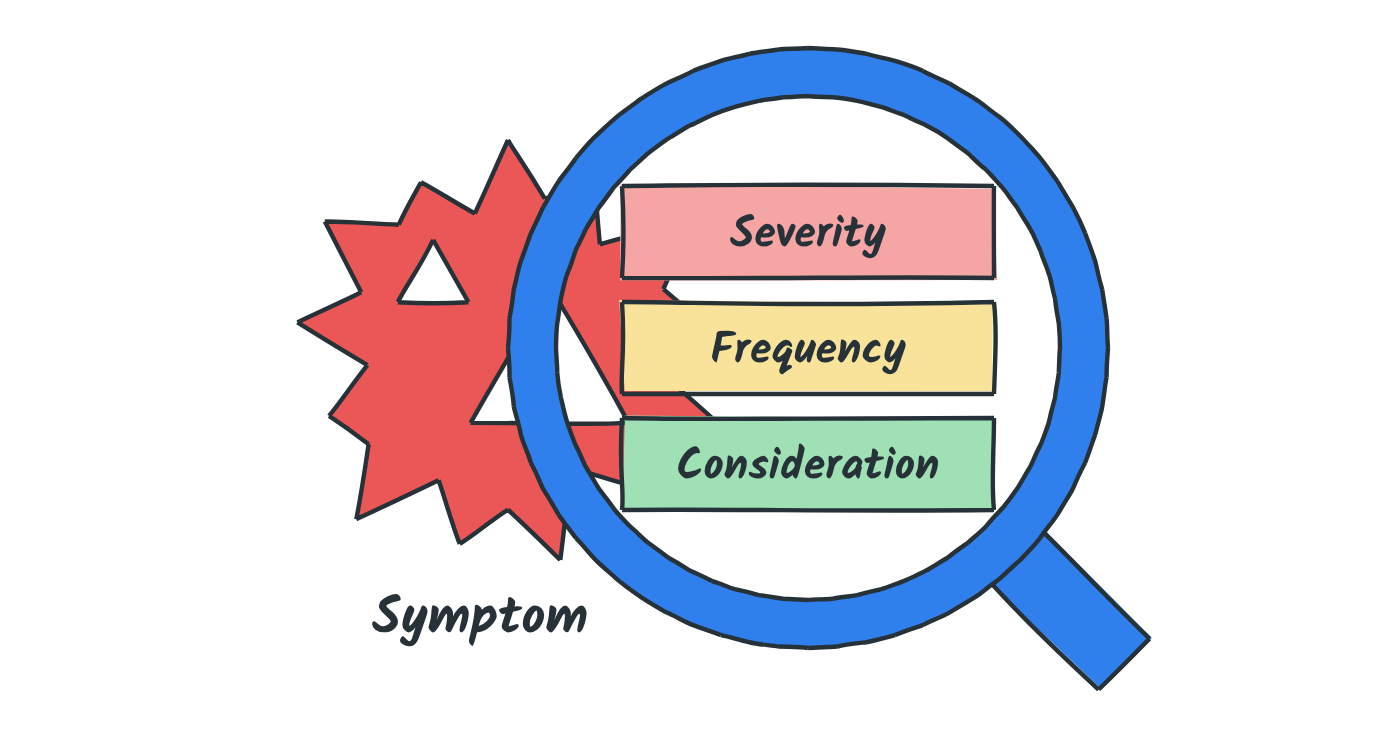
Against the trunk of the oak, Max has propped the flip chart brought down from the meeting room. He uncaps a marker and writes three words in a column, “Severity, Frequency and Consideration.”
“For every symptom you identify, you need to understand how important it is. The key is to set up a scoring system based on multiplying these three parameters. That will give you an objective assessment of each symptom and help you decide which ones deserve the most attention. We aren’t at the need yet. We suspect a need through different symptoms that have to be assessed.”
“What do these three parameters correspond to?” Julien and Sophie ask it in the same breath, then look at each other.
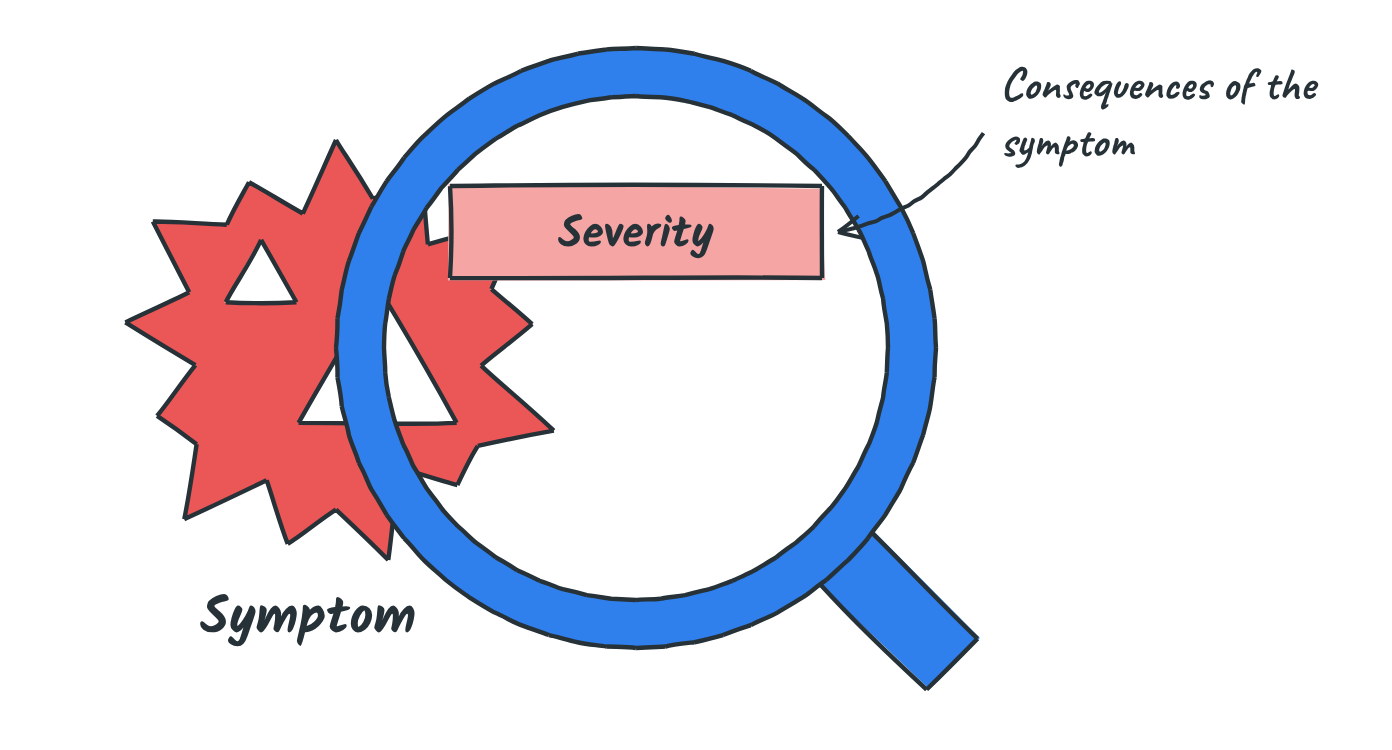
It’s Léo who answers. “The first two measure the consequences of the symptoms, and the third is the level of consideration they receive. It shows you which symptoms really matter when you’re looking for an underlying need.”
“Take Amazon, for example,” Max says, tapping the first word with the tip of his marker. “Amazon handles millions of deliveries every day, and its main goal is to guarantee that customers receive their orders within the promised time. Meeting those deadlines goes beyond logistics: it’s the very essence of their promise of reliability.”
“And what does the customer expect?” Sophie asks.
“Depends on the day. First, imagine the goal of a customer during the holiday season. For this customer, the goal is to receive a present before Christmas. If there’s a delay, say the parcel arrives on the 26th instead of the 24th, the symptom is indeed a late delivery. But here the consequence is serious: the customer can’t give the present on time and may lose confidence in Amazon for critical end-of-year purchases. For him, it’s no longer just a late parcel, it’s a broken promise.”
“A present that shows up on the 26th ends up at the back of a closet, basically,” Éric says.
“Or it goes back,” Max answers. “The customer may decide to return the parcel because he found an alternative at the last minute, and that loss of confidence may push him toward other options in the years to come.”
He opens one hand, palm toward them. “Now consider a different goal. Suppose a customer orders a product outside the critical periods. The goal here is to receive an item with no particular urgency, let’s say within three days. If a late delivery happens here too, the symptom is the same: a late parcel. But the consequence is far less serious. The customer isn’t significantly penalized, and a delay of a day or two may even go unnoticed.”
“Same box, different tree,” Julien says.
Max looks at each of them, one after the other. “That’s severity: for the same symptom, a delay, the consequences vary enormously depending on the goal at stake. In some contexts the consequence is small; in others it’s heavy. And for us, what matters is to understand the specific goals that change the weight of each symptom.”
Julien pulls up a blade of grass and rolls it between his fingers. “I don’t know how to put a broken promise in a spreadsheet. That’s interesting, Max, but how do you quantify severity in a case like Amazon’s? With a financial loss? A score on a scale of one to five? Or rather a list of qualitative consequences?”
“Let’s go back to the Christmas customer, the one whose present arrives on December 26 and who couldn’t give it on time. If we assume that each Prime customer spends an average of 1,400 euros a year on Amazon, and that this delay leads him to cut his purchases by half, that’s a potential loss of 700 euros for Amazon.”
Max writes “€700” next to Severity.
“And in March?” Marc asks.
“Outside the holidays, the same customer might feel a delay of a day or two as a slight inconvenience, with no impact on his future orders. We could put the loss at zero. With a normalized approach, we could rate the severity of the first case at level five on a scale from zero to five, while the second situation comes out at a severity of zero.”
He adds a 5 and a 0 under the €700, then goes back to underline the amount. “But the normalized approach may limit our ability to justify investing in solving the problem later on.”
“No investor signs off on a five out of five,” Julien says. “Seven hundred euros, he gets.”
Cassandre has laid her hands flat on the grass. “But here we’re only talking about one delay for one customer, when Amazon delivers millions of parcels every day. Aren’t we taking a risk by drawing such absolute conclusions from a single consequence?”
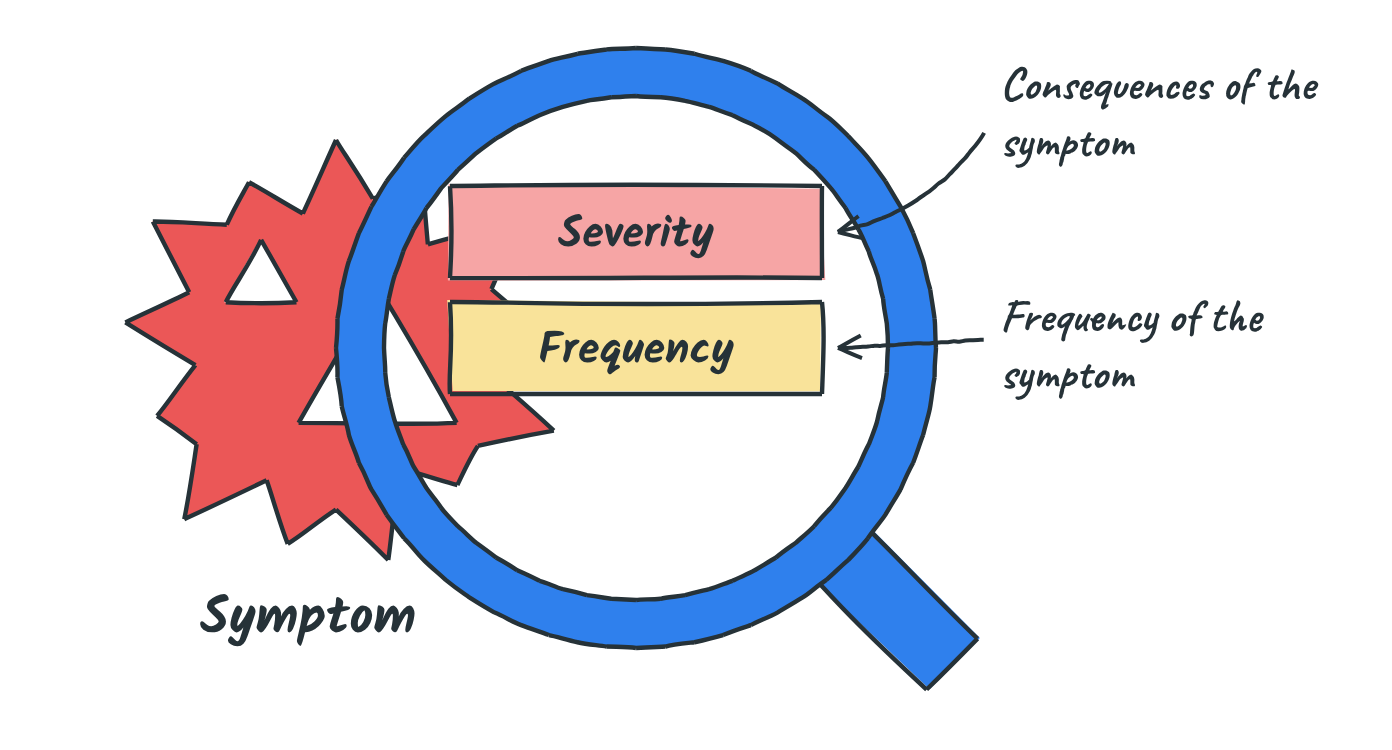
Léo answers before Max can open his mouth. “You got it, Cassandre. That’s why the second key parameter is frequency! In other words, we need to look at how many times this event, this symptom, occurs over a given period to judge how important it is. If we want to compare several symptoms and prioritize our efforts, we must always keep that period the same across the different indicators.”
“Back to the holidays,” Max says. “Imagine that a delay at Christmas costs Amazon 700 euros per customer affected. Suppose a delay hits 10 percent of orders over the Christmas period. To keep it simple, 10 percent of customers. Now we’re talking about tens of thousands of customers affected, not just one. If those 10 percent of customers decide to cut their purchases by half, we’re talking about a colossal loss that can run into tens of millions of euros. The same consequence carries a completely different weight when the frequency goes up.”
“One loose contact on a board, you shrug,” Marc says. “Across the whole production run, you recall the batch.”
Julien lets go of his blade of grass. “So severity gives us an idea of the potential impact for each customer, and frequency tells us how recurrent the problem is.”
“Right,” Max says. “Severity, measured in terms of consequences, tells us about the individual impact, while frequency shows us whether it’s an isolated symptom or a systemic problem. And to prioritize effectively, you always have to look at the two side by side.”
Sophie looks at the flip chart. Next to Severity, it reads €700, 5 and 0; next to Frequency and Consideration, nothing yet. “And this third parameter, the level of consideration, what exactly is it? Isn’t it already covered by severity?”
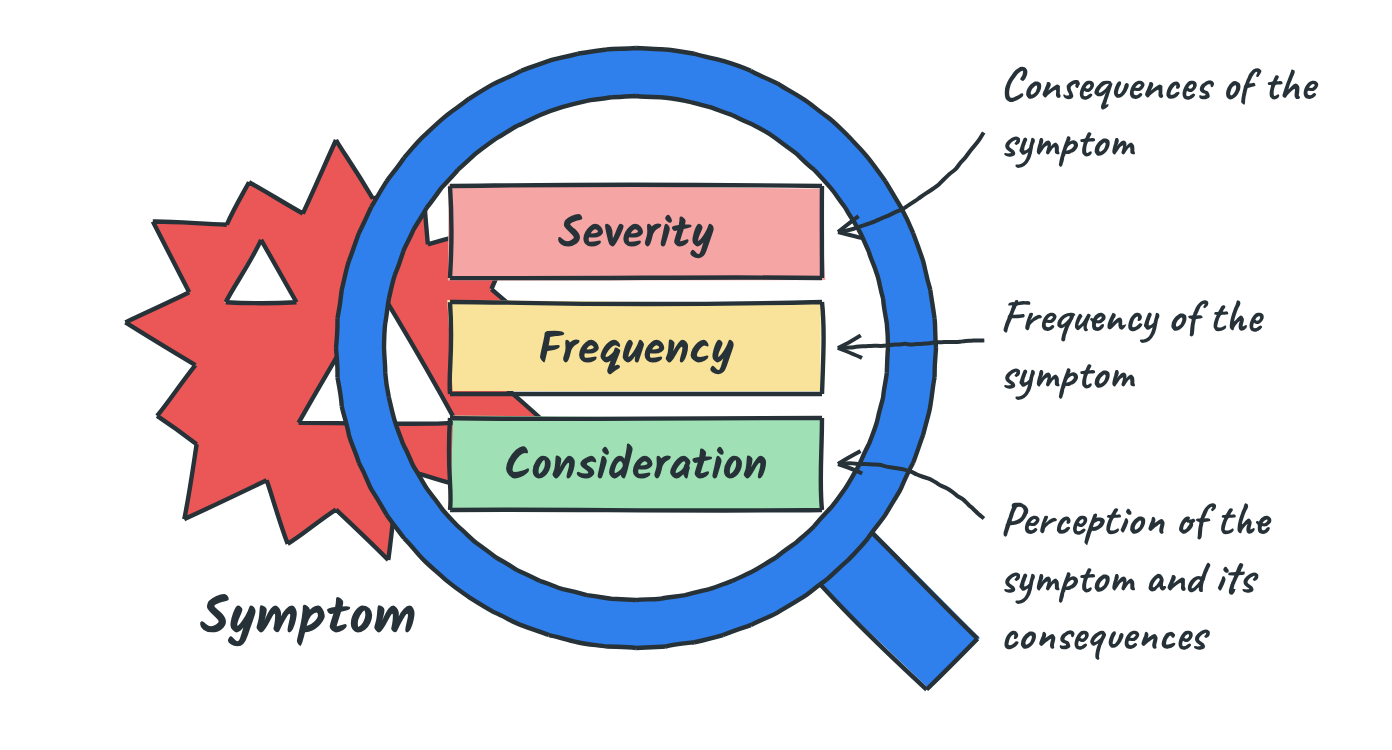
Max shakes his head. “Not quite, Sophie. Consideration is, in a way, the human dimension of our analysis: an indication of how much importance the company attaches to solving a problem. Sometimes, even with problems that hit their results hard, companies choose to ignore them. It’s a bit like someone who keeps smoking while knowing the risks to their health. In those cases, there’s no point proposing a solution if the need for change isn’t recognized.”
“Hold on,” Laura says. “Recognized by whom? By the person who lives with the problem, or by the one who pays?”
“By the company, first. Look at Amazon. Amazon built its reputation on extreme logistical excellence. For them, every delivery problem, every delay, every lost parcel is taken seriously, even if the direct financial impact seems minor. They have the means and the will to deal with these symptoms, because they’re aiming for flawless customer satisfaction. Consideration is high because every detail counts for them; every weak point is an opportunity to improve.”
“And some companies couldn’t care less,” Paul says quietly.
“Now imagine,” Max says, “a company that has a monopoly on its market, where customers have no choice but to buy its product. It could afford to neglect its customers’ complaints or frequent delays, because it knows they have no alternative and it can afford to pass the extra costs on in its prices.”
“Like the only bakery in town,” Éric says. “It can burn its croissants every morning.”
“In a context like that,” Max goes on, “consideration for solving a problem is low, because the company feels no pressure to change things.”
He pulls his laptop out of his backpack, leans back against the bag and turns his fingerprint-smudged screen toward them. “Look, I have a diagram that shows how I assess the consideration given to a problem.”
The table fits on a single page: five questions, with two boxes to check beside each one. Max runs his finger down the +1 column. “At zero, nobody cares about the problem. No budget, no resources, not even a discussion about it. At five, on the contrary, a solution is in place, with regular follow-up and clearly defined improvement targets.”
“One point for every box checked in that column, huh?” Cassandre asks.
“One point per yes. To help, you can ask yourself questions such as: Is the problem understood? Does the company see the problem clearly, or does it remain vague? Is it even a problem the organization recognizes? Sometimes you notice that workarounds have been put in place. That’s a sign: if people build their own makeshift solutions, the need exists, even if management hasn’t made it a priority.”
Sophie brushes her left temple with a fingernail. “At the focus group, the worker from the presses told us, ‘We end up using hand signals.’”
“A workaround, yes,” Max says. He scrolls down the page. “Another question. Is it a need that completely blocks a goal? In other words, does the population concerned simply give up on meeting its need, for lack of means? In that case, it leaves us thinking about an opportunity: do we want to be the first to reveal and fill this ignored need? That can mean a high acquisition cost, and therefore the need for substantial funding!”
Julien has opened his notebook again. His index finger stops on the margin where he keeps recounting their months of cash. “Substantial funding,” he repeats. “Going after customers who don’t know they have a problem costs a lot.”
| Question | +1 | +0 |
|---|---|---|
| Do the stakeholders properly understand the problem? | ☐ | ☐ |
| Is the need clearly worded (not vague, not purely technical)? | ☐ | ☐ |
| Does the company already regard this point as a problem? | ☐ | ☐ |
| Have users put workarounds in place? | ☐ | ☐ |
| Does this need completely block the achievement of a priority goal? | ☐ | ☐ |
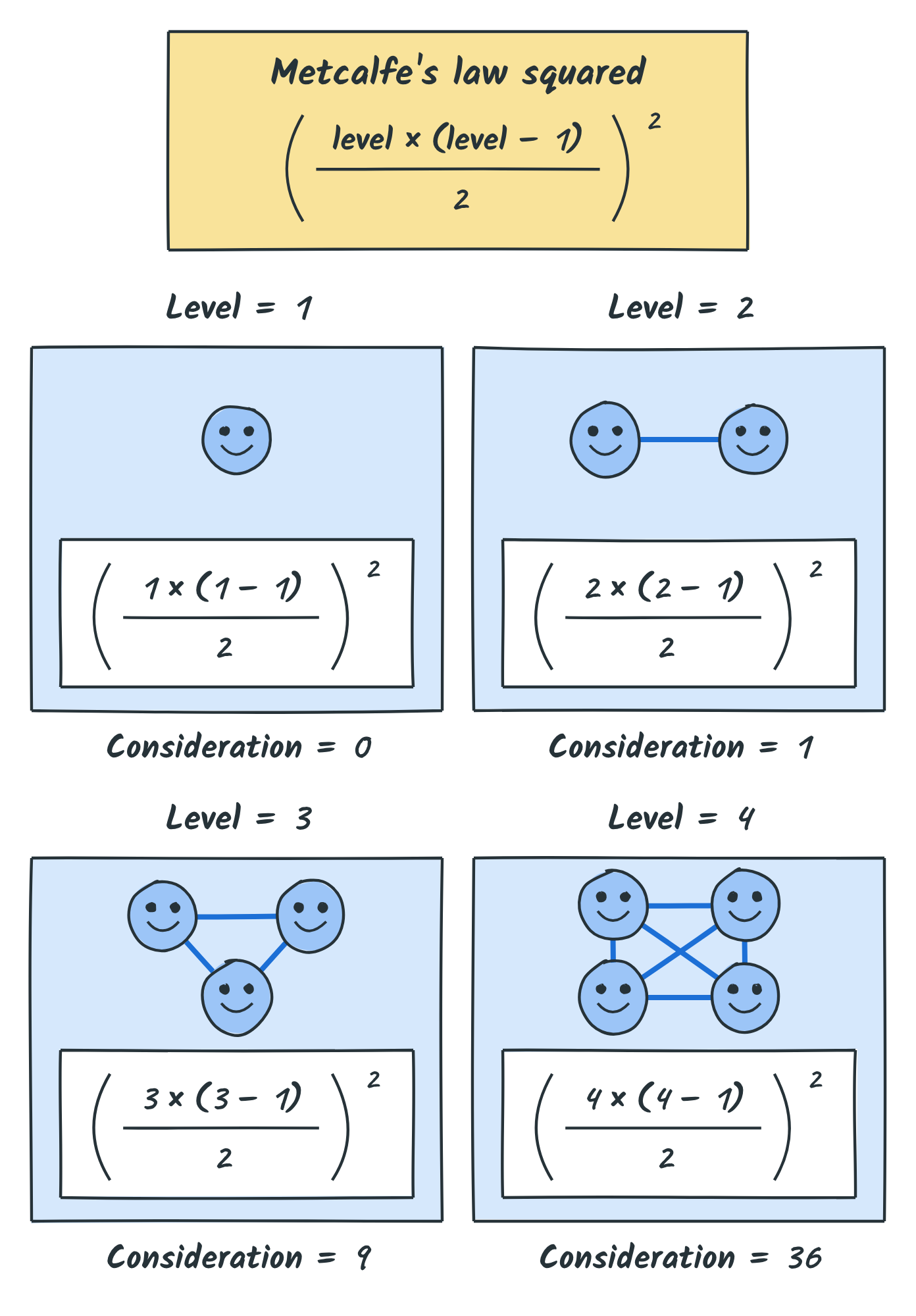
Max scrolls through his document to a second graph. “Next, I feed this level of consideration into the formula of Metcalfe’s law squared. Why? Because, as I see it, becoming aware of a problem is a social phenomenon.”
Julien leans so far toward the screen that he has to put a hand on the grass to keep from toppling over. “Explain that to me. Metcalfe, isn’t that the thing about the value of networks?”
“That’s the one. Roughly speaking, Metcalfe’s law says that the more members a network has, the more useful it becomes, and much faster than the number of members grows: roughly as its square. A single telephone is useless, but as soon as there are two people, an interaction becomes possible. With ten users, the potential connections explode.”
“Forty-five possible links, for ten,” Marc murmurs. “And you square that again.”
“And what does that have to do with how a problem is considered?” Sophie asks.
Max points to another diagram on the screen. “Consideration works the same way. The more players recognize a problem, the more legitimate it becomes and the more it calls for a solution. If nobody cares about it, it takes a colossal effort to bring it to the surface, a bit like launching a social network with a single user. On the other hand, if everyone is already talking about it, the investment needed to solve it is much smaller.”
Léo pulls from his pocket an apple he’s kept since the restaurant and bites into it. “Bottom line, an ignored problem takes a lot more effort to make visible and get support for. That it?”
“Yes. By building this factor into our analysis, we avoid charging headlong at a need that could be extremely hard to get recognized.”
Sophie points her pencil at the screen. “And why do you stop at five? You could run statistics on the number of respondents.”
Max winks at Léo. “You’re going to like my answer, Léo: it’s to keep the scoring simple. It’s an approximation, but it works well.”
Léo raises his apple in approval, his mouth full.
“Consideration is crucial,” Max concludes, “because without it even the best solution will remain a dead letter. Understanding this parameter helps us avoid working on problems nobody really wants to solve.”
Under the oak, the shadows have stretched out as far as the bags, and the late-afternoon walkers pass along the path with their dogs without a glance at the flip chart. Julien closes his notebook. “Enough theory, we’ve understood what the one-on-one interviews involve.” He turns to Sophie. “What we need now is a well-structured interview guide.”
Sophie looks down at her notebook, at her question from lunch. “And here we are.”
Julien and Sophie send the team back to the office to get on with their current tasks. Laura, Paul, Éric and Cassandre leave first; Marc waves to Max like a neighbor, and the flip chart goes off under Paul’s arm. Julien and Sophie stay in the park with Léo and Max. Sitting in a circle on the grass, laptops on their knees, they work out how to turn this session into an interview guide.
“Where do we start?” Sophie asks. “How do we word the questions so we’re sure to get answers we can use?”
Max puts his laptop down beside him and folds his arms. “If you follow what we’ve said so far, start by checking that the person you’re talking to is legitimate, steer the discussion toward the goal they’re trying to reach and identify the symptoms that stop them from getting there. And above all, for each symptom, don’t stop at a simple description. Assess its importance by applying the formula we saw: combine severity, frequency and level of consideration. That’s what will let you rank the real problems and not get carried away by misleading signals.”
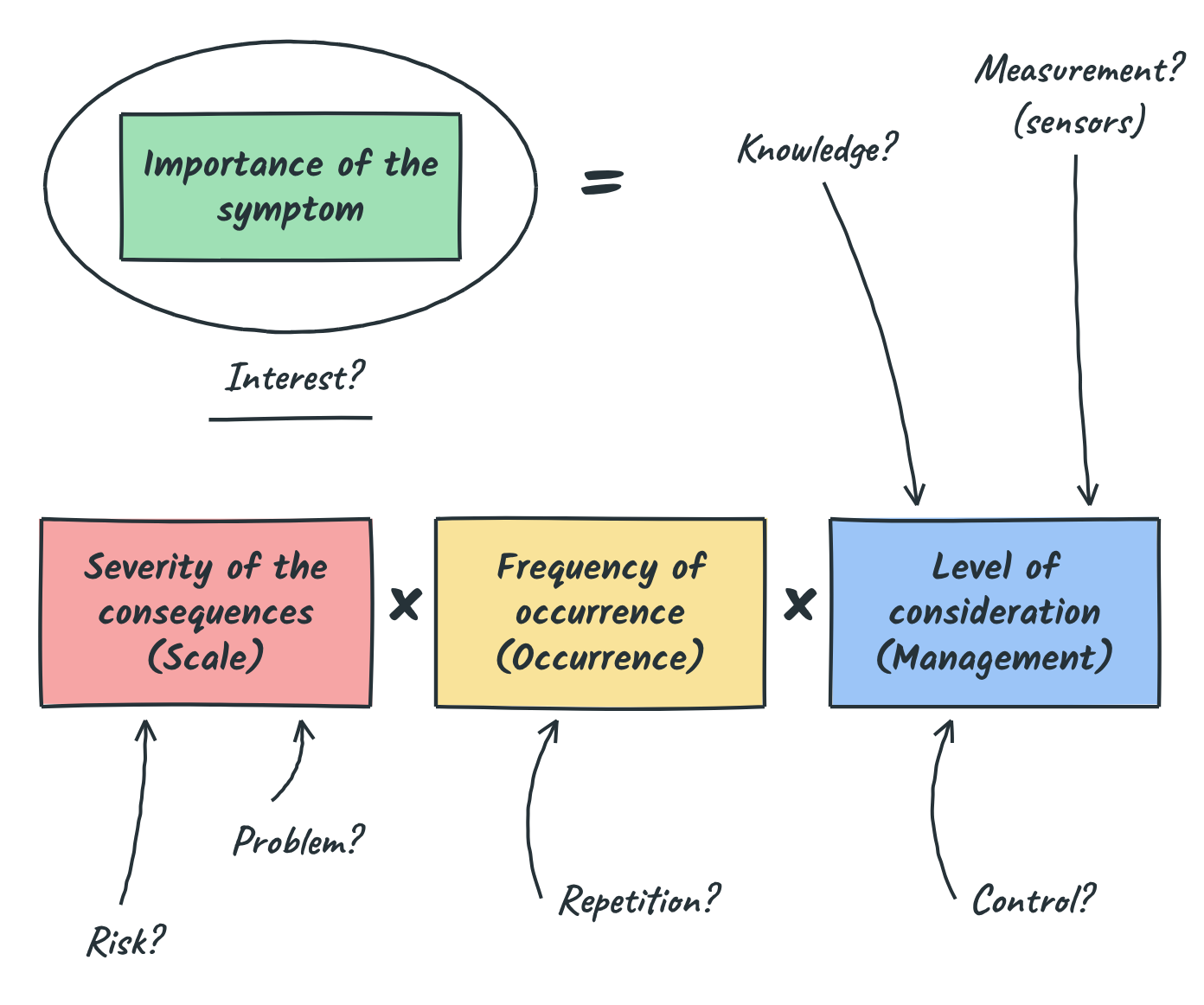
Under her question, Sophie writes: legitimacy, goal, symptoms, then Max’s three words joined by two multiplication signs. “Perfect. Then that’s how we’ll do it. We’ll work it all out in detail before we leave this park.”
“And don’t forget to ask for contacts for the follow-up interviews!” Léo says, the apple core in his hand.
The next morning, in the meeting room, the interview guide fits on three printed pages, in a stack in front of Sophie, between her notebook and a paper cup of coffee going cold while the others sit down. “Thank you all for being here. We need your help to dig deeper into the needs identified during our focus group at the hospital. After our discussion in the park yesterday, we’ve put together a questionnaire, starting with the questions that assess how legitimate each person is with regard to the need that came up.”
“Legitimacy, like my hats?” Marc asks, twirling his screwdriver.
“Like your hats. We’ll start with a simple but revealing question, ‘Could you walk us through your professional background and explain what your current position in the company involves?’ Next, we’ll dig to find out how the person has personally come up against the need we’re trying to understand. We’ll ask, ‘Have you faced this need directly? If so, can you tell us about an experience where this particular need came up and how you dealt with it?’ That will let us assess how relevant their comments are, and how much direct expertise they have.”
Laura hugs her notebook to her chest. “And what if they’ve never lived through the problem themselves?”
“Then they may be speaking on behalf of someone they represent,” Sophie answers. “The question at that point will be, ‘Could you put us in touch with one or more people who face this need directly?’ And to judge how much influence they have in their organization, we’ll also ask this one, ‘Would you be in a position to invest in a fifty-thousand-euro study to take this further? Is that your call?’”
Éric pushes his laptop screen halfway down. “Fifty thousand euros? Maybe I’m an idiot, but nobody’s going to say yes to that.”
“We’re not selling them anything, Éric. Their answer will give us an idea of their ability to manage resources and run projects.”
“And if they answer something else entirely?” Cassandre asks.
“That’s the next part,” Sophie says. “For every answer given, in the first part of the interview as in the second, we’ll have to identify whether it’s concrete or abstract, specific or non-specific, and whether the person dodges the question or answers it directly. That will tell us their level of expertise and how consistent their comments are. We’ll regularly ask, ‘Can you give us concrete examples that illustrate your answers?’”
“Specific or non-specific,” Julien says. “Léo’s strategy director could have gone through an hour-long interview without letting slip a single concrete word.”
Sophie passes the stack around. On the first page, everyone finds the legitimacy questions, the ones they settled the day before under the oak.
| Example question You mentioned a communication problem within your teams, for which our mind-reading headset could be a solution. Can you tell us more? Example of a specific (concrete) answer Absolutely. Let me give you an example from our last development sprint, which shows the problem well. Our team had built an advanced user interface (UI) for our application, with dynamic AJAX filters and interactive widgets to improve the user experience (UX). They had based it on the REST API we had defined in the initial technical specifications. However, there was a misunderstanding between my front-end team and the back-end team, which had developed a simplified REST API designed only for simple GET requests, without support for the complex parameters needed by the dynamic filters the front end had in mind. At the technical review, when the front end presented prototypes using POST requests to send advanced search data, the back end was not ready to handle those requests, having planned a much lighter server architecture. This misunderstanding, which came to light in our sprint meeting, caused a two-week delivery delay because part of the API had to be refactored and new processing logic added on the server side. It also led to unplanned overtime and a significant rise in stress within the teams. Your mind-reading headset could have been extremely useful in this context. It would have given a clear, immediate view of each team’s technical expectations, making sure everyone was on the same wavelength about what the API could do and was expected to do. By seeing technical thoughts and intentions in real time, we could have anticipated and resolved these disagreements before they turned into costly problems, optimizing our development cycles and cutting down on redundant communication. WARNING! This person is very specific, and you need to check that the need is really qualified amid all this information. Example of a non-specific (abstract) answer Internal communication is a considerable challenge in our fast-moving, constantly changing technological environment. Especially in an international company like ours, where we manage teams spread across several continents, linguistic and cultural differences can seriously complicate day-to-day interactions. We have observed that even simple technical information can be misinterpreted, which leads to costly mistakes and delays in our projects. On top of that, virtual meetings do not always capture the nuances of non-verbal communication, which can lead to further misunderstandings. Your mind-reading headset technology is an intriguing prospect for us. If it works as promised, it could potentially transform the way we communicate by making our interactions instantly clearer and more direct. Imagine a world where team members could immediately understand technical instructions without the barrier of language or cultural misunderstandings. It would let us not only make our communication more efficient but also speed up the way we carry out our projects. It would also reduce frustration within the teams and improve overall harmony and productivity. By adopting such a tool, we could see a significant drop in errors and the revisions they require, which would undeniably improve our profitability. Having a means of communication that guarantees every team member understands precisely what is expected of them at all times would be revolutionary for our way of working. WARNING! This person does not know the need they are talking about! Don’t be taken in by their polished language! |
| Legitimacy questions 1. Could you walk us through your professional background and explain what your current position in the company involves? 2. Have you faced this need directly? If so, can you tell us about an experience where this particular need came up and how you dealt with it? 3. If the person has not faced the need directly, they may be speaking on behalf of someone they represent. The question at that point will be: ‘Could you put us in touch with one or more people who face this need directly?’ 4. Would you be in a position to invest in a fifty-thousand-euro study to take this further? Is that your call? 5. For every answer given, it is crucial to identify whether it is abstract or concrete, and whether the person dodges the question or answers it directly. We will regularly ask: ‘Can you give us concrete examples that illustrate your answers?’ |
Cassandre runs her finger down the second sample answer. “This one sounds really good.”
“Read the warning underneath,” Julien says.
Sophie turns the page. The second part of the guide is about the need itself. “In the second part of the interview, we’ll ask the participant to describe and pin down the need that was identified during the focus group. We’ll go deeper into how this need shows up in their daily work: in which specific situations does it occur? It might take the form of frequent interruptions to an activity, mistakes caused by poor communication, or even breakdowns in coordination between teams. This first question helps us understand the need they mention better.”
“What if they answer with a solution?” Paul asks.
“We’ll have to pay attention to the way the person expresses the need, so we can follow up with the right questions and get the answers we’re after.” Sophie turns to Julien. “That was my question from lunch yesterday. This is where the seven doors come in.”
Julien taps the page of his notebook where he copied them out, all checked off.
“In practice,” Sophie goes on, “the aim is to clarify two things: the person’s main goal, and the specific symptoms that slow down or prevent them from reaching it.”
Julien goes to the board and jots down a few notes. “And it’s only once we’ve identified and properly described a symptom that we can go further. That’s when we can ask questions to assess the real importance of the need, as represented by that symptom. Is that clear for everyone? Because this description stage is really essential. If we skip it, we risk asking questions that are too general and missing key data. It’d be like taking someone’s blood pressure without knowing what they came in for.”
Laura puts down her pen. “And once we’ve got hold of the symptom?”
“Then we weigh it,” Julien answers. “We’ll assess the scale of the symptom, or of the problem to be solved, by asking the person what the lack of a solution is currently costing them: that’s the consequence we’re looking for here. Whether it’s a financial cost, lost time, difficulty getting something done, dissatisfaction, insecurity, direct or indirect impacts. We’ll also try to find out whether the problem has already been tackled with other solutions and, if so, why those weren’t satisfactory.”
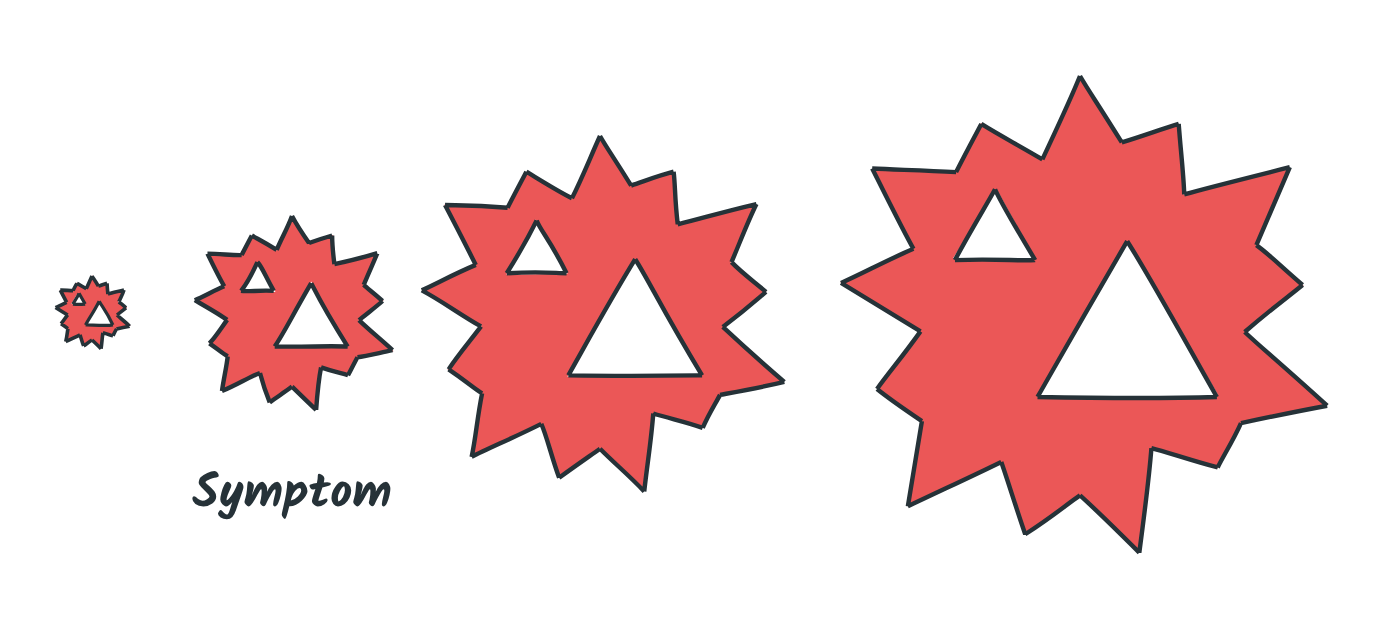
Marc’s screwdriver stops turning. “Frequency, how do you ask for that? People don’t count their breakdowns.”
“They don’t count, but they remember,” Sophie answers. “Hence precise questions, ‘How often do you feel this problem? How many times have you come across it over the past year?’ And to pick up trends, ‘Are you seeing an increase, a decrease or no change in how often this problem occurs?’ Those questions will help us gauge the scale of the problem and how it’s evolving. The idea is to work out a frequency for the need: a number of occurrences over a meaningful period, or a projection of future occurrences that may come from something new in the context we’re studying.”
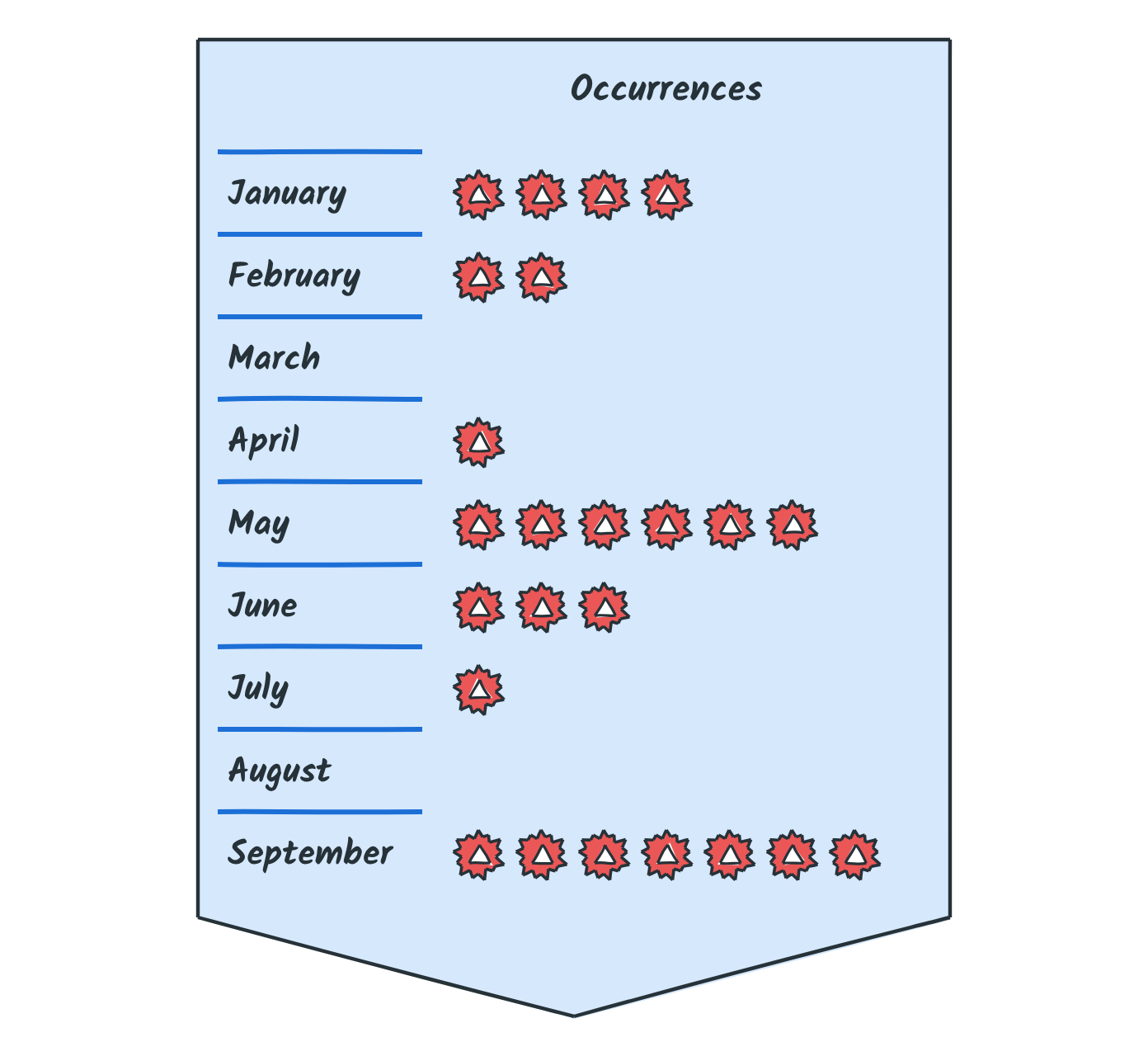
Julien comes back to his seat. “That leaves consideration. We need to understand how the individual sees this need, and how much interest the organization really has in solving it. As we said yesterday, a problem can seem major on a personal level but may not be a priority for the company, or, in actual fact, for the person themselves. That could mean extra effort on our part to convince them it matters. Max’s smoker, in other words.”
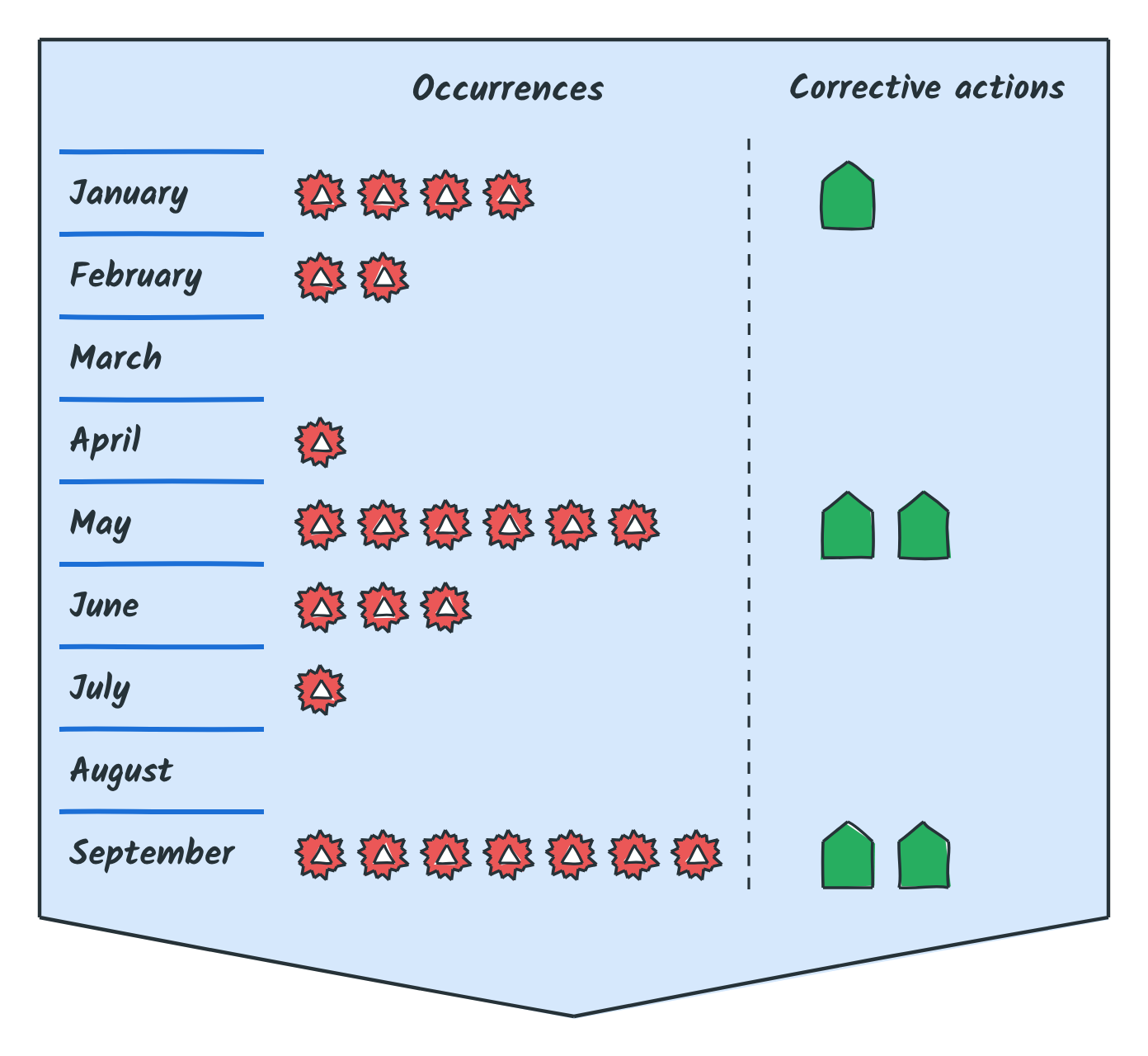
“Hold on. How do you measure that interest?” Laura asks.
“By what they’ve done,” Julien answers. “We’ll need to explore the concrete actions the organization and the person have taken in response to this need. The precise questions would be, ‘What investments have been made to address this problem? What initiatives have been taken, and who was involved?’”
“In plain English, who’s already reached for the checkbook,” Éric says.
“And who hasn’t done a thing,” Julien goes on. “To understand any possible passivity, ‘Has this need been ignored, or simply put up with, without any attempt to solve it until now? Why would it be a priority for your company, or under what conditions could it become one?’”
Cassandre turns her sheet toward Sophie. “The people from the focus group have already worn the headset, huh?”
“Yes,” Sophie says, “and that’s why this part of the interview is meant to be agnostic about the solution the headset represents.”
“Agnostic: not one word about the headset,” Julien says.
“That covers,” Sophie goes on, “the questions we think are important to ask in order to assess the opportunity with the person we interview. But we mustn’t neglect their network and the perspectives of other people who might see the need differently. All the more so because the people who took part in the focus group already have a view biased by the fact that they tried the headset!”
“Already sold, or already sore,” Julien says.
“So we’ll ask,” Sophie continues, “for the contact details of other people who might share the same view or who run into similar problems. Last question, ‘Do you have a contact who could either give us more detail or another point of view on the need, or a contact who would be in a position to sponsor an internal project at your company?’”
“The headset itself comes at the end,” Julien says, “with more open questions. We’ll explore how the person sees the headset being used in this context. The questions could be, ‘How do you imagine our technology could be built into your activities? What results would you hope to get?’ And above all, if the person was there for the demonstration at the hospital, ‘Are there any obstacles you anticipate, or improvements you would like to see compared with the demonstration?’”
Sophie adds that the interviews will take place at the interviewees’ workplaces whenever that makes it possible to gather more visual information, and by video call in the other cases. Permission to record on video will have to be requested.
The door opens in the middle of one of Sophie’s sentences: Max arrives at the time they agreed on the day before, greets each of them by name and leaves his bag against the wall. “Julien and Sophie have asked me to train you for the interview challenge! Let’s start with something light to warm up, without necessarily following your interview plan.”
He suggests a role play. Julien volunteers to be the first guinea pig interviewee and puts on the slightly exaggerated pose of a man frustrated by the MelonsNet headset. Laura, the product owner, plays the interviewer. She starts with her eyes on her notes, in a voice so low that Paul leans in to hear her, then sweeps her pages aside with the back of her hand and lifts her chin.
“Julien, you mention that when you tested our headset, you ran into some frustrations. What made you feel frustrated?”
Julien spreads his arms. “It’s as if the headset was trying to read my mind, but all it does is confuse me even more!”
The team bursts out laughing. When the room settles, Max nods toward Julien. “He didn’t tell you about a single sensor. Remember this: it matters to understand the user experience beyond the technical features.”
The morning goes on like this, from one role play to the next. At noon, the team has lunch at a nearby company cafeteria, where they push two tables together to eat as a group, then they take a short walk in the summer sun before going back up.
In the meeting room, Max counts off on his fingers the three main phases of the interview, as defined by Sophie, Julien and himself. Assessing the interviewee’s legitimacy, understanding the specific need, discussing what the mind-reading headset could bring.
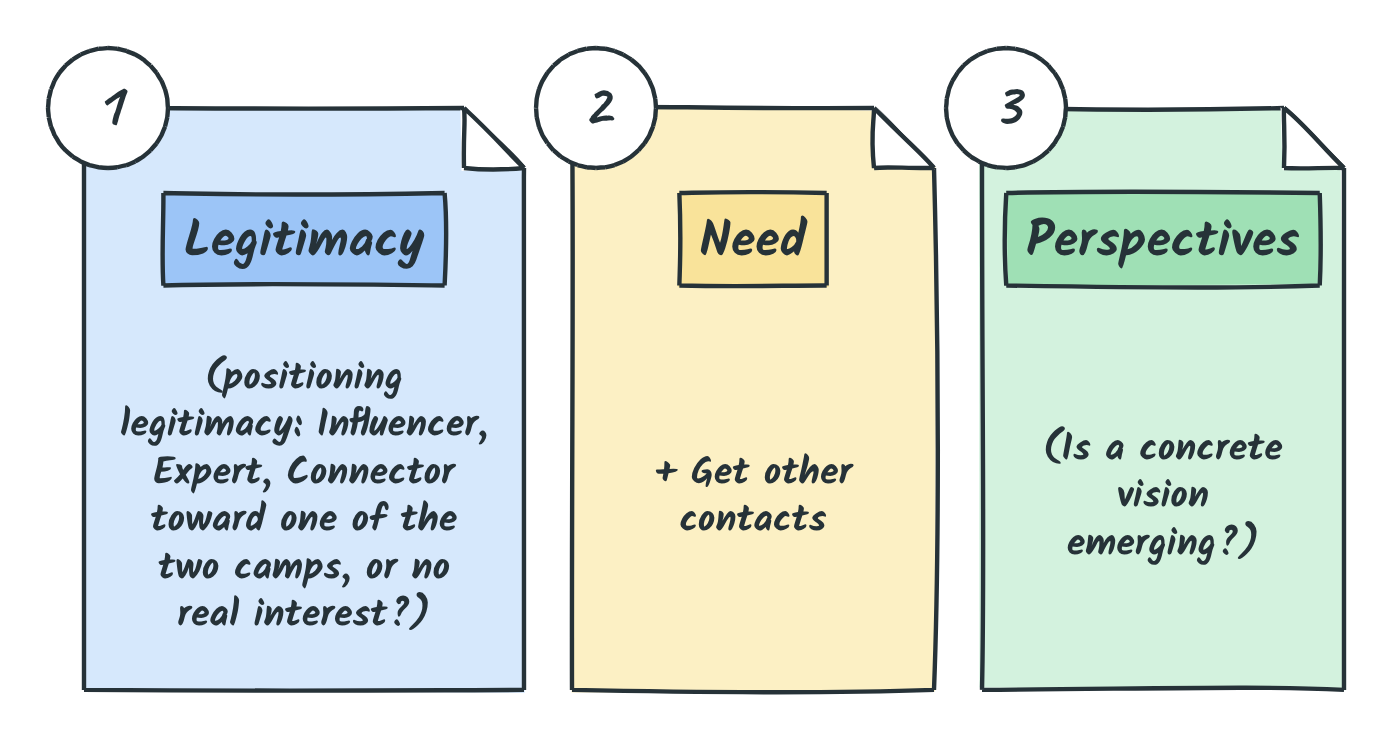
To put these lessons into practice, he picks Cassandre to play a worker in a very noisy environment, where communication is a constant challenge. Cassandre hesitates for a second, then accepts. Paul takes on the role of interviewer.
“Paul,” Max says, “you’re going to ask Cassandre questions so that she can introduce herself and explain how she could legitimately benefit from our product.”

Paul nods and begins. “Could you walk us through your professional background and explain what your current position involves?”
Cassandre, in her role as a worker, describes her experience in manufacturing and the daily difficulty of communicating over the noise of the machines.
“You mentioned the communication challenges caused by the background noise,” Paul goes on. “Can you give us a specific example of when this problem came up and how you dealt with it?”
“We use hand signals. One day, a signal was misread, and the confusion cost us dearly.”
Paul asks at which station, on which machine, and Cassandre answers without stepping out of her role.
Max lets them go all the way to the end, then speaks to the whole table. “See? Paul isn’t reading his questions anymore. That’s what we’re after: turning the structured exchange into a natural, fluid conversation. And film your interviews. Video will allow better transcription, and a more accurate analysis of what you’ve collected.”
“Some people will refuse the camera,” Éric objects.
“Then you go in pairs. While one of you asks the questions, the other takes detailed notes in real time.”
It is nearly five o’clock when Max suggests one last exercise, to put into practice everything the team has learned since the morning. He picks Sophie to play the interviewee and Éric to run the interview. The subject: the potential of the mind-reading headset, and above all the reluctance it might provoke.
Sophie plays a senior executive swamped by her daily meetings; she checks an imaginary calendar and sighs.
Éric slides his laptop aside and begins by probing the challenges she faces. “In your meetings, do you often run into problems understanding your colleagues or your manager?”
“All the time. Really understanding the intentions and thoughts of the people around the table would be a huge asset, to find my way through projects this complicated and strategies that change every month.”
Éric smiles and leans forward. “Now imagine you could get a glimpse of those unspoken thoughts. It could transform the way you understand situations and adjust your reactions. Our headset is designed precisely for that, and you’re the one who chooses exactly which thoughts you want to share or receive.”
Sophie frowns. “That sounds very promising, but wouldn’t it be a bit intrusive? How does the headset protect the confidentiality of the thoughts I perceive?”
“The headset has customizable filters that let you set the confidentiality levels of your interactions,” Éric answers. “You have full control over the thoughts shared with you, and your privacy stays protected, like everyone else’s. Does that answer your concerns?”
Max’s fist comes down on the table so hard the paper cups jump. “Stop there, please!” He smiles all the same, and his voice stays calm. “Remember: the need must emerge naturally from the people being interviewed. We must not fall into the trap of running the interview as if we were actively selling our product.”
“But she was interested!” Éric protests.
“That’s the trap. The danger is focusing too early on the people who seem interested straight away, at the risk of missing other participants who could reveal more significant opportunities. If we behave like salespeople, we could unintentionally influence their answers, make them say things they don’t really think, and turn the result of our investigation against us.”
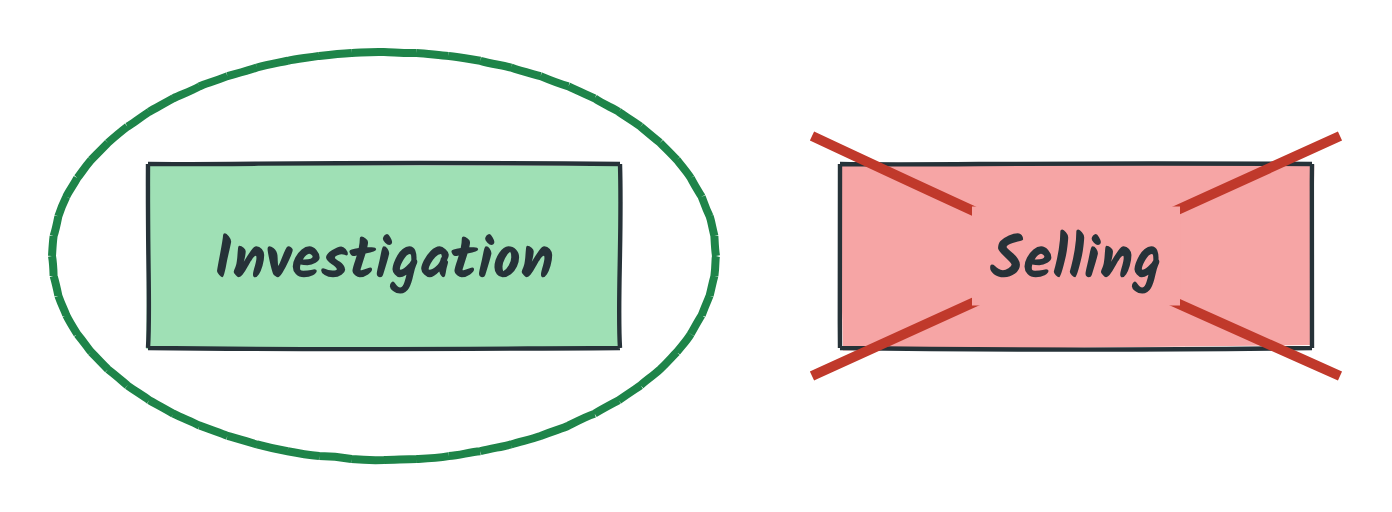
Éric pushes his screen halfway down, opens it again, then nods. “I was defending the headset, basically. Defending the product can wait, for now.”
At the end of the day, the team gathers around the big table. The summer light slants in through the window and falls on the three pages of the guide, covered in pencil notes, arrows and questions crossed out and rewritten in the margin. Everyone says what the exercise taught them.
“You played along, and fast,” Max says. “These skills you’ve developed today will let you shape your product in a way that really speaks to your targets. Your prototype could come out of this transformed, and so could the way you approach your future customers. One last thing: don’t forget to make sure you get the contact of a decision-maker and other experts on the need from every person you interview, for the next stage of the investigation.”
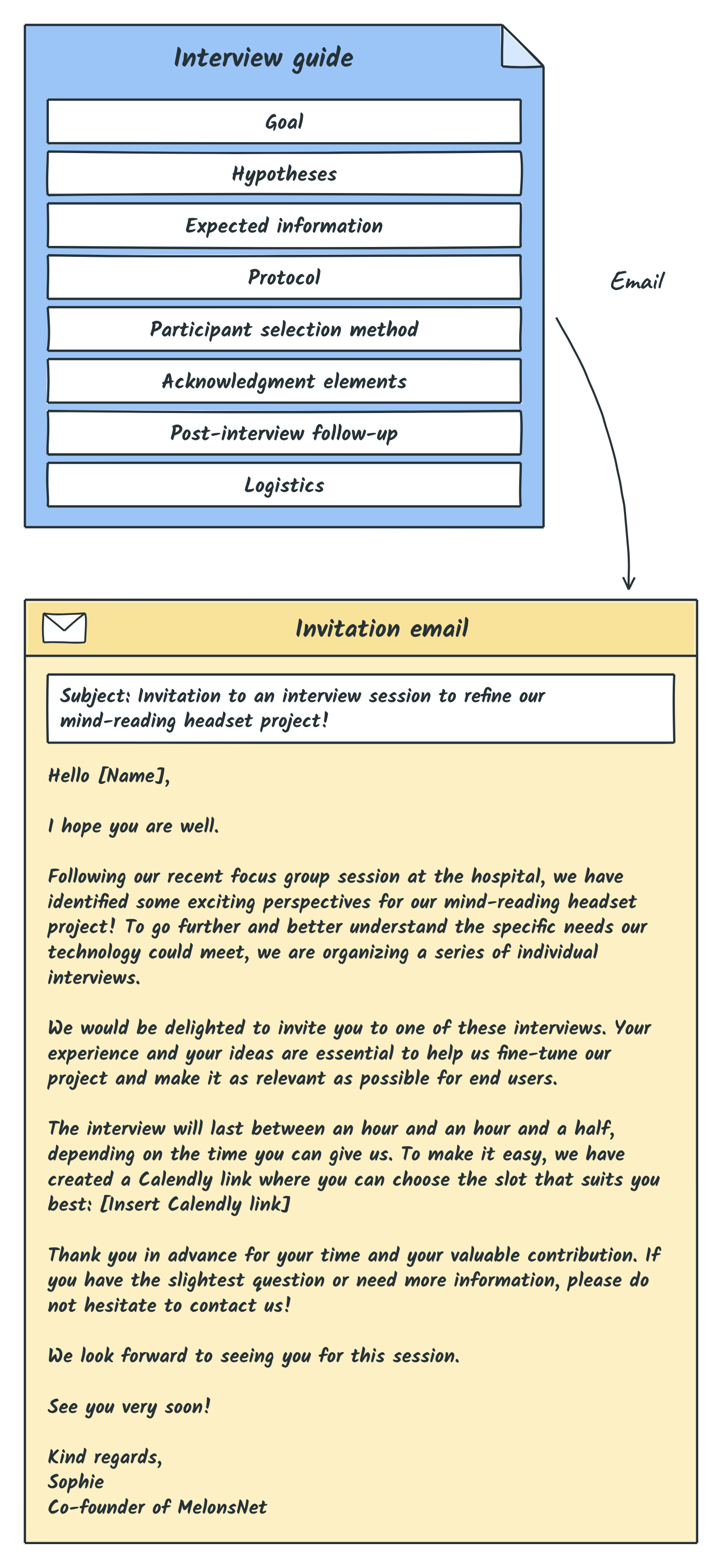
Nobody packs up right away. Sophie turns her laptop toward the table, the list of replies to her invitation on the screen. “We’re finally going to meet potential customers and users directly, and dig into what they expect from our prototype, and what’s holding them back. Eighty percent of the people questioned during the focus group have confirmed the one-on-one interviews.”
“That’s pretty rare,” Laura says.
“Right. And it already shows strong interest,” Max says.
Julien opens his notebook to a blank page. “Now we find out which of our symptoms survives the multiplication.”
At the top of the page he writes Severity × Frequency × Consideration, and leaves the line below it empty.









 CC BY-SA 4.0