
Ninth episode of a ten-episode series on the weight of politics in the success of a product. Earlier episodes showed markets blocked by whoever owned a technology. Making a technology common property lifts that block: no one can take it back anymore. What remains to be seen is where the conflict moves next.
What the sanction could not cut
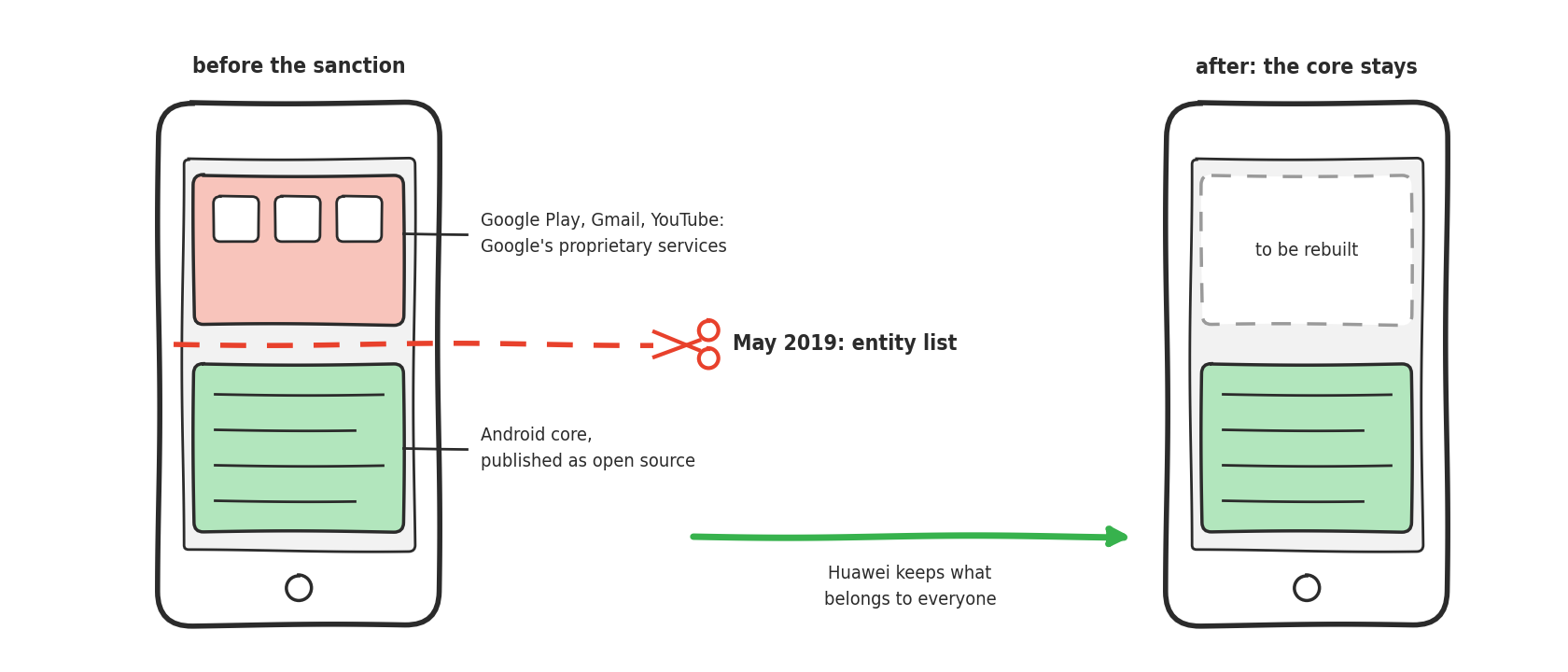
In May 2019, the US Department of Commerce added Huawei to its Entity List. From then on, exporting to Huawei any product, software or technology subject to US export regulations required a license.

Google complied at once. It suspended everything that required it to transfer hardware, software or technical support to Huawei. Only one thing escaped the suspension: what was already public under an open source license.
Huawei’s new phones therefore lost the Google Play app store, Gmail, YouTube and Google’s other proprietary services. They kept the core of Android, published as the Android Open Source Project, which anyone can download freely. Huawei used it to keep selling, then launched its own system, HarmonyOS, whose first phones came out in 2021.
The sanction cut off what belonged to Google. It could do nothing against what belonged to everyone.
What “open” means
Open source software is published under a license that allows anyone to use, study, modify and redistribute it. The Open Source Initiative, an American nonprofit, maintains the reference definition and certifies the licenses that comply with it.
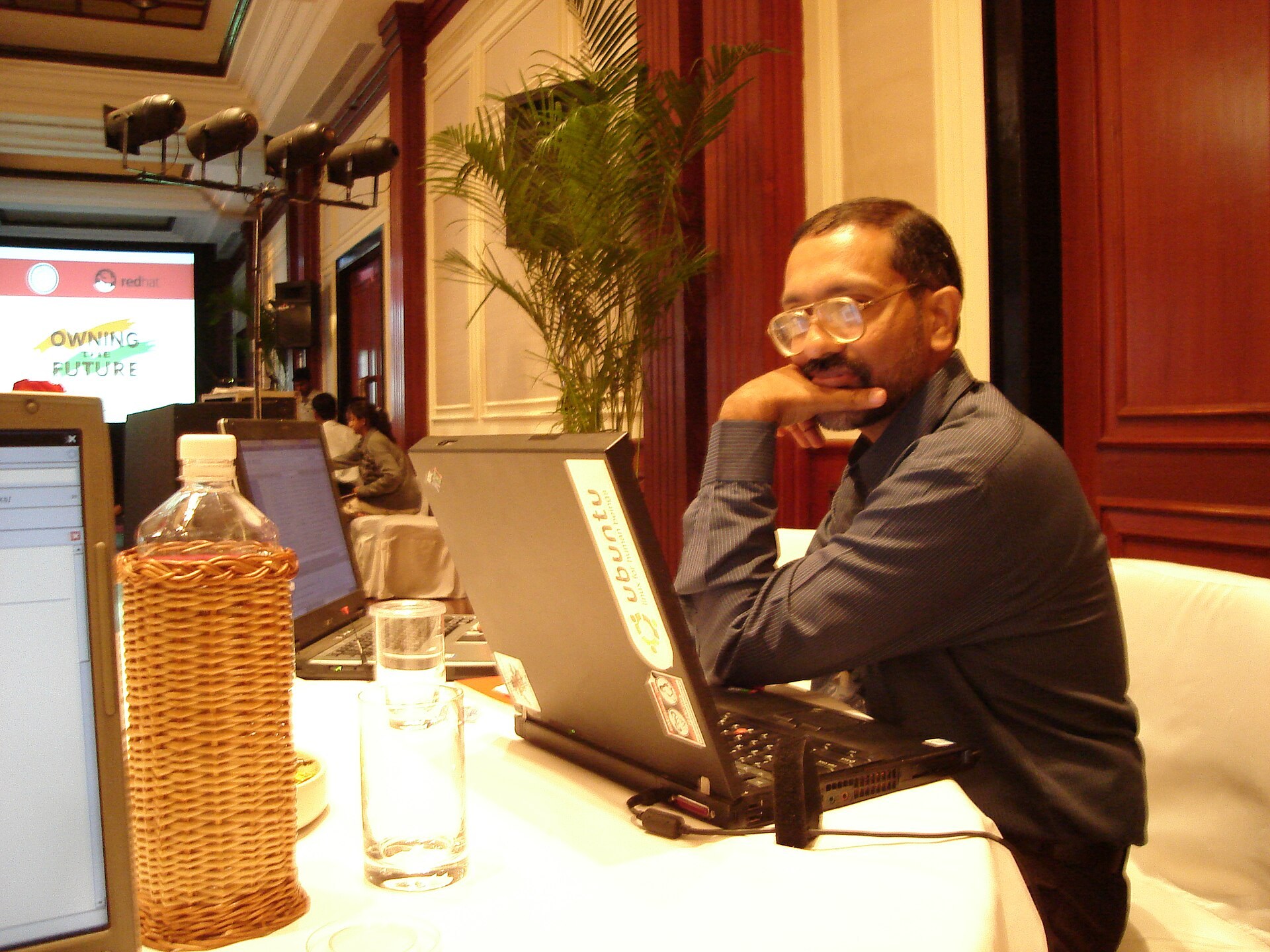
Jean-Marc, a developer, explains it through his own trade at Show Me the Maker, a conference devoted to makers that I organized a few years ago.
The word has spread, and it no longer always means the same thing.
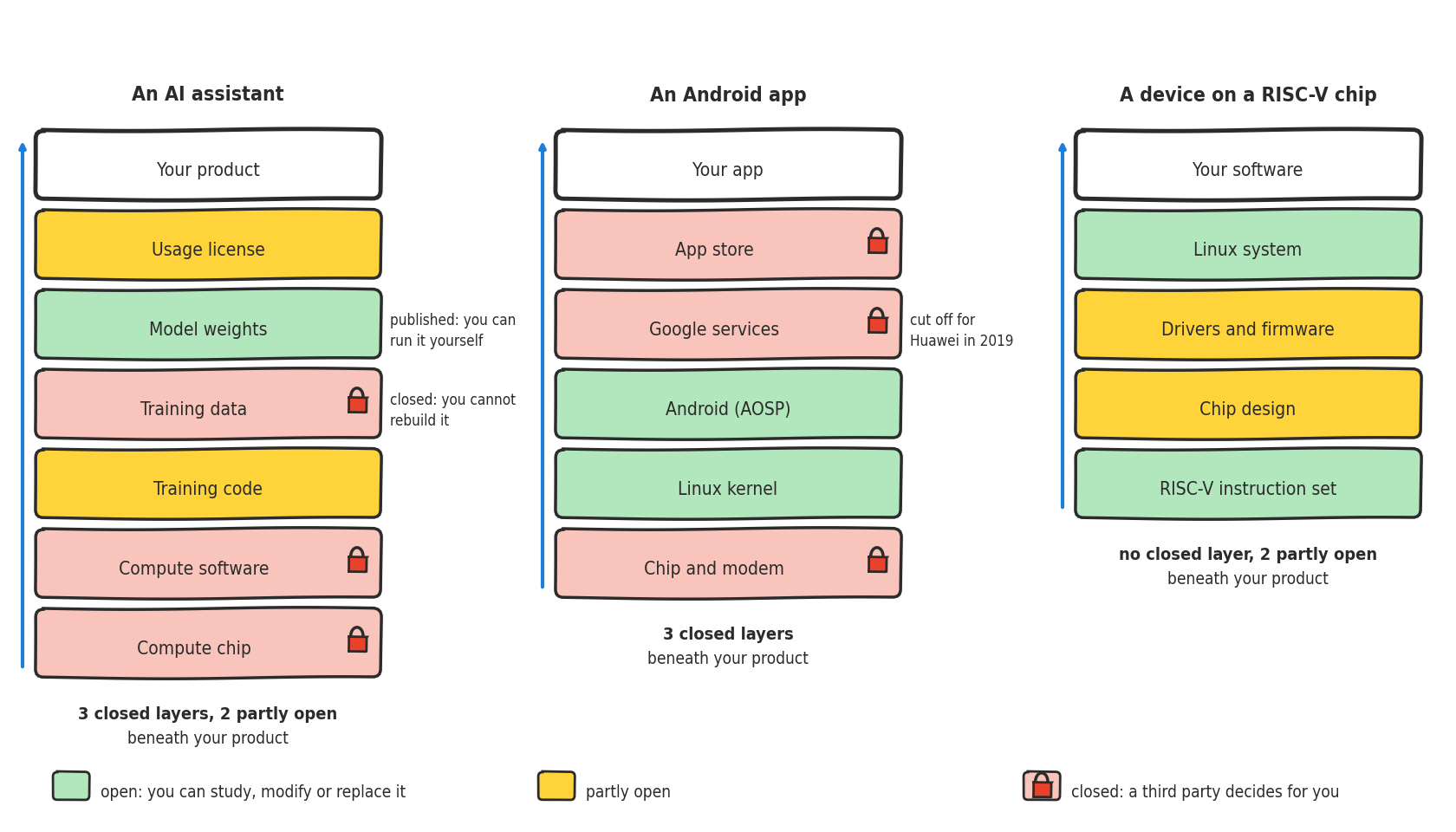
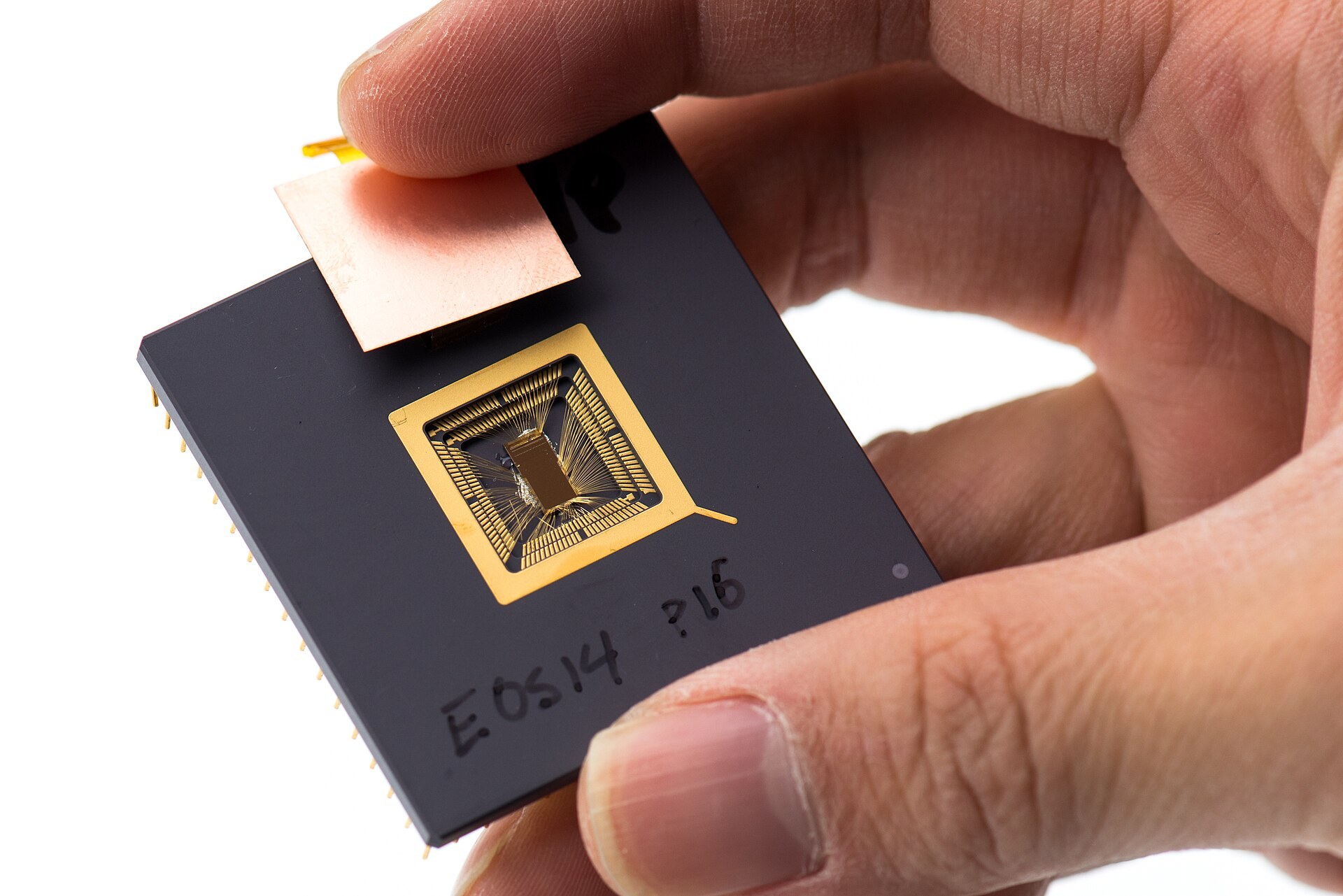
Open hardware. RISC-V is an open instruction set, meaning the public list of operations a processor can execute. Anyone can design a chip that follows it, with no license to negotiate with an owner.
Arduino applies the same idea to physical objects: the designs of its electronic boards are published under a free license, and any manufacturer can reproduce them. Its cofounder, Massimo Banzi, talks about it in the interview below.
Open weights. Weights are the billions of numbers adjusted while an artificial intelligence model is trained. Publishing them lets you run the model on your own machines, not find out how it was made.
Open source AI. In October 2024, the Open Source Initiative published its definition for AI. It requires the training code, the weights, and enough information about the data for a skilled person to build an equivalent system. It does not require the data itself.
By this standard, many models described as open are not. The license for Llama, Meta’s model, requires any company with more than 700 million monthly users to request a license from Meta. DeepSeek, a Chinese lab, released its R1 model in January 2025 under the MIT license, one of the most permissive. It also published a paper detailing its training method.
These kinds of openness combine in layers. A product is only under your control if every layer it depends on can be studied, modified or replaced: an open layer sitting on a closed one remains at the mercy of whoever holds the closed one.
Pay only for what sets you apart
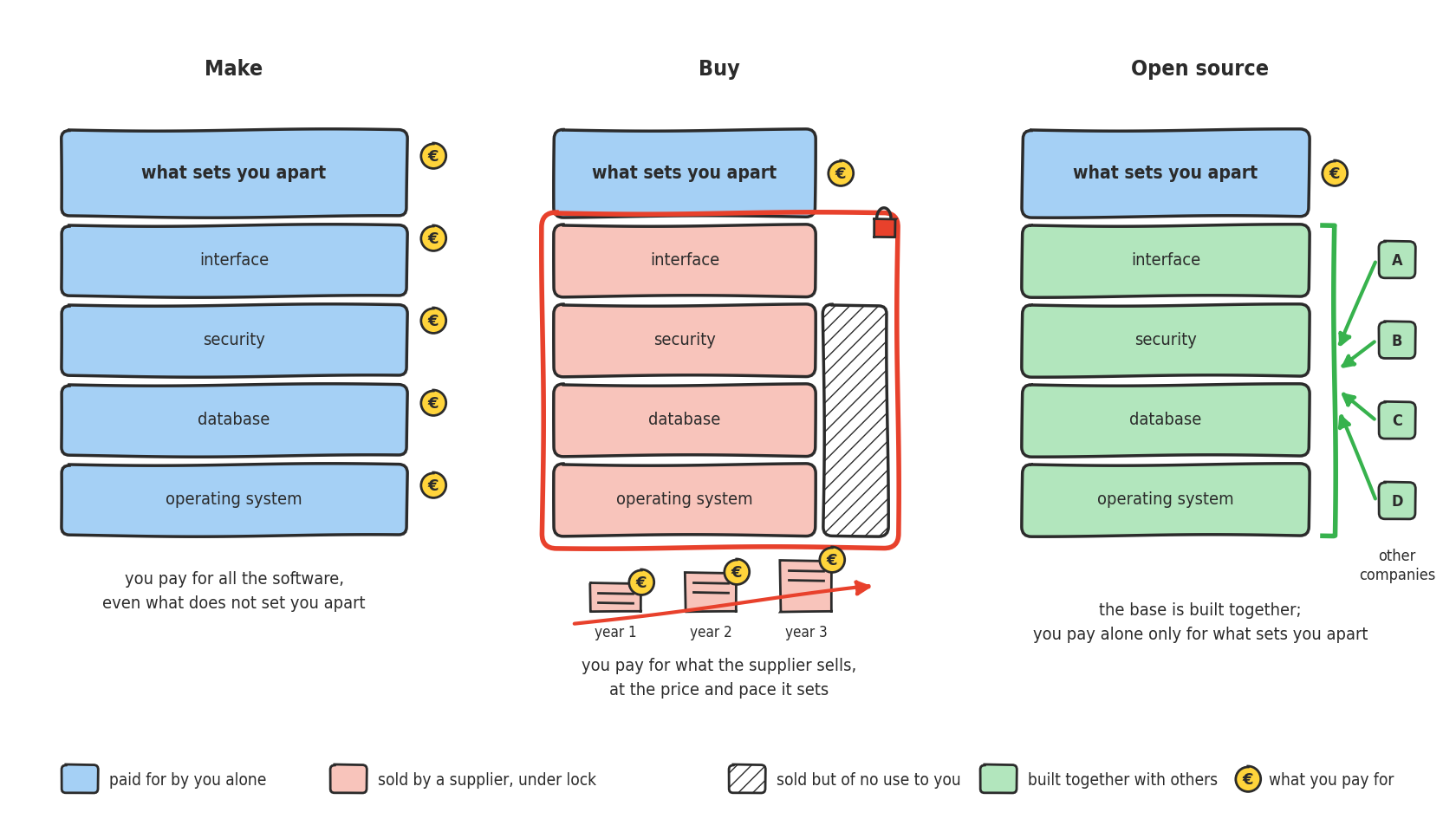
The economic principle of open source comes down to a division of labor. The shared base is developed and maintained by everyone who uses it. Each company invests only in the features it cares about, and benefits from the rest: the base, its updates, and the future contributions of others.
Joachim Henkel observed this in 2006 in embedded Linux, the Linux that runs inside machines and electronic devices. His survey rests on 268 responses. Companies publish on average about half of the code they develop and protect the other half. What they publish earns them informal development help from the other participants.

This breaks with the two classic routes. Building it yourself, the “make” option, means paying for all the software, including what does nothing to set your product apart. Buying it, the “buy” option, as a license or a subscription, means paying for everything the supplier decides to sell, at the pace it decides. Open source opens a third route: producing the base together with others, and funding alone only what makes you different.
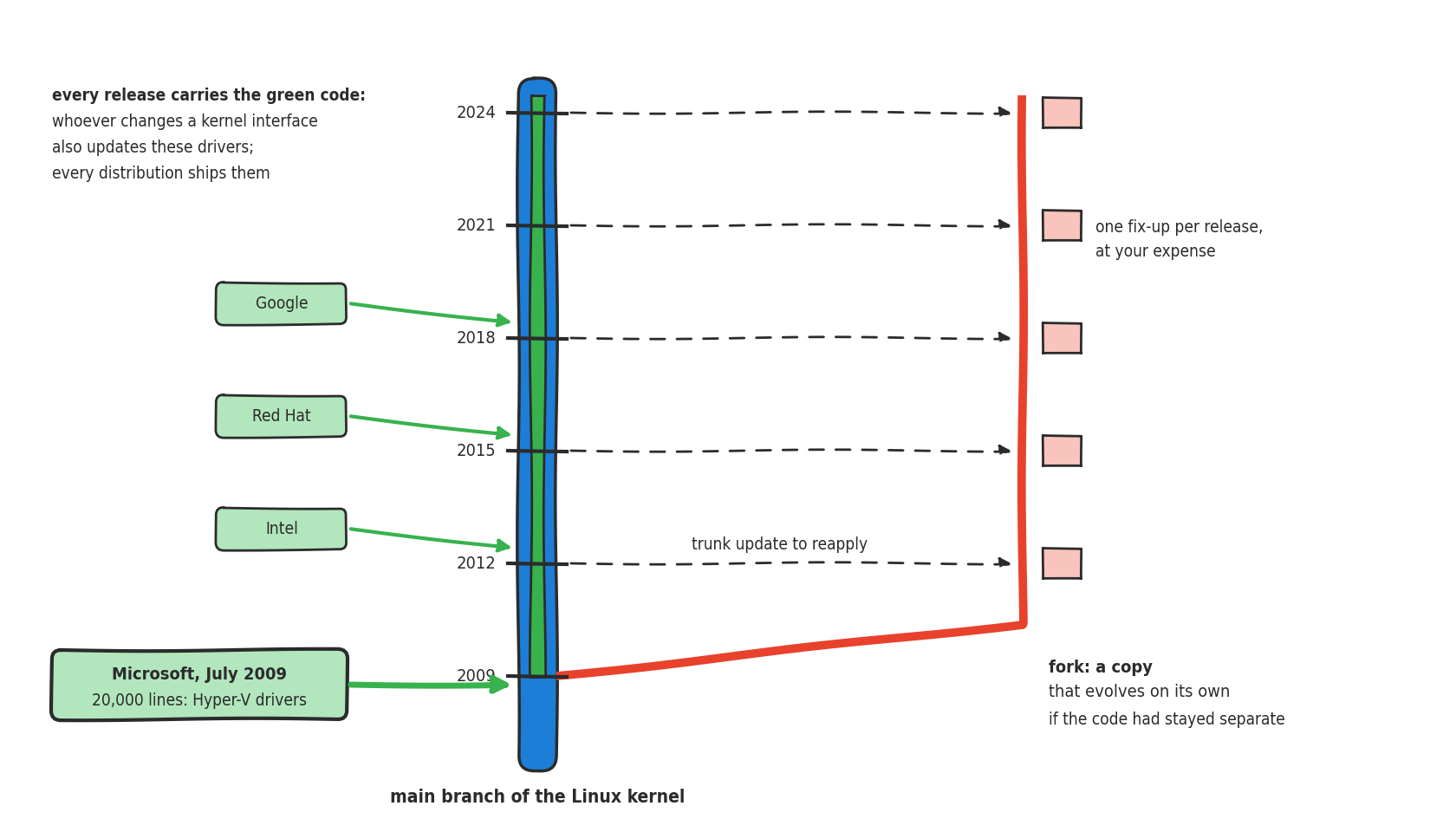
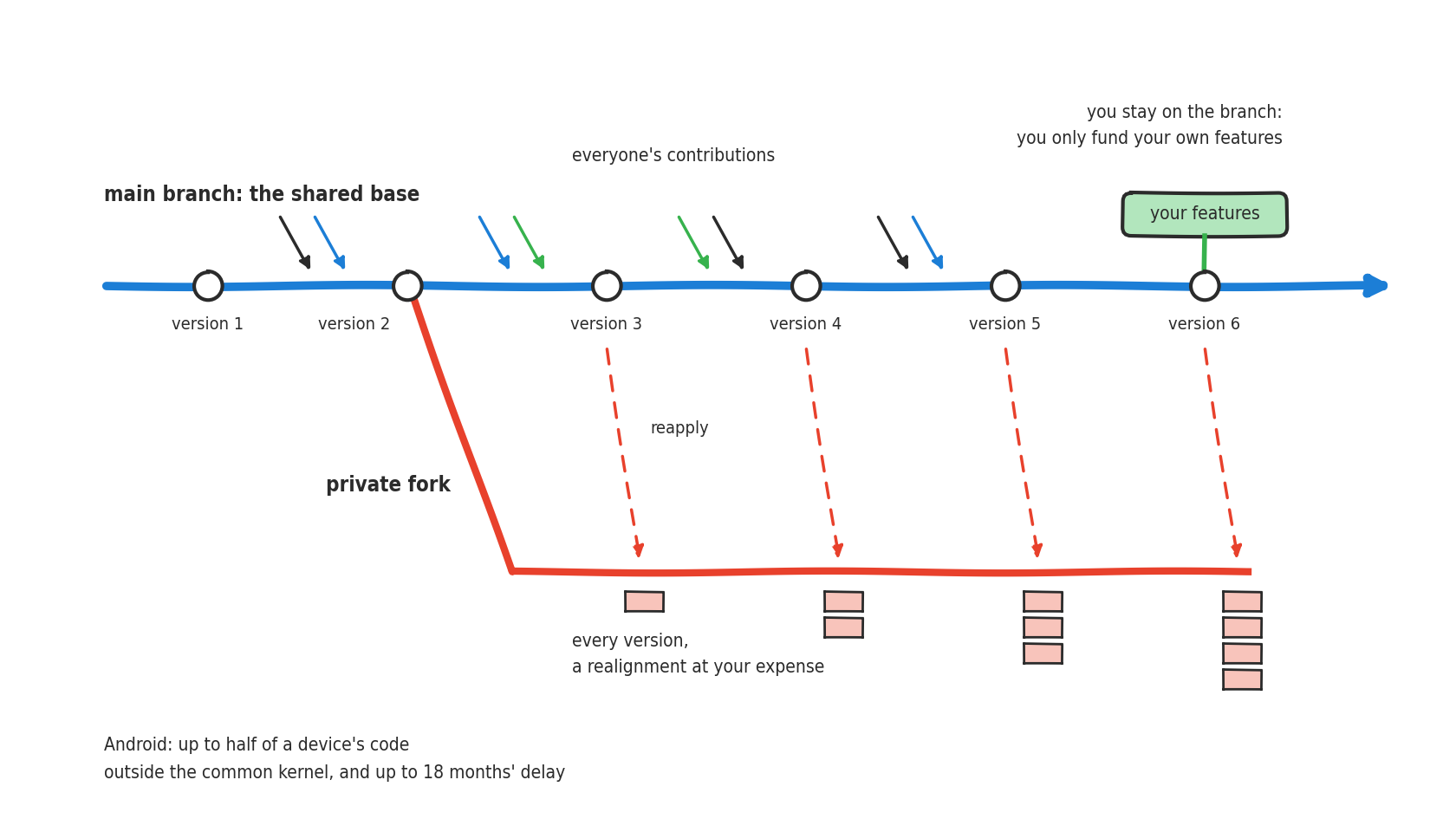
This route comes with a condition. The code of an open source project branches like a tree. The trunk is called the main branch, or upstream: it is the reference version, the one the project publishes and all contributors improve together. A company that stays on it proposes its changes to the project, which merges them, and in return receives everyone else’s. It can also copy the code and develop it alone, on a separate branch: this is called a fork. But every update to the project will then have to be reapplied to its version, and every divergence realigned, at its own expense.
Microsoft’s Hyper-V drivers are a case in point. A driver is the program that lets an operating system control a piece of hardware. These drivers make Linux run inside Hyper-V, Microsoft’s software that splits a server into several simulated computers, called virtual machines. In July 2009, Microsoft submitted about 20,000 lines of code to the Linux kernel, the core of the system that lets programs talk to the hardware. The code entered the main branch with version 2.6.32 of the kernel, released in December 2009.
From then on, the project’s rule works in Microsoft’s favor. A developer who changes an internal interface of the kernel must update every driver in the main branch themselves. And every Linux distribution, the ready-to-install versions such as Ubuntu or Debian, ships the drivers without anyone having to ask. A driver kept outside the main branch, by contrast, has to be updated by its owner for every new version of the kernel.
Android shows the scale of the problem. There, the Linux kernel passed from hand to hand: Google, then the chipmakers, then the phone makers, each adding its own changes. According to Google, up to half of the code running on a device no longer belonged to the common kernel.
Getting a security fix all the way to phones had become, by Google’s own account, prohibitively expensive. A new long-term version of the kernel, which contains these fixes, took up to eighteen months to reach a device. Google now asks for new features to be proposed to the mainline Linux kernel first, before they go into Android, a model it calls upstream first.
Contributing also pays off for the contributor. In 2018, Frank Nagle compared companies that contribute to open source software with those that merely use it. The former get up to twice as much productivity out of their use of it, because feedback from more experienced developers teaches them how to use it.
A commons worth more than it costs
In 2024, three Harvard researchers, Manuel Hoffmann, Frank Nagle and Yanuo Zhou, put a figure on the value of the most widely used open source software. Recreating it once would cost $4.15 billion. But if every company that uses it had to develop it on its own, the bill would reach $8.8 trillion.

In other words, without this commons, companies would spend 3.5 times more on software. It is the network in its purest form: a resource everyone shares, and that no one can deny to the others.
The test from episode 8 confirms it. Who can say no to the use of code published under an open source license? No one. The license is granted once and for all, to everyone.
Yet this commons rests on very few people. According to the same study, 96 percent of the value comes from 5 percent of the developers.
Why openness breaks the deadlock
Something that has been published can no longer be confiscated. That is why states that control exports target what remains closed.
In January 2025, the US rule known as the AI diffusion rule made the export of the weights of certain closed models subject to a license. Open-weight models were not covered. The rule was rescinded in May 2025, before it even took effect.
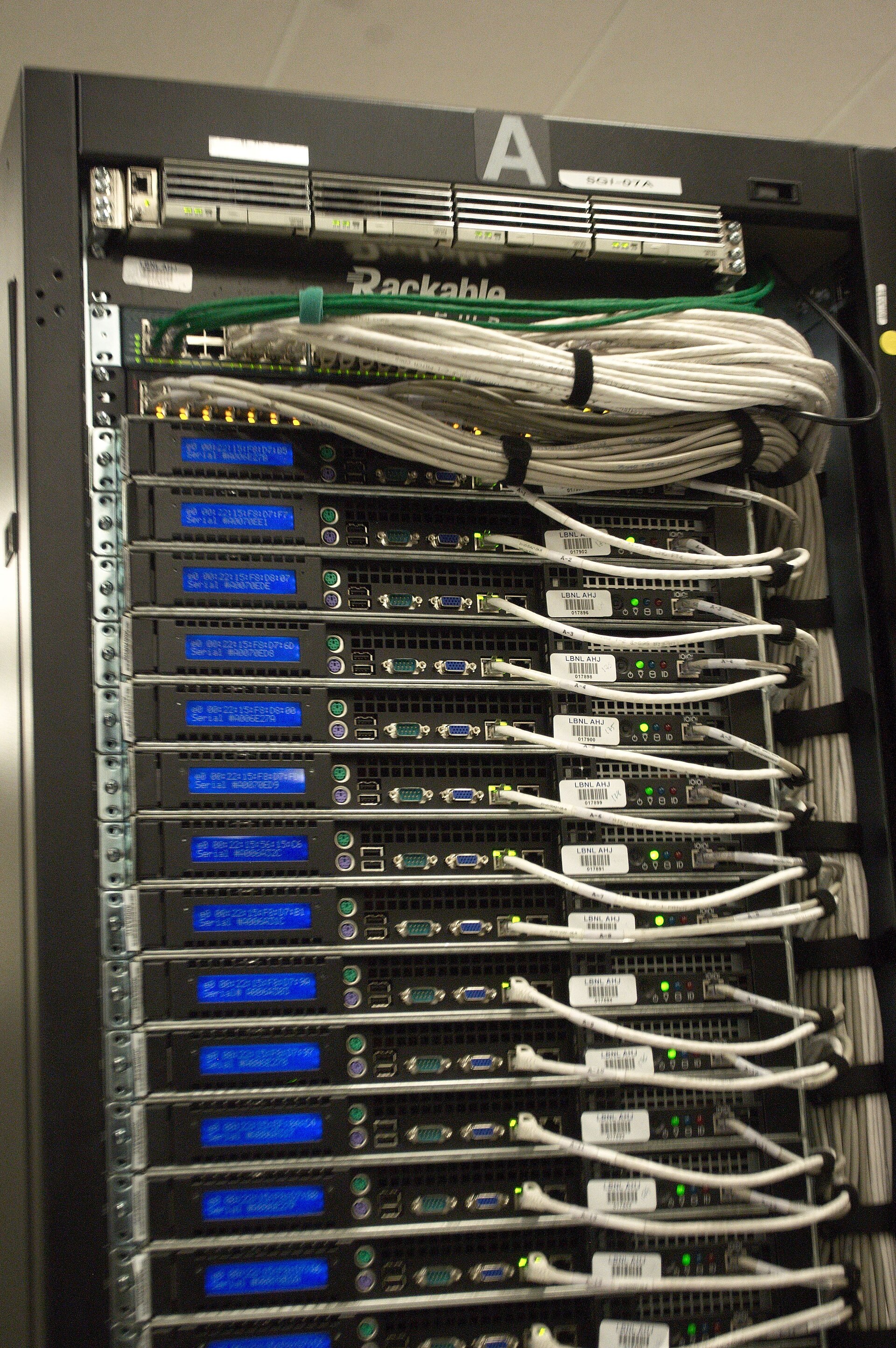
The European Union follows the same logic in its AI Act. A model released under a free and open source license, together with its weights, is exempt from two documentation obligations. It must still comply with copyright law and publish a summary of its training data. And it loses any exemption if its risk is deemed systemic.
RISC-V shows what openness protects, and what it does not. In late 2019, its foundation, until then based in the United States, confirmed its move to Switzerland, first announced in December 2018. Its chief executive, Calista Redmond, explained that members around the world would feel more at ease outside the United States. Its members included Huawei and Alibaba.
Republican lawmakers saw it as a way for Beijing to get around export controls. DARPA, the US military research agency that had funded part of the work, replied that the work was intended to be public.
Where the conflict moves
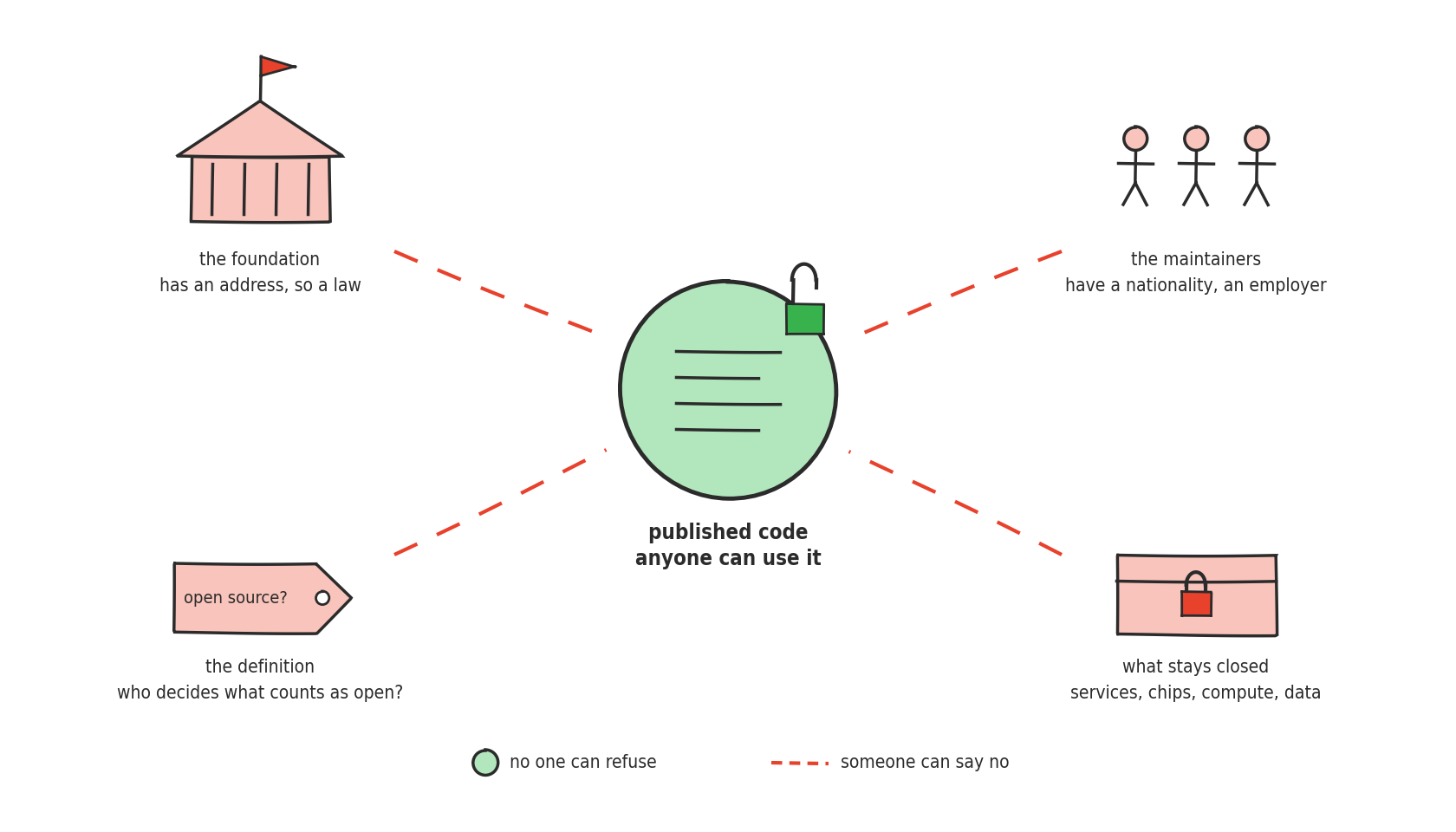
Open code escapes ownership. The conflict shifts to whatever around it can still be owned, controlled or refused. Four places come up again and again.
Where governance lives. The RISC-V instruction set is public, but the foundation that decides how it evolves has an address, and therefore a jurisdiction. That address is what it moved.
People. In October 2024, several developers linked to Russia were removed from the list of people responsible for maintaining the Linux kernel, citing “various compliance requirements”. The rule was then clarified: a company on US sanctions lists, or controlled by one, cannot appear on it. The code remains usable by everyone. Taking part in maintaining it depends on the law.
The definition. Calling a model open source attracts developers and, in Europe, can lighten legal obligations. Who decides what deserves the word therefore becomes something worth fighting over. Meta keeps calling Llama open source, despite the Open Source Initiative’s definition.
What stays closed around it. Open code rarely works on its own. It relies on services, chips and data that do have an owner. Withdrawing these supports is enough to weaken the product, without touching the code.
Huawei learned this firsthand. After the 2019 sanction, the company kept Android’s code, published as open source, but lost the Google services that sit on top of it. And many apps rely on these services to sign the user in with a Google account, display a map, locate the phone or collect a payment. Uber, Lyft, Gmail and YouTube only work if those services are present. A Huawei phone sold in Europe is still an Android phone, but some of the apps its buyer expects no longer work on it.
The weights of an AI model follow the same logic. They are the result of training, not the means to redo it. Meta publishes the weights of Llama 3.1. But producing the largest version took 30.84 million hours of computation on Nvidia H100 chips, or about 3,500 years for a single chip. Since August 2022, these chips can no longer be sold in China without a license from the US government. The model also learned from about 15 trillion fragments of text, which Meta describes as coming from public sources without listing them. Whoever downloads the weights can run the model and adapt it to their needs. They can neither rebuild it nor find out what it learned from.
When a state turns openness into policy
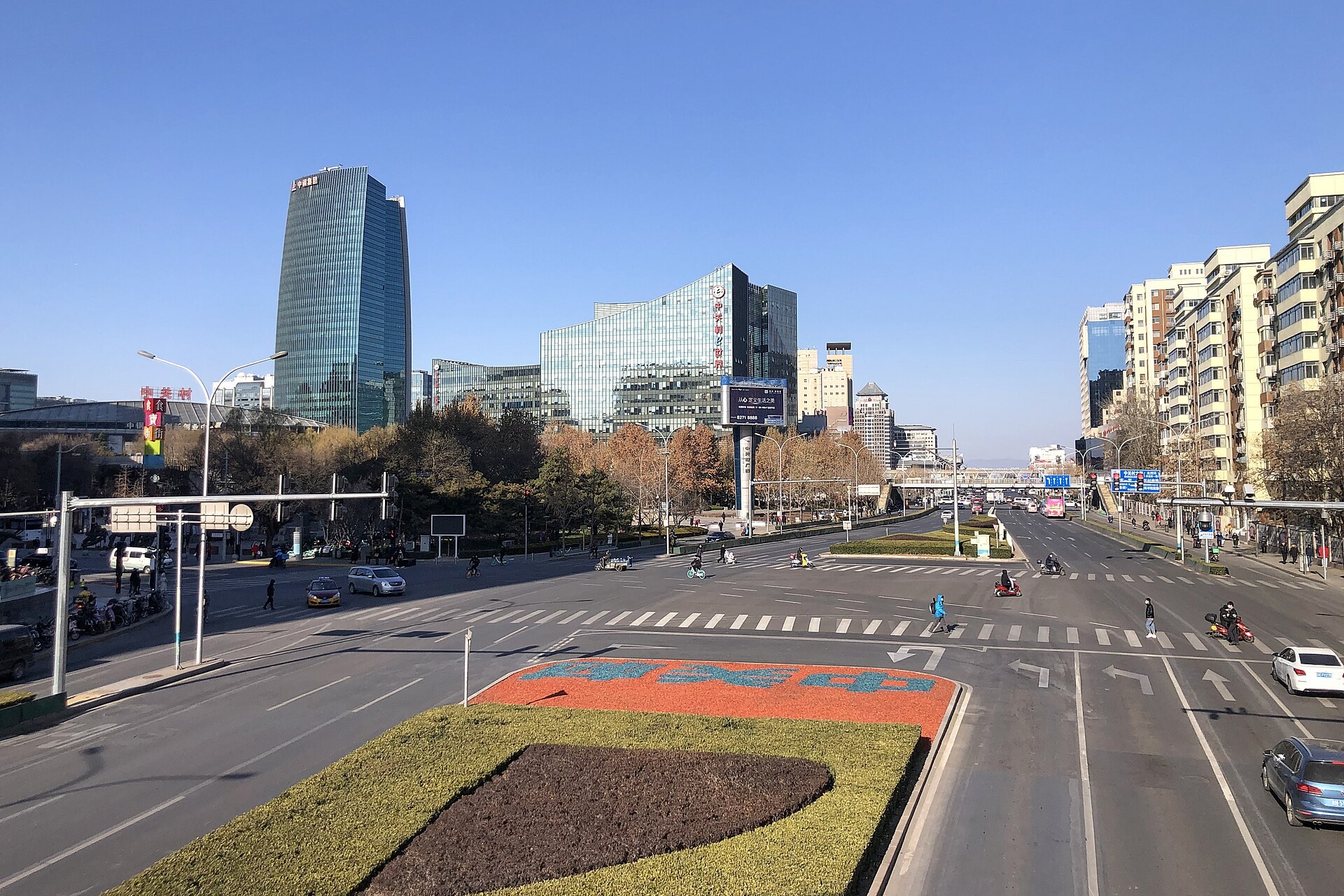
If openness puts a technology out of reach of sanctions, a state that fears sanctions has an interest in promoting it. That is what China is doing.
In March 2025, Reuters reported that eight Chinese government bodies were preparing national guidance to encourage the use of RISC-V chips. Beijing is seeking to reduce its dependence on Western-owned technology. In August 2025, the “AI Plus” directive from China’s State Council set out to develop the open source ecosystem. On the American side, lawmakers had been pressing the administration since 2023 to restrict the work of US companies on RISC-V.
France did it too, on a smaller scale and for other reasons. On 19 September 2012, Prime Minister Jean-Marc Ayrault issued a circular, an official instruction to the administration, asking government departments to consider free software in their purchasing. The point was not to protect themselves from a foreign sanction, but to spend public money better.
The circular gives three reasons. Free software costs less, since there is no license to pay. It adapts more easily, since its code can be modified. And it gives leverage in negotiations with software vendors: a department that can do without a paid program negotiates the price from a stronger position. The circular’s annex adds pooling. Several departments with the same need can fund a single development together, instead of each paying for its own. It also recommends giving part of the money saved on licenses back to the projects.
Frank Nagle measured its effects in 2019, and the results are clear. Each year, the circular led to a 9 to 18 percent increase in the number of new digital companies and a 6.6 to 14 percent increase in IT jobs. It also reduced software patents by 5 to 16 percent. A comparable Italian law, never enforced, did not raise contributions to open source software: the effect does come from the circular, not from an underlying trend.
What governing the commons brings
France found companies and jobs in openness. For China, the gain is broader, and it shows first in three places.
No longer depending on software that can be taken away. Huawei already had its own server operating system, EulerOS, certified as UNIX as early as 2016. In December 2019, a few months after the US sanctions, it released an open source version, openEuler. In 2021, it handed the code and the trademark over to the OpenAtom Foundation, set up the previous year by Huawei, Alibaba, Tencent and Baidu.
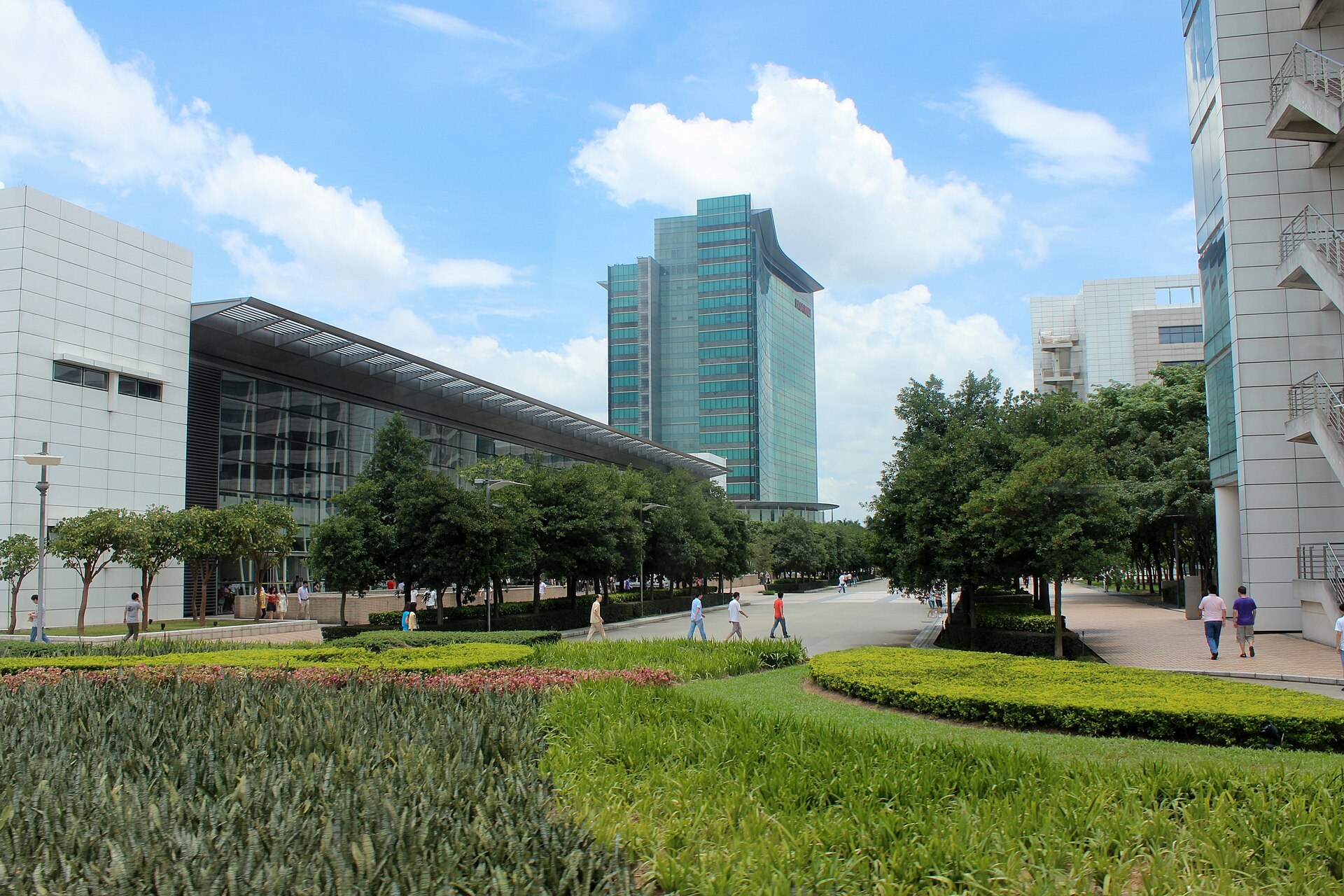
According to the research firm IDC, openEuler accounted for 36.8 percent of new server operating systems in China in 2023. CentOS and Red Hat, of American origin, accounted for 20.7 percent, and Windows for 19.3 percent.
Designing chips without depending on a Western owner. The x86 architecture, controlled by Intel and AMD, and the Arm architecture, from Arm Holdings, belong to Western companies. RISC-V belongs to no one. In 2025, Alibaba unveiled a server processor design built on it, the XuanTie C930. Its executives predict that RISC-V will become a mainstream cloud architecture within five to eight years.
Winning over developers and customers worldwide. In October 2025, Airbnb’s chief executive, Brian Chesky, explained that his company’s customer service agent relies heavily on Qwen, Alibaba’s open-weight model. He called it very good, fast and cheap. By January 2026, Qwen models had passed one billion cumulative downloads on the Hugging Face platform.
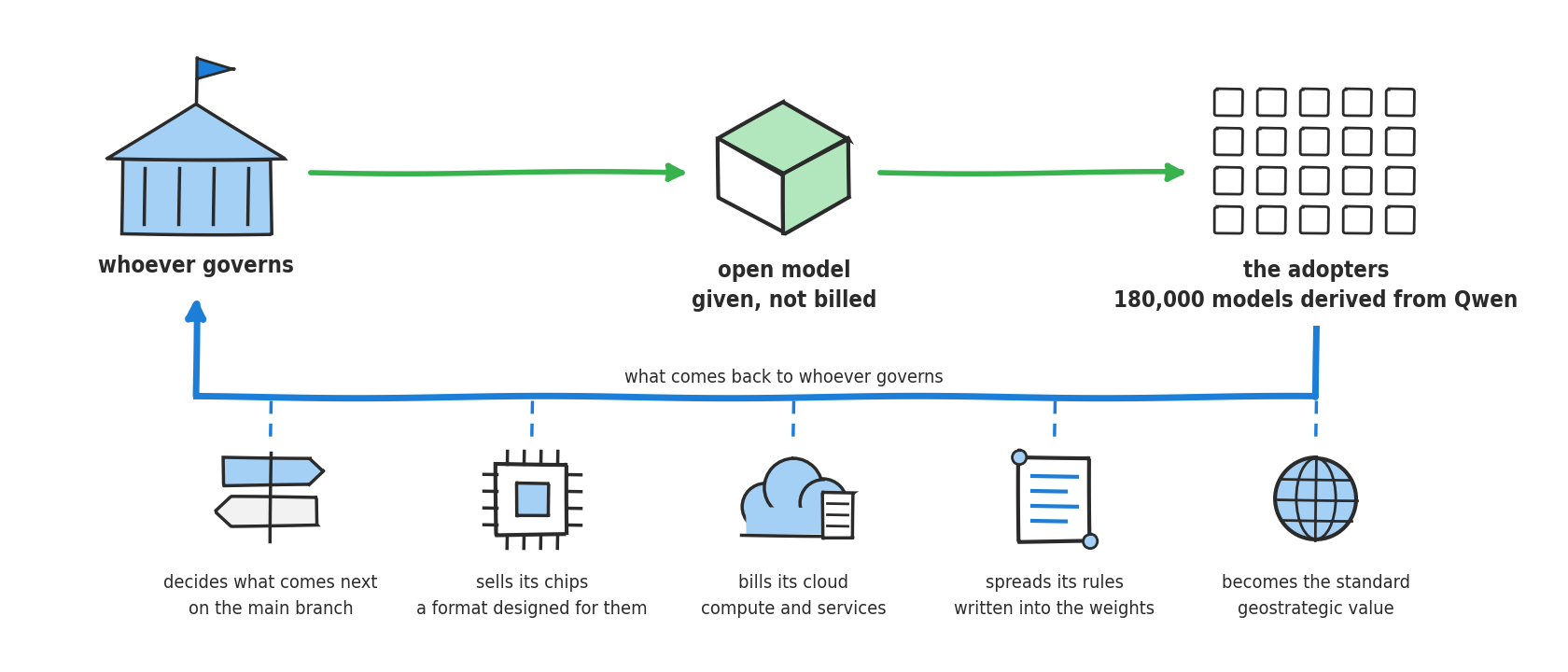
That leaves the underlying question: why would a country want the world to adopt its technology rather than someone else’s, if it charges nothing for it? Because the value is not captured on the code. It is captured on what adoption brings with it, and five mechanisms show how.
Whoever governs decides what comes next. A company that adopts an open building block has every reason to stay on its main branch, or else pay alone for every realignment. It therefore follows the choices of those who decide what goes into that branch. For openEuler, the code and the trademark belong to the OpenAtom Foundation, set up by Chinese companies. It was precisely to avoid leaving that decision under a single jurisdiction that the RISC-V foundation left the United States.
The model pulls the hardware along. In August 2025, DeepSeek released a new version of its model, V3.1. It uses a number format for calculations, UE8M0 FP8, which DeepSeek says was designed for the next generation of Chinese chips. Every company that adopts this model becomes a potential customer for those chips, at a time when the United States is restricting exports of its own.
Free sells paid. Alibaba does not charge for Qwen’s weights. It charges for the computing power and services to run them in its cloud. By the end of October 2025, more than 180,000 models derived from Qwen had been published on Hugging Face, more than double the runner-up. By the end of 2025, Alibaba’s revenue from its cloud’s AI products had at least doubled year on year, for the tenth quarter in a row.
The model carries its country’s rules. Downloaded weights run on the user’s own machines, with whatever training wrote into them. In September 2025, an evaluation by the US government, itself a party to the rivalry, compared DeepSeek models with American models. On questions politically sensitive for Beijing, the former repeated misleading Chinese Communist Party narratives four times as often.
The de facto standard turns into influence. Alibaba’s chairman, Joe Tsai, sums up the strategy: AI will be won by those who adopt it fastest, not by those with the most powerful model. Washington reads the situation the same way. In July 2025, America’s AI Action Plan stated that open models could become global standards, and that for this reason they have geostrategic value. It calls for open American models, founded on American values.
Politics comes straight back in through another door. In 2026, committees of the US House of Representatives questioned Airbnb about the security risks of its use of Qwen.
A political tool or the backbone of a network?
Both, but not on the same floor.
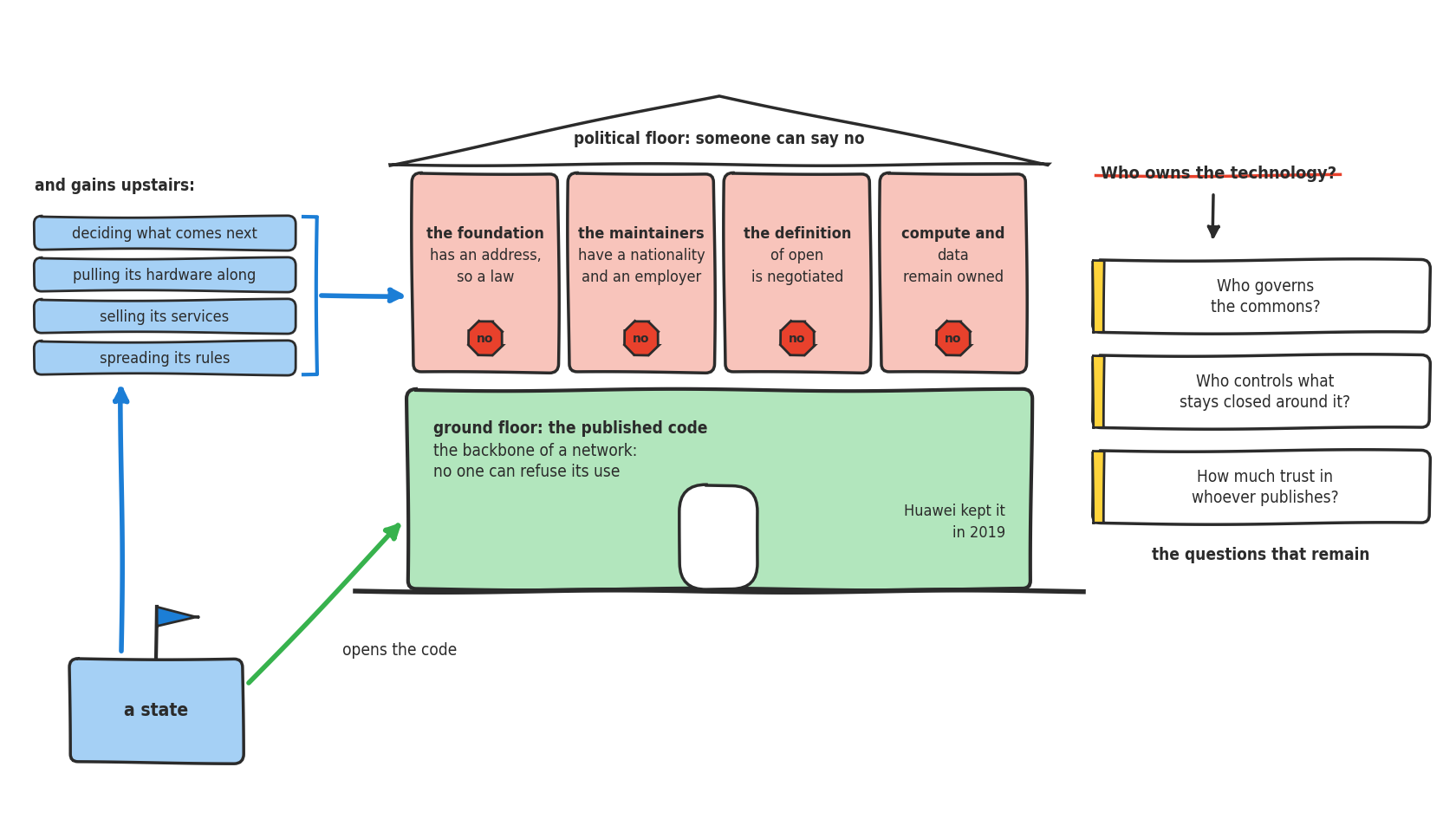
Published code is the backbone of a network. No one can refuse its use, and that is precisely what makes it valuable when politics blocks everything else. Huawei learned as much in 2019.
Everything around that code is political. The foundation has an address, the maintainers have a nationality and an employer, the definition of open is negotiated, and computing power, like data, remains owned. On each of these floors, someone can say no.
And a state can choose to open up in order to win on those floors: deciding what comes next, pulling its hardware along, selling its services, spreading its rules.
The debate is therefore no longer about who owns the technology. It is about who governs the commons, who controls what stays closed around it, and how much trust you place in whoever published it.
What this changes for your product
For each open building block your product depends on, five checks are enough.
Read the license: open source in the strict sense, or open weights with conditions, such as Llama’s cap on users. Work out what it would cost to move away from the main branch: every change you keep to yourself will have to be reapplied at every version. Look at where the foundation is based and who maintains the code. Identify the closed services around it that you depend on, as Huawei depended on Google Play. And ask where the data comes from, if the building block is an AI model.
For the first of these checks, the tool below explains a license you know by name, or helps you choose one for what you publish yourself.
Finally, a commons is governed with those who contribute to it. Contributing to a building block you depend on means taking a place in its network, and sometimes a voice in its governance.










 CC BY-SA 4.0